


How Marcus Bell Caught 3 Trending Tech Products in 1 Year and Made $27K/Month with Spocket
Marcus Bell missed 3 viral tech trends because shipping took weeks. Switched to Spocket. Then caught 3 in one year and hit $27k/month. Read to learn about his journey.
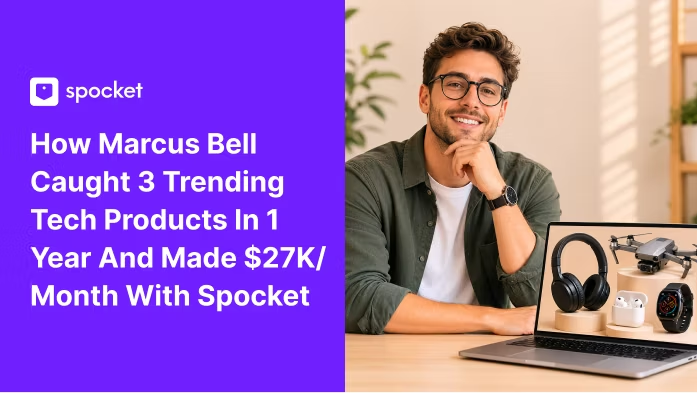
"I can see the inventory number before I spend a cent on ads. If there are 800 units sitting in a warehouse in New Jersey, I know I can run a campaign without worrying about running out mid-trend. That's the game."
— Marcus Bell, Founder, VoltEdige Store
$27.4K Peak monthly revenue | 3 Major trend cycles capitalized | 4 days Avg US delivery time
$43 Average order value | 72 hrs Time from trend ID to store live | 2% Stockout rate during trend peaks

Marcus Bell spent 5 years running paid ads for DTC brands in Miami. He was good at it. He could tell within an hour of a product popping up on TikTok whether it had legs or not. The scroll-stopping visual, the impulse-buy price point, the comments full of people asking "where do I get this?" He read those signals faster than most.
The problem was never finding the trend. It was keeping up.
He'd spot a product on a Monday, order from his overseas supplier by Tuesday, and then wait. 3 weeks, sometimes 4. By the time stock showed up, the TikTok had 30 million views and a dozen other stores had already captured the demand.
Spocket fixed that.
"I kept arriving to the party after it was over."
Here's the math that kept burning Marcus on trending products dropshipping. Day one, he identifies the trend. Day two or three, he finds a supplier overseas and places the order. Then he waits. Day 22 to 35, the product finally ships. By then, the TikTok trend is three weeks old and the buying window has closed.
Over 18 months, he correctly predicted 5 tech accessories that went viral. He made money on exactly zero of them. His suppliers couldn't ship fast enough. He'd run ads for products that were technically "coming soon" and end up eating the ad spend when fulfillment lagged behind demand.
That wasted budget added up to roughly $4,200 across those 18 months. For someone doing tiktok dropshipping and tech accessories dropshipping on the side, that stung. He started wondering if the whole trending products dropshipping model was broken, or if he was just doing it wrong.
What he actually needed was pretty simple: suppliers who already had US inventory, real-time stock numbers he could check before spending on ads, and fast shipping US dropshipping that wouldn't tank his reviews. He just couldn't find all three in the same place.
Spocket's US inventory as a speed advantage
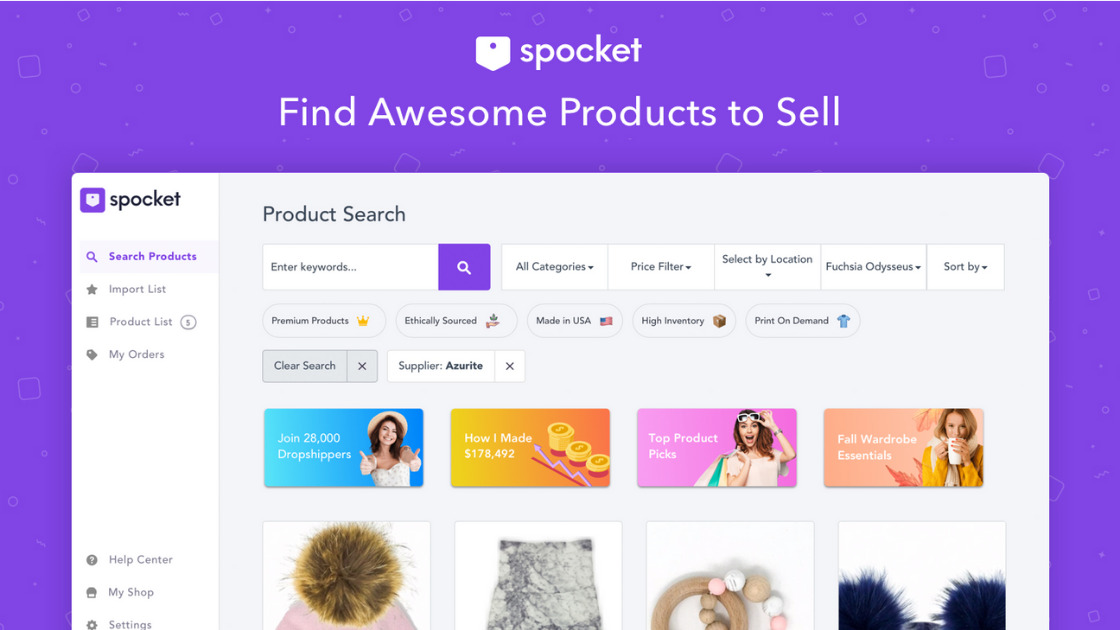
Marcus found Spocket through a recommendation in the Haze dropshipping Discord server. Someone had linked a clip of Marc Chapon talking about US supplier speed, and that was enough to get Marcus to try the free trial. He went straight to the US supplier filter.
The difference was immediate. He could browse trending dropshipping products from spocket tech suppliers who already held stock in US warehouses. No trans-Pacific wait. No customs delays. And the real-time inventory display showed exactly how many units each supplier had on hand.
That inventory number changed his whole approach to how to find trending dropshipping products. His rule: never spend a dollar on ads for a product with fewer than 300 units in stock. If a supplier in New Jersey has 600 units of a phone mount sitting in their warehouse, he knows he can run a campaign without worrying about selling out before the trend peaks.

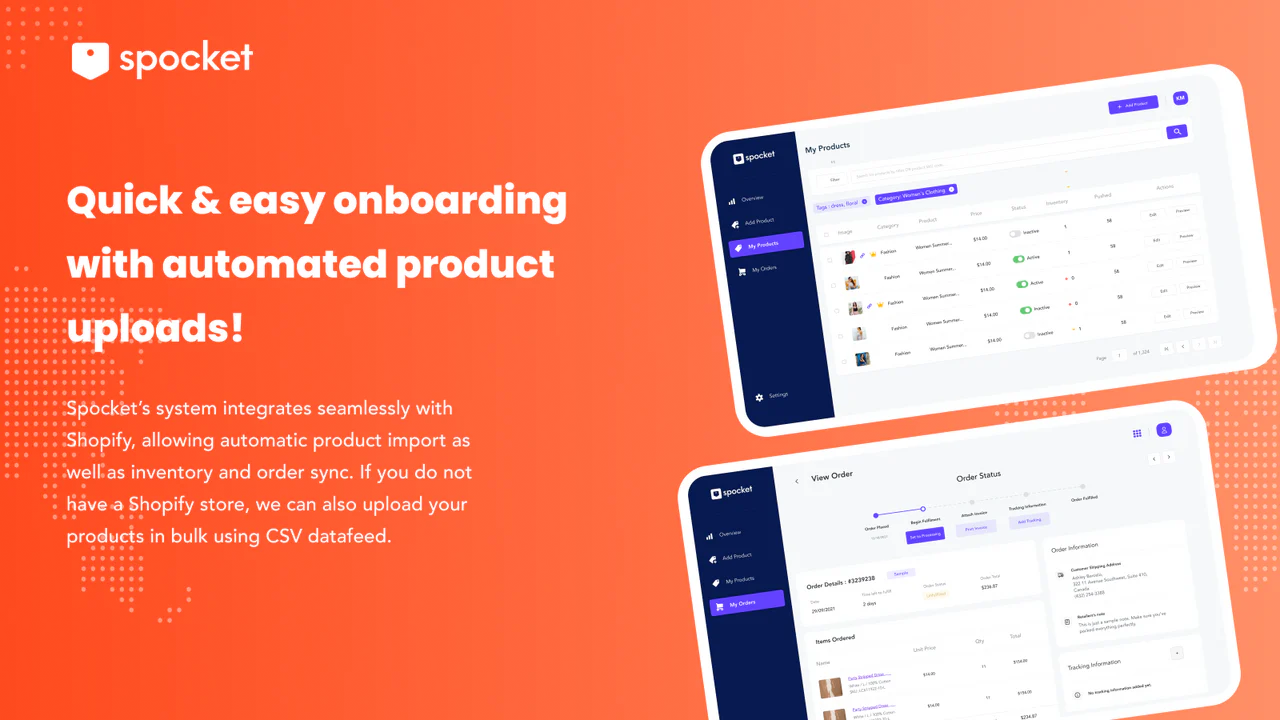
One-click Shopify import meant a new product could go live on VoltEdge in under 15 minutes. With Spocket's pricing at $99/month for the Empire plan (0% transaction fees, unlimited orders), his margins worked even on impulse-price accessories. He'd use the profit margin calculator to price each product at roughly 45% margin before running ads.
Spocket integrates with WooCommerce, Wix, eBay, and BigCommerce, but Marcus ran everything on Shopify. The whole ecommerce tech stack was lean: Spocket for sourcing and fulfillment, Shopify for the storefront, Meta for ads, CapCut for video edits.
The 72-hour trend-to-store system
This is how to find trending dropshipping products and actually capitalize on them before the window closes. Marcus built a repeatable 3-day system and ran it every time he spotted something with potential.
Day 1, trend identification
He checks TikTok, Instagram Reels, and Google Trends every morning. The signals he watches for: comments asking "where can I buy this?", shares from non-creator accounts (meaning regular people are passing it around), and a noticeable uptick in Google search volume. He cross-references with Spocket's trend research guide to validate whether the product category has supplier support.
The same day, he searches the Spocket catalog for the product or closest match. Checks US stock levels, shipping time, and supplier rating. If stock is above 300 units and shipping is under 5 days, he moves forward.
Day 2, store build and creatives
Imports the product to Shopify through Spocket's one-click import. Writes the product description using a problem-agitate-solve format he's been using since his agency days. Shoots or sources a 15-second product demo video and edits it in CapCut. Because Spocket has no MOQs, he can order a single sample to film with if he wants, though for speed he usually skips the sample and uses the supplier's existing media.
Day 3, launch
Runs a $50 test ad budget on Meta. If CPC stays under $0.80 and ROAS crosses 2x within 24 hours, he scales the budget to $500/day. If it doesn't hit those numbers, he kills the ad and moves on. No emotional attachment to any product.
That's the whole system. How to find trending dropshipping products, validate them, and go live before the trend peaks. 72 hours, start to finish.
3 trends, 3 wins

Here's how to ride a product trend dropshipping in practice. 3 products, 3 cycles, all within 1 year.
1. MagSafe car mounts, March 2025
Marcus spotted the product gaining traction on Reels on a Tuesday. Found a US-based supplier on Spocket with 800+ units by Wednesday morning. Store was live by Thursday night. Revenue from this single product over 4 weeks: $8,200. Shipping averaged 4 days. Zero complaints.
2. Clip-on monitor light bars, June 2025
Desk setup content was everywhere that summer. Marcus caught the monitor light bar trend early through Google Trends data. Supplier had 1,100 units in a California warehouse. Revenue over 5 weeks: $11,500. He ran the print-on-demand angle on a few branded accessories alongside the light bars to boost AOV.
3. 3-in-1 portable chargers, November 2025
Holiday season plus a viral unboxing video. This was the big one. Supplier stocked 2,000+ units. Marcus scaled ads to $800/day during the peak week. Revenue that month: $27.4K. His biggest month ever, and the one that proved the system worked at scale.
Common thread across all 3:
Spocket's US suppliers had enough stock at the moment the trend peaked:
- No stockouts that killed momentum.
- No 3-week shipping delays generating refund requests.
- Each trend window was fully captured because the supply chain could actually keep pace with the demand.
If you're trying to figure out how to find trending dropshipping products and actually make money from them, Marcus's story is the playbook.
Stop missing the trend window. Spocket's US suppliers have inventory ready to ship today. Start your free trial.
