Future-Proofing Dropship with AI APIs
Explore how AI APIs are revolutionizing dropshipping. Learn how integrating AI can streamline operations, boost profits, and future-proof your business in 2026.
.avif)

In the rapidly evolving world of dropshipping, staying ahead of the competition is crucial for success. Enter AI APIs – the game-changing tools that streamline operations, enhance customer experiences, and automate key processes. Integrating AI APIs into your dropshipping business is no longer optional; it’s essential for future-proofing your operations. From personalized product recommendations to real-time inventory management and AI-driven customer support, these technologies offer a competitive edge that can boost efficiency, scalability, and profitability. In this blog, we’ll explore how AI APIs are revolutionizing dropshipping, and why incorporating them into your business strategy can help you thrive in 2026 and beyond. Ready to scale with AI? Let’s dive in!
What is the AI API for Dropshipping?
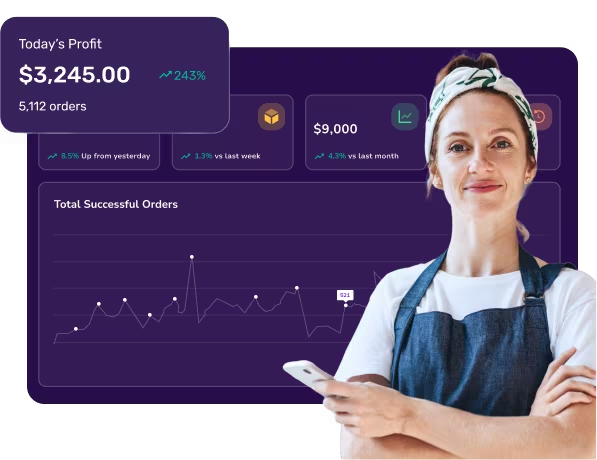
An AI API (Application Programming Interface) for dropshipping is a tool that connects artificial intelligence systems with your eCommerce platform, enabling seamless automation and data-driven decisions. These APIs provide businesses with the ability to integrate AI technologies into their store without extensive development, enhancing functionality and optimizing operations.
.avif)
How AI APIs are Applied in Dropshipping
AI APIs are applied across various functions in dropshipping to optimize business processes and enhance the customer experience. Here's how:
1. Product Research
AI APIs analyze market trends, customer behavior, and competitor data to help you quickly identify trending products. This allows you to make data-driven decisions on what products to offer in your store.
2. Order Automation
AI APIs automate order management, including order fulfillment, inventory updates, and shipping notifications. This reduces manual tasks, speeds up the process, and improves operational efficiency.
3. Customer Service
AI-powered chatbots and virtual assistants offer 24/7 customer support. They can handle customer queries, provide product recommendations, and track orders, ensuring a seamless experience for your customers.
Benefits of Using AI APIs for Product Research, Order Automation, and Customer Service
1. Product Research
AI APIs can analyze large datasets from various sources, identifying market trends and customer preferences. This helps you identify profitable products, allowing you to make faster, more informed decisions.
2. Order Automation
Automating your order management process with AI APIs ensures quicker order processing, automatic inventory updates, and customer notifications. This reduces human error and increases order fulfillment efficiency.
3. Customer Service
With AI-powered customer support, chatbots and virtual assistants handle customer inquiries around the clock. This enhances customer satisfaction by providing immediate responses and resolving issues quickly, without the need for human intervention.
Why AI APIs are Essential for Future-Proofing Your Dropshipping Business
AI APIs are key to making your dropshipping business scalable, efficient, and competitive. Here’s why they are essential for future-proofing your business:
1. AI-Driven Customer Experience
Personalized customer experiences are crucial for increasing conversions and customer loyalty. AI-powered recommendation engines suggest products based on customer preferences, improving the shopping experience and boosting sales.
2. Predictive Analytics for Better Inventory Management
AI APIs help forecast future demand patterns by analyzing past sales data. This allows you to optimize stock levels, ensuring you have the right products at the right time, reducing overstocking or stockouts.
3. Streamlining Workflows with AI-Powered Automation
From processing orders to managing inventory, AI APIs streamline many aspects of dropshipping. Dropshipping automation reduces the need for manual input, saving you time and ensuring accurate, timely operations.
.avif)
4. Competitive Edge
Using AI APIs helps you stay ahead in the competitive dropshipping market. AI allows businesses to operate more efficiently, respond to changes quickly, and scale operations with minimal human input.
Key AI API Technologies for Dropshipping Success
1. AI-Powered Product Recommendation APIs
These APIs analyze customer behavior and suggest relevant products based on their preferences, increasing product discovery, customer engagement, and sales.
2. AI Customer Support APIs
AI-driven chatbots and virtual assistants provide 24/7 support, answering customer queries, resolving issues, and guiding customers through the purchase process. This ensures a smooth and consistent customer experience.
3. AI Inventory and Demand Forecasting APIs
AI APIs help predict future demand based on historical data and trends. This allows you to manage your inventory more effectively, optimizing stock levels and reducing costs associated with overstocking or stockouts.
4. AI Logistics APIs
AI-powered logistics APIs automate shipping routes, optimizing delivery times and costs. They improve the efficiency of your supply chain, ensuring timely deliveries and better customer satisfaction.
How to Integrate AI APIs in Your Dropshipping Store
Integrating an AI API for Dropshipping can make your store faster, smarter, and easier to manage. The key is to introduce AI in a way that improves operations without affecting the customer experience.
Step-by-Step Guide to Integration
Identify Your Main Use Case
Start by choosing the exact problem you want AI to solve. Many businesses also rely on AI development services to connect AI APIs with Shopify, WooCommerce, and backend logistics systems. This could be product recommendations, customer support, inventory forecasting, dynamic pricing, or order automation. When your goal is clear, it becomes easier to choose the right API and measure results.
Choose the Right AI API Provider
Select a provider that matches your store’s needs and platform. For example, Spocket can support product sourcing and dropshipping automation, while tools like OpenAI can help with AI-generated content, customer support flows, and conversational shopping experiences. The best provider should be reliable, well-documented, and easy to integrate.
Connect the API to Your Store
Most modern eCommerce platforms support API-based integrations through apps, plugins, middleware, or direct developer setup. Whether you run your store on Shopify or WooCommerce, the integration should fit naturally into your current workflow and not slow down store performance.
Test Before Full Deployment
Before launching it storewide, test the AI integration in a controlled environment. Check whether product suggestions are relevant, chatbot replies are accurate, and automation flows work correctly. This step reduces the chance of customer-facing issues.
Monitor Performance and Improve
Once the integration is live, track how it performs. Monitor conversion rate, customer response time, order accuracy, and engagement levels. Good AI integration is never completely set-and-forget. It needs small adjustments based on real store data.
Best Practices for Smooth Integration
Start Small and Scale Gradually
Instead of adding multiple AI tools at once, begin with one area where impact is easiest to measure. For many stores, that is customer support or product recommendation.
Prioritize Compatibility
Make sure the API works well with your platform, theme, and existing apps. Poor compatibility can create technical issues and affect user experience.
Protect Customer Data
AI tools often rely on user behavior and transaction data. Use secure providers and follow privacy best practices to protect customer information.
Keep Human Oversight
AI can automate a lot, but it should not replace judgment completely. Review outputs regularly, especially when AI is used for communication, pricing, or customer service.
Watch Site Speed and Stability
A useful AI tool should improve your store, not make it slower. Monitor performance to ensure the API does not affect loading speed, checkout flow, or uptime.
Benefits of Future-Proofing with AI APIs for Dropshipping
Using AI APIs is not just about saving time. It helps build a more flexible and scalable business that can adapt to market changes faster.
Ensuring Longevity in a Changing eCommerce Market
Dropshipping changes quickly. Customer expectations, product trends, and fulfillment standards keep evolving. AI helps you respond faster by turning store data into useful action, which makes your business more resilient over time.
AI Scalability Without Heavy Overhead
As your store grows, AI APIs help you manage more orders, products, and customer interactions without needing a large support team. This gives you room to scale while keeping costs under control.
Better Decisions With Real-Time Insights
AI can process and store data faster than manual analysis. It can show which products are trending, where customers drop off, and what actions improve conversions. This leads to faster and more confident decisions.
Real-World Examples of Dropshipping Stores Using AI APIs
AI works best when it solves practical business problems. Here are common ways dropshipping stores use it successfully.
AI-Powered Product Recommendations
A dropshipping store can use recommendation APIs to show relevant products based on browsing behavior, past purchases, and customer interest. This improves product discovery and often increases upsells and cross-sells.
Typical result: Higher average order value and more products added per session.
Automated Customer Support With AI Chatbots
Many stores use AI chatbots to answer common questions, track orders, and guide shoppers to the right products. This reduces support pressure and keeps response times fast, even outside business hours.
Typical result: Lower support volume, faster replies, and better customer satisfaction.
Predictive Inventory and Demand Planning
AI forecasting APIs help stores anticipate product demand using sales history, seasonal patterns, and behavioral trends. This supports better supplier planning and reduces missed sales from stock issues.
Typical result: Fewer stockouts, better fulfillment, and more stable operations.
Challenges of Using AI APIs in Dropshipping
Using an AI API for Dropshipping can create major advantages, but implementation is not always frictionless. To get the best results, store owners need to understand the common challenges before they scale AI across operations.
Technical Hurdles and Integration Complexity
One of the biggest challenges is integration. Not every AI tool connects smoothly with your store, supplier systems, CRM, or shipping stack. Some APIs require developer support, custom workflows, or middleware to function properly.
There is also the issue of tool compatibility. If your store already uses multiple apps, adding AI on top of that can create conflicts, slower performance, or broken workflows. This is why clean testing and phased rollout matter.
Data Security and Privacy Concerns
AI tools often rely on customer behavior, order history, product data, and store analytics. That makes data security a serious concern. If the API provider does not meet strong security standards, your business could face privacy risks or compliance issues.
To reduce that risk, businesses should work only with trusted providers, review data policies carefully, and avoid sharing more customer data than necessary. AI should improve operations without putting trust at risk.
Initial Investment and ROI Concerns
Another concern is cost. While some AI APIs are affordable, others require monthly subscriptions, usage-based billing, developer time, and ongoing optimization. For smaller stores, the upfront investment can feel high.
The solution is to treat AI as a business tool, not a trend. Start with one use case that directly affects revenue or efficiency, such as customer support automation or product recommendations. This makes it easier to measure ROI before expanding further.
Managing Expectations the Right Way
Many businesses expect AI to solve everything at once. In reality, AI performs best when used with clear goals, strong data, and ongoing refinement. It should support your workflow, not replace strategy.
The smartest approach is to begin with one high-impact integration, track performance closely, and improve from there. That lowers risk and helps you build confidence in the system.
Future Trends: What’s Next for AI in Dropshipping?
AI is moving beyond simple automation. The next phase of dropshipping will be shaped by smarter customer experiences, better predictive systems, and more immersive shopping journeys.
Voice Commerce and Conversational Shopping
Voice search and voice-assisted shopping are becoming more relevant as users grow comfortable with AI assistants. In dropshipping, this could mean shoppers discovering products, asking for recommendations, and placing orders through voice-enabled experiences.
This shift will push stores to optimize not just for typed keywords, but also for natural-language buying queries.
Augmented Reality for Better Buying Decisions
One of the biggest challenges in online shopping is uncertainty. Customers cannot physically see or test products before buying. AI combined with augmented reality can help solve that by allowing shoppers to visualize products in real settings.
For dropshipping stores, this can improve confidence, reduce returns, and create a more engaging shopping experience.
Hyper-Personalization at Scale
Personalization is getting more advanced. Instead of showing basic product suggestions, future AI systems will tailor homepages, offers, product bundles, email flows, and even search results based on individual customer behavior in real time.
This level of personalization can increase conversions while making the shopping experience feel more relevant and less generic.
Smarter Predictive Tools and Autonomous Workflows
AI tools are becoming better at forecasting demand, identifying trends early, and automating backend decisions. In the future, store owners may rely on AI to handle pricing adjustments, supplier switching, restock planning, and performance reporting with minimal manual input.
That does not remove the owner from the process, but it gives them faster insights and less repetitive work.
Emerging AI Tools That Will Shape Dropshipping
The next generation of AI tools for dropshipping will likely focus on:
AI Search and Discovery Tools
These tools will help customers find products faster through natural language search and intent-based recommendations.
AI Content Generation APIs
Stores will use AI to create better product descriptions, ad copy, SEO content, and email campaigns more efficiently.
AI Pricing and Margin Optimization
These systems will help stores adjust pricing dynamically based on demand, competitor moves, and supplier costs.
AI Fraud Detection and Risk Analysis
As stores grow, AI will also play a larger role in spotting suspicious orders, reducing fraud, and protecting revenue.
Conclusion
Using an AI API for Dropshipping is no longer just a smart upgrade. It is becoming a practical way to build a stronger, more scalable business. From personalization and automation to forecasting and customer support, AI helps store owners make faster decisions and run leaner operations.
The stores that adopt AI early will be in a better position to adapt, compete, and grow as eCommerce keeps evolving. Start with one clear use case, integrate carefully, and expand based on results. That is how you future-proof your dropshipping business without overcomplicating it from day one. Use reliable suppliers like Spocket to get an edge over your competitors.
Start your dropshipping business today
Dropshipping with API FAQs
What is an AI API for Dropshipping?
An AI API for Dropshipping is a tool that connects AI features to your online store. It automates tasks like inventory updates, order tracking, customer support, and product recommendations, helping dropshipping businesses run faster and more efficiently.
How can AI APIs improve my dropshipping business?
AI APIs improve dropshipping by automating repetitive work, predicting demand, personalizing customer experiences, and reducing manual errors. This helps increase efficiency, lower operating costs, improve conversions, and make your store more scalable as your business grows.
What are the best AI APIs for dropshipping?
The best AI APIs for dropshipping usually include product recommendation APIs, customer support chat APIs, inventory forecasting APIs, and logistics APIs. Tools from Spocket, OpenAI, and shipping automation platforms are often used to improve store performance.
How do I integrate AI APIs with my dropshipping store?
To integrate an AI API for Dropshipping, first choose a trusted provider, connect it through your platform or app, test it on a small workflow, and monitor results. Start with one use case to ensure smooth performance.
Are AI APIs expensive for small dropshipping businesses?
AI APIs are not always expensive for small businesses. Many offer flexible pricing based on usage, making them scalable for growing stores. When used correctly, the time saved, better conversions, and lower support costs often justify the investment.
What are the challenges of using AI APIs in dropshipping?
Common challenges include integration complexity, compatibility issues with existing apps, data security concerns, and upfront costs. The best way to reduce these risks is to start small, use trusted providers, and track ROI before expanding further.


Launch your dropshipping business now!
Start free trial


Related blogs
Dropshipping Supplier Directory: Where to Find Vetted Suppliers
Browse our directory of vetted dropshipping suppliers across the US and EU, complete with niches, shipping speed, and pricing. Start your free trial today.

How to Negotiate With Dropshipping Suppliers: 9 Tactics That Actually Work
Learn how to negotiate with dropshipping suppliers on price, MOQs, and payment terms. Proven tactics and email scripts to boost your margins. Try Spocket free.

Best Clothing Dropshipping Suppliers: The 2026 Guide
Compare the best clothing dropshipping suppliers for 2026 — US/EU shipping speeds, pricing, and product quality — and find the right fit to launch your store.