How to Make AI Video Ads for Dropshipping Products?
Stop guessing with your ad creatives. AI video ads help you test products fast and scale your dropshipping store in 2026.

You can build a full UGC ad for a product you never touched. The actor is not real. The product in their hand gets placed there by AI. The voice, the setting, all generated. And you cannot even tell.
That is the reality of AI video ads in 2026. Traditional dropshipping ad creation forces you to find creators, ship samples, wait one to two weeks, and spend hundreds per video. By the time you find out that ad does not work, you already spent money and waited weeks. Multiply that across every product you test, and you see how quickly that cycle kills your business. AI changes everything. You can now test hooks, angles, and creatives in a single sitting for a fraction of the cost. This guide shows you exactly how to make it happen.
What Are AI Video Ads for Dropshipping?
An AI video ad is an AI-generated video that mimics real customer clips. It uses avatars, voice synthesis, and smart editing to recreate the tone and rhythm of organic content. The point is not to fake people. The point is to produce content that blends into social feeds and persuades like real social proof.
For dropshipping, these ads solve a massive problem. You can now generate high-quality video ads from a handful of supplier photos. AI models can wear and demonstrate your product, create cinematic shots, and build UGC-style hooks without you ever touching the physical item. An AI dropshipping ad maker for e-commerce ads gives you faster turnaround, unlimited variations, and zero shipping costs.
Types of AI Video Ads for Dropshipping
Three main formats dominate the market right now. Each serves a different purpose and works better for certain products.
Talking Head Videos
An AI avatar speaks directly to camera about the product. This is the most common format. You pick an avatar, feed it a script, and the AI generates a video of that person talking naturally about your product. The lip sync and body movements look surprisingly real with modern AI video tools for dropshipping.
This format works best for products that benefit from personal recommendation. Skincare, supplements, beauty items, and lifestyle products convert well here. You will need to ensure your avatar looks like someone your target audience trusts. A middle-aged woman for anti-aging products. A young adult for trendy fashion items.
Product Showcase with Voiceover
This format uses B-roll footage of the product with an AI-narrated script. No face-syncing required. You simply show the product in action while a voice explains the benefits. This is easier to pull off convincingly because you avoid the uncanny valley problem entirely.
Use this for products where the visual demonstration matters more than the person. Gadgets, kitchen tools, fitness equipment, and home goods work great here. You can also mix this format with static images turned into animated scenes.
Static Image Slideshows with AI Voice
The simplest format. You take product photos, add text overlays, and layer an AI voice narration on top. Lowest production value but also lowest detection risk. No avatars, no complex animations, just clean visuals and a compelling script.
This works well for products where the problem-solution dynamic is obvious. You can also create animated image videos where static photos get subtle motion effects. These look like short, punchy TikToks that stop the scroll without screaming "commercial."
Best Apps for Making AI Video Ads for Dropshipping Products
You do not need a production team. You do not need editing experience. These tools let you build professional ads in minutes. Here are the best options for creating consistent AI ads for dropshipping products.
1. Arcads
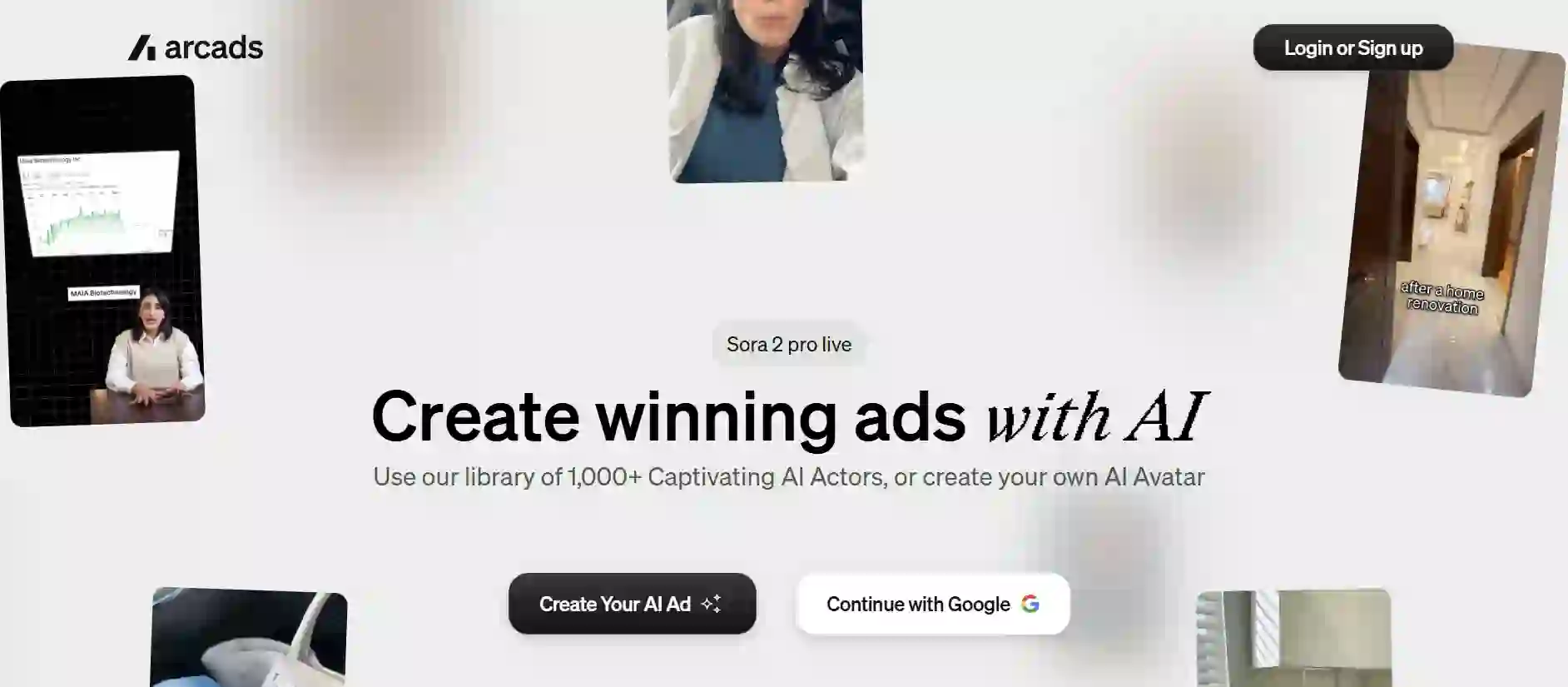
Arcads specializes in UGC-style video generation that feels native to TikTok and Instagram Reels. You start by building your ideal actor using the UGC Studio. Describe your target customer, and the tool generates multiple AI avatar options. You pick the one that fits best.
Then you take your product image and place it directly into the actor's hand using the Nano Banana Pro feature. Upload both images, and the tool composites them together. You can run three separate prompts for three different scenes. Arcads offers a free trial. Paid plans start around $29 per month. The tool excels at voice consistency, but you must manually manage your file organization.
2. Creatify AI
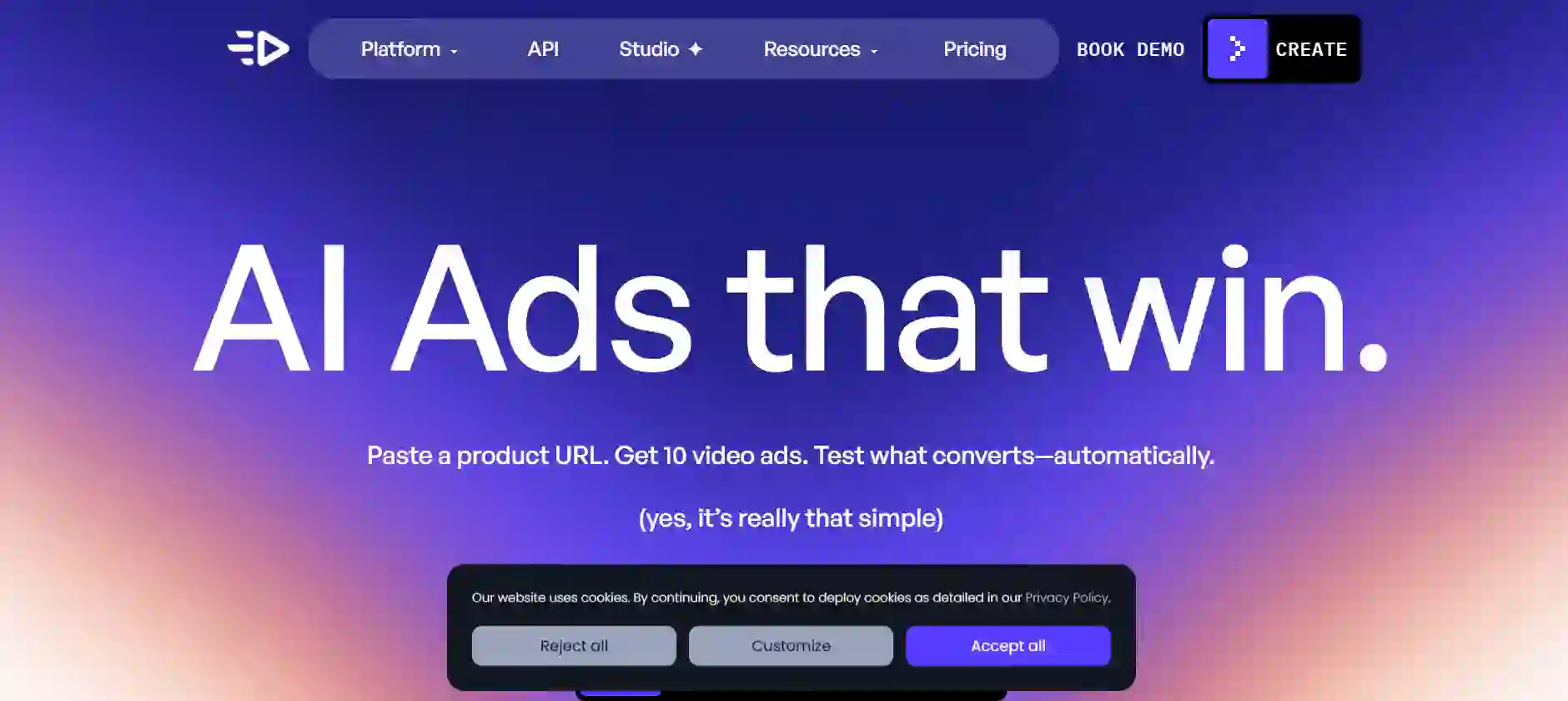
Creatify AI focuses on lightweight ecommerce ad testing. You paste your product URL, and the tool automatically extracts images, descriptions, and pricing. It then generates multiple ad variations with AI avatars and scripts tailored to your product.
The platform gives you a full library of avatars, voice options, and music tracks. You can adjust emotions like happy, worried, or shocked. You can change captions, shrink or enlarge avatars, and add stickers or watermarks. Creatify AI has a free tier that includes your first ad. Paid plans start around $19 per month. The main limitation is avatar realism, but for quick testing this tool is hard to beat.
3. Whatmore AI
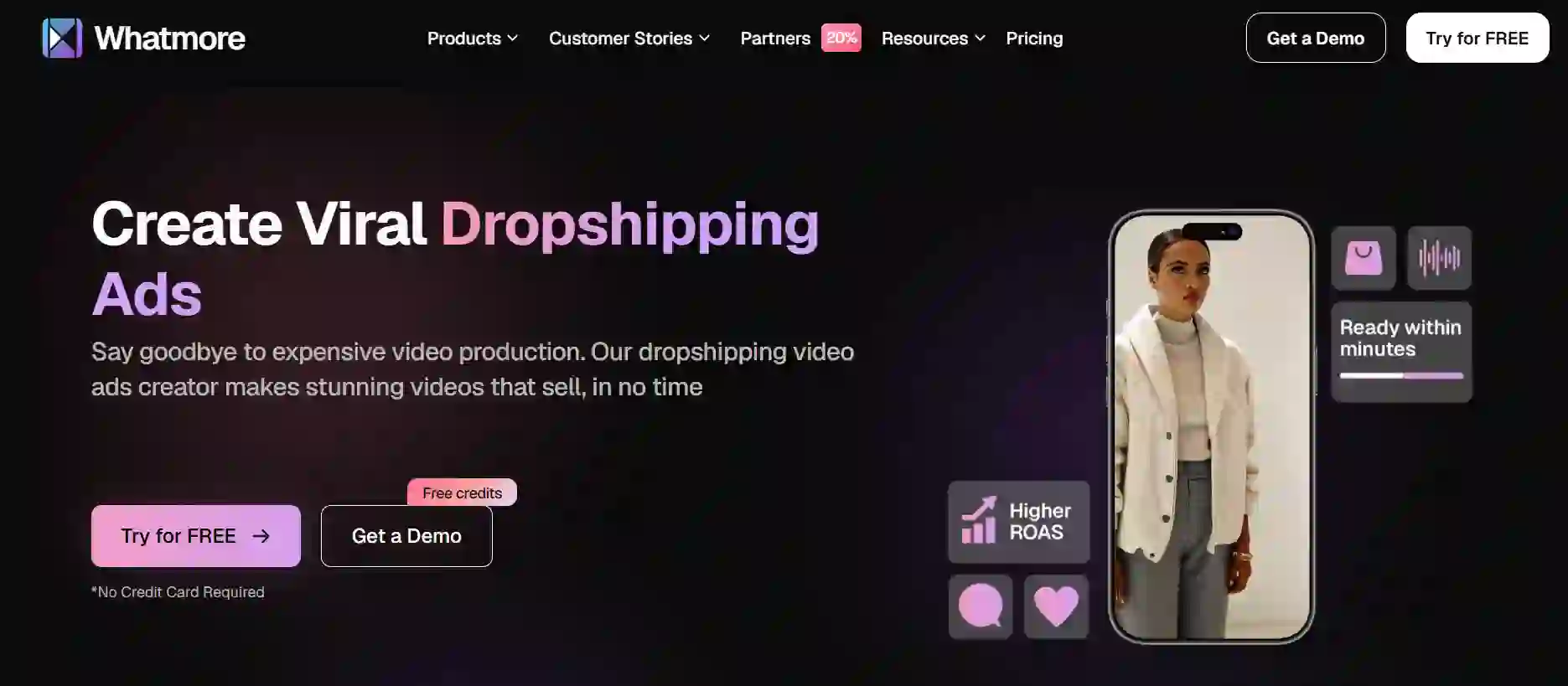
Whatmore AI positions itself as a free dropshipping ads maker that focuses on turning products into complete video ads for TikTok. You upload your product images, paste your product link, and the AI generates a short, punchy video optimized for vertical platforms.
The tool excels at fast turnaround. You can go from product URL to finished ad in under two minutes. Whatmore AI uses a library of trending audio tracks and hook templates that already perform well on TikTok. Pricing starts free with limited exports. Paid plans run around $15 to $25 per month. The downside is limited customization.
4. ROCKADS
ROCKADS focuses on highly realistic UGC style videos. The platform uses a library of real actors who licensed their likenesses for AI training. This means the avatars have natural micro-expressions, human breathing patterns, and authentic body language.
You type your script, select an actor, and the AI generates a video of that person speaking your words naturally. The lip sync technology is among the best in the market. Pricing starts around $39 per month with a free trial available. The tool works best for brands that need high-production-value ads. The main limitation is the actor library size.
5. Medeo
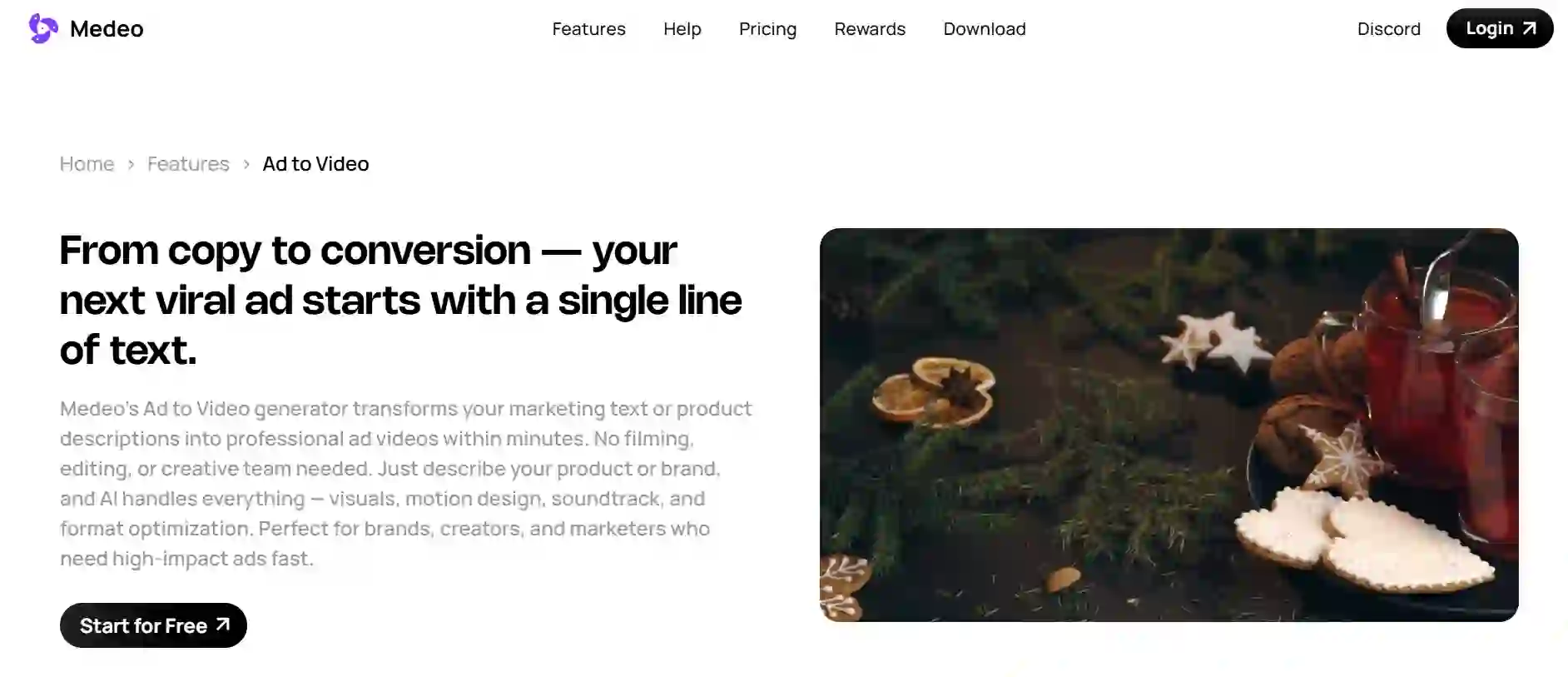
Medeo offers an ad-to-video feature that converts existing static ads into video format. You upload your best-performing image ad, and Medeo animates it with motion effects, adds an AI voiceover, and generates a video version optimized for social platforms.
This is useful for dropshippers who already have image ads that convert. Instead of starting from scratch, you repurpose what already works. Medeo also offers script generation based on competitor analysis. Pricing starts at $29 per month. The platform offers a free trial. The downside is that Medeo works best as a supplement to other tools.
6. Zeely Dropshipping Ads Maker
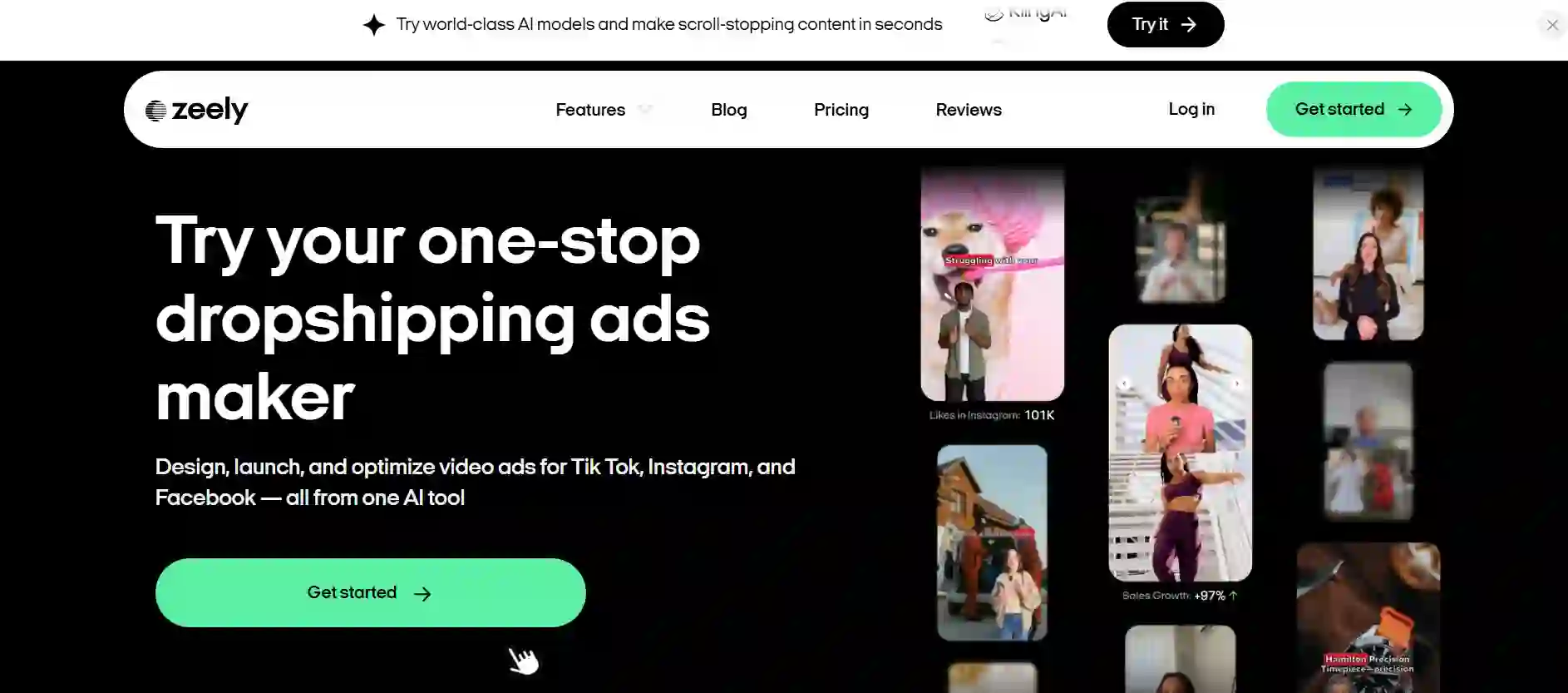
Zeely specializes in creating consistent AI ads for dropshipping products at scale. The platform includes a template library of proven ad formats that already generated millions of views. You pick a template, plug in your product, and Zeely generates a customized version.
Zeely offers multi-language support for international scaling. You can generate the same ad in English, Spanish, German, and French with accurate lip sync for each language. The platform can be combined with Spocket for seamless product sourcing for ad making. Pricing starts at $25 per month with a free tier available. Zeely works best for dropshippers testing multiple products simultaneously.
How Much Money Can You Make Dropshipping with AI Video Ads
You can go from a brand new store to six figures in under 30 days using ads created entirely by AI. The website, the creatives, all of it.
Here is the math on cost savings. Traditional human creator ads cost $150 to $500 per video. That is before usage rights fees, whitelisting costs, and shipping expenses. With AI tools, the cost per video drops to just a few dollars when you divide your subscription across monthly output. You can get started with a free dropshipping video ads tool and upgrade later.
What drives revenue is volume. Performance marketing teams want to produce more ads but get limited by time and budget. AI bridges that gap. With AI, you can produce 20 to 30 variations per product weekly instead of waiting weeks for one video.
The hybrid approach works best. Use AI to test many creative variations cheaply. Find your winning hooks and angles. Then hire real creators to produce premium versions of what already works. That way every dollar you spend on creators goes toward proven winners rather than guesses. For finding trending dropshipping products to pair with your AI ads, check the latest market data.
Where to Post and Share Your AI Dropshipping AI Ads?
Your AI video ads will not work if you post them in the wrong places. You need to go where your customers scroll. Here are the top platforms for AI dropshipping ads.
TikTok
TikTok thrives on trends and authenticity. Your AI video ads must blend in with organic content. If they feel like commercials, viewers will scroll past instantly. The hook matters more than anything. You get one second to grab attention. Present a problem viewers actually feel. Then give them a payoff that makes them lean in.
Post multiple variations daily. TikTok's algorithm rewards consistency. A library of 30 to 50 videos outperforms three perfect ones. Use trending sounds and formats. Do not reinvent the wheel. Take what is already working and make it yours.
Instagram Reels
Instagram Reels shares the same vertical format as TikTok but skews slightly older and more polished. Your stunning AI-generated video ad on Reels can afford to look a bit more produced. But still keep it native. No hard sells. No corporate voiceovers.
Use Instagram's built-in editing tools to add text overlays, stickers, and music. Tag your products if you have a store. Run the same ad on both platforms to see which one responds better. What works on TikTok often flops on Instagram, and vice versa.
YouTube Shorts
YouTube Shorts gets overlooked by most dropshippers, which means less competition. The format supports longer videos, up to 60 seconds, compared to TikTok's tighter constraints. You can run more detailed product demonstrations here.
YouTube also offers better searchability. Your Shorts can surface in search results months after posting. This gives you long-term organic reach that TikTok and Instagram do not provide. Post your top-performing TikTok videos to YouTube Shorts as a secondary distribution channel.
Facebook Feed
Facebook remains the backbone of paid social for dropshipping. Your AI video ads for dropshipping products online need clear calls to action. Tell viewers exactly what to do next. Click the link. Use the promo code. Visit the site.
Facebook rewards smart campaign scaling through retargeting. Run cold traffic ads to new audiences. Then retarget people who watched 50 percent or more of your video. Those viewers already showed interest. A follow-up ad with a discount code or testimonial often converts them.
Meta Ad Library and Retargeting
The Meta Ad Library lets you spy on competitors. Search for your product category and see what ads are running. Take screenshots of the best-performing images and videos. Use those as references for your own AI-generated variations.
Do not just post and pray. Track your metrics. Click-through rate. Cost per click. Return on ad spend. Cut losers within 48 hours. Double down on winners. An AI video ads maker for Shopify often includes analytics dashboards that show you exactly what is working. For stores using print-on-demand, these same principles apply.
How to Create AI Video Ads for Dropshipping that Look 100% Real?
The difference between a winning AI ad and a losing one comes down to realism. Here is how to make your ads look indistinguishable from real UGC. Follow these steps to create dropshipping UGC ads from start to finish with AI.
- Start with a clean product image. AI uses whatever picture you upload as its reference point. The sharper the image, the better your final ad turns out. If your image is blurry, do not rely on it. Find a cleaner version from Google Images or the supplier's page.
- Build a consistent avatar. Use the same actor across every clip for a single product. If your ad has four or five different people, it feels weird to viewers. Describe your ideal customer to the AI tool. Age, style, vibe. Let the tool generate options, then pick the one that fits best.
- Place the product directly in the avatar's hand. Upload both the avatar image and a clean product shot. Prompt the AI to have the person hold the product and present it toward the camera. Run three variations and pick the most realistic one.
- Use high-end video models. Tools like V3.1 and Sora 2 produce the most realistic visuals, cleanest lip sync, and best product integration. Ultra settings take longer to export, but the quality is worth the extra minute or two.
- Match the voice to the avatar. Do not just accept the default voice. Listen to multiple options. Find one that sounds natural for that person. A young avatar with an old voice kills realism. Adjust the emotion to match the script. Happy for testimonials. Concerned for problem statements.
- Add natural pauses and micro-expressions. Real people do not speak in perfect, unbroken sentences. Use the emotion controls in your AI tool to add worry, surprise, or happiness at the right moments. These small touches separate winning ads from obvious AI content.
- Check the small details. The AI should match the lid click on a product. The product label should face the camera correctly. The lighting should match the scene. These tiny details show how far AI has come, and viewers notice them subconsciously.
- Regenerate when needed. Not every generation works on the first try. Some outputs have weird hand movements. Others show the product in the wrong place. Regenerate two or three times. The perfect version exists. You just need to generate until you find it. For voice generation, ElevenLabs offers high-quality options.
Best Prompt Templates for Consistent Character Creation for Your Dropshipping Video Ads
Writing prompts that work consistently separates beginners from pros. You need a reusable framework that works across products, niches, and platforms. This is the laziest way to make dropshipping ads with AI because once you set up your templates, you can reuse them indefinitely.
The Character Creation Framework
Start by describing your ideal customer. Not the product. The person who buys it. Here is a template you can copy and adapt.
"Create a realistic AI avatar for a UGC product video. The person is a woman in her mid-20s. She cares about her skincare routine. She shops at Sephora and follows beauty influencers on TikTok. She has a friendly, approachable energy. She looks like someone you would trust for product recommendations. Not a model. Not an influencer. Just a regular person who knows what works."
Feed that description into your AI tool's UGC Studio. Generate three to five variations. Pick the one that feels most authentic. That is your anchor character for that product.
The Scene Prompt Framework
Once you have your character, you need scene prompts. Here is a working template for a fictional brand called "Summer Times" running a campaign for a lip balm.
"Scene one: The woman holds the Summer Times lip balm tube in her right hand, presenting it toward the camera. She is in natural daylight, standing in front of a window. She looks directly at the camera and says, 'I put this on every single morning and my lips stay soft literally all day.'"
"Scene two: The woman applies the Summer Times lip balm to her lips. She looks in a mirror. She turns to the camera and says, 'My lips have never felt this good. Like actually hydrated for once.'"
"Scene three: The woman holds the tube again, this time in her bathroom. She says, 'I have tried literally every lip product, and nothing comes close to this.' She smiles naturally at the end."
Each scene uses the same character, same product, same lighting style. The AI understands the continuity. The final edit looks like one seamless video instead of three disconnected clips.
Prompt Template for a Business
For a fictional food business launching a new protein bar, your prompts would look different. Start with a character description: "Create a realistic AI avatar for a UGC product video. The person is a man in his early 30s. He goes to the gym four times a week. He is tired of protein bars that taste like cardboard. He has an honest, no-nonsense energy."
Then write scene prompts: "Scene one: The man opens the wrapper. The camera focuses on the sound of the seal breaking. He looks at the bar and raises his eyebrows." "Scene two: He takes a bite. He closes his eyes and nods slowly. He looks at the camera and says, 'I actually look forward to eating this. It does not taste like cardboard.'" "Scene three: He holds up the bar and says, 'Twenty grams of protein. Zero junk. This is the one.'"
Building a Reusable Prompt Library
You do not want to write prompts from scratch every time. Build a library of proven templates. Use a text expander tool like BeefText or a prompt management system to store and retrieve them instantly.
Organize your prompts by product category. Skincare prompts. Gadget prompts. Apparel prompts. Home goods prompts. Each category needs different angles. Skincare needs close-ups and before-after comparisons. Gadgets need action shots and problem-solving demonstrations.
Here is how you structure a reusable prompt template:
[CHARACTER: age, gender, lifestyle, personality] [SCENE: location, lighting, camera angle] [ACTION: what the person does with the product] [DIALOGUE: exact words to say, with emotional tone] [DURATION: target seconds]
Save each template as a separate text file or note. When you need to create ads for a new product, copy the relevant template, replace the product name and specific details, and paste it into your AI tool.
The key to reusable prompts is modularity. Break your prompts into blocks. Character description block. Scene setting block. Action block. Dialogue block. Mix and match blocks from different templates to create new variations without starting over. This is how to create viral dropshipping ads using only AI in 2026.
Top Mistakes to Avoid when Making AI Video Ads for Dropshipping
Most dropshippers fail at AI ads not because the tools are bad, but because they make predictable mistakes. Avoid these errors to get the best AI video ads for dropshipping products.
- Using low-quality source images. AI cannot fix a blurry product photo. It uses your input as its reference. Start with sharp, clear images. If your supplier photos look bad, find better ones or take your own.
- Picking the wrong avatar. An avatar that does not match your target audience kills trust before the first word. Selling anti-aging cream? Use a mature avatar. Selling gaming gear? Use a young avatar. The mismatch confuses viewers.
- Skipping the edit step. Raw AI outputs are rarely perfect. Captions need adjusting. Avatars need resizing. Music needs adding. Spend five minutes editing. That small effort doubles your conversion rate. Use free tools like CapCut for final touches
- Running the same ad for weeks. AI lets you produce variations in minutes. Use that power. Refresh your creatives every three to five days. Ad fatigue happens fast in 2026.
- Forgetting a clear call to action. Viewers will not guess what to do. Tell them. "Click the link." "Use code SUMMER20." "Shop now." No ambiguity.
- Ignoring the hook. You get one second. If the first frame does not grab attention, the rest of the video does not matter. Start with a question, a bold claim, or a relatable problem.
- Not testing multiple models. V3.1 and Kling AI produce different results. Run the same prompt through both. One will outperform the other for your specific product. You will not know which until you test.
- Giving up after one bad generation. AI generation is iterative. The first output often has issues. Regenerate. Tweak the prompt. Regenerate again. The perfect version exists. You just need to find it. Spocket has no MOQs, so you can test products freely alongside your AI ads.
Conclusion
AI video ads give you an unfair advantage in 2026 dropshipping. You can now test many creative variations for what you used to pay for one. You can find winning hooks in hours instead of weeks. You can scale what works without waiting on creators or shipping samples.
The tools are ready. The workflows are proven. The only question is whether you will use them or watch your competitors take your market share. Start with one product. Make five ads using the frameworks above. Launch them. See what the data tells you. Then do it again. To find the best dropshipping products for your AI video ads, use Spocket today.
Start your dropshipping business today
AI Video Ads for Dropshipping FAQs
What is the cheapest way to start making AI video ads for dropshipping?
Start with a free tier from Creatify AI or Zeely. Both offer free plans that include your first few ad exports. You can test the workflow without spending anything. Once you confirm the tool works for your product, upgrade to a paid plan for more exports and higher quality models.
Can AI video ads really replace real UGC creators?
AI does not replace creators. It changes when you use them. Use AI to test hooks and angles first. Find what works. Then hire real creators to produce premium versions of proven winners. That hybrid approach gives you the best of both worlds.
How long does it take to make one AI video ad from start to finish?
Fifteen to thirty minutes for a basic ad. That includes picking an avatar, writing a prompt, generating the video, and making simple edits. More complex ads with multiple scenes and custom voice matching take closer to an hour.
Do I need any video editing experience to use these tools?
No. The tools handle the editing for you. You adjust captions, resize avatars, and add music through simple point-and-click interfaces. CapCut is free and works well for final tweaks, but most AI tools include built-in editors.
Which products work best for AI video ads?
Products with clear visual benefits. Skincare, gadgets, kitchen tools, fitness equipment, and home goods. Products that need explanation or demonstration. Avoid products that rely on texture, scent, or other non-visual qualities, as AI cannot replicate those yet.
Can I use the same AI avatar across multiple products?
Yes, but only if the products fit the same niche. A skincare avatar can sell moisturizer, serum, and cleanser. The same avatar cannot sell protein powder and phone cases. The mismatch confuses viewers and hurts trust.


Launch your dropshipping business now!
Start free trial.avif)


Related blogs
Dropshipping Supplier Directory: Where to Find Vetted Suppliers
Browse our directory of vetted dropshipping suppliers across the US and EU, complete with niches, shipping speed, and pricing. Start your free trial today.

How to Negotiate With Dropshipping Suppliers: 9 Tactics That Actually Work
Learn how to negotiate with dropshipping suppliers on price, MOQs, and payment terms. Proven tactics and email scripts to boost your margins. Try Spocket free.

Best Clothing Dropshipping Suppliers: The 2026 Guide
Compare the best clothing dropshipping suppliers for 2026 — US/EU shipping speeds, pricing, and product quality — and find the right fit to launch your store.