Best Dropshipping Niches for 2026, Scored and Ranked
The best dropshipping niches for 2026, scored on demand, margin and shipping, with product ideas, a validation checklist and worked margin math for each niche.



The best dropshipping niches for 2026 are pet supplies, beauty and skincare tools, home and kitchen organization, fitness and recovery gear, baby products and tech accessories. They combine steady year-round demand, room for a healthy margin and products that ship easily. Jewelry, activewear, car accessories, print-on-demand gifts and seasonal products round out the list for sellers who want a sharper angle.
A list alone won't pick your niche, though. Below you'll find each niche scored on five factors, the demand data behind it, sub-niches with less competition, product examples with price points, and a step-by-step way to validate a niche before you spend money on ads.
What makes a dropshipping niche worth choosing
A niche is a group of related products sold to a specific type of customer. "Pet products" is a category; "travel gear for dog owners" is a niche. The narrower version is easier to market because your ads, product pages and emails all speak to one person with one set of problems.
The niches that work for dropshipping share five traits:
- Stable demand. People buy all year, or at least on a predictable calendar. Search interest that holds steady over five years beats a spike that vanished last spring.
- Margin room. Products that retail between $25 and $100 usually leave enough space for product cost, shipping, payment fees and ad spend. Under $15, ads eat everything.
- Manageable competition. Big categories are crowded, but there's usually a sub-niche where the competing stores have weak branding or generic photos.
- Repeat purchases. Consumables and accessories bring customers back without paying for them again.
- Easy shipping. Light, compact, non-fragile products mean fewer damaged parcels and lower shipping costs.
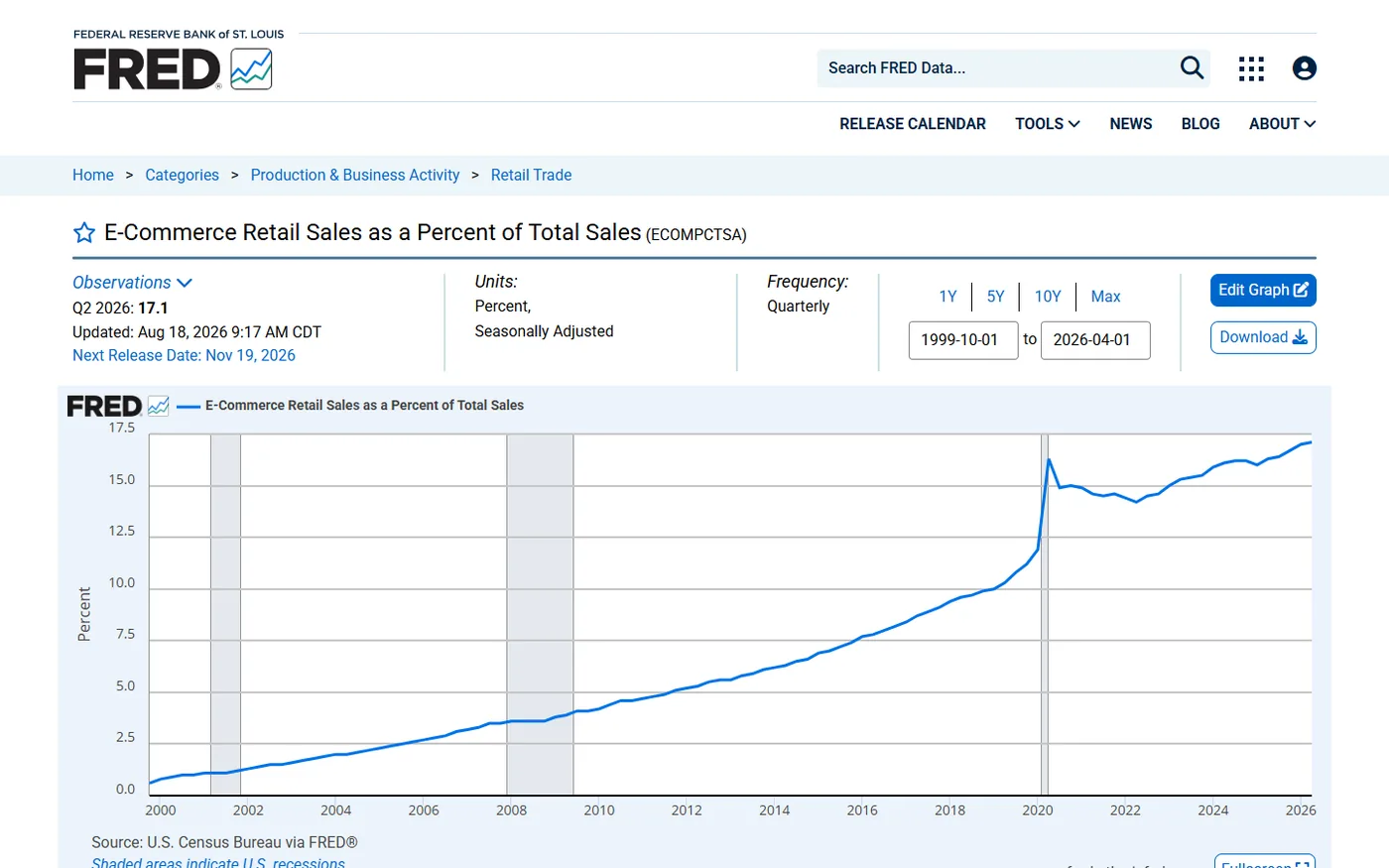
The wider market is still growing, which helps every niche. US Census Bureau data shows ecommerce reached 17.1% of total US retail sales in the second quarter of 2026 (seasonally adjusted), up from 16.3% a year earlier.
Best dropshipping niches for 2026, scored
We scored each niche from 1 to 5 on the five traits above (5 is best; for competition, 5 means easier to stand out). The scores are our editorial judgment based on the demand data in each section, typical supplier pricing and how crowded each category is in ad libraries and marketplaces. Use them to shortlist the best dropshipping niches for your situation, then validate with your own research.
| Niche | Demand | Margin | Competition | Repeat buys | Shipping | Total /25 |
|---|---|---|---|---|---|---|
| Pet supplies | 5 | 4 | 3 | 5 | 4 | 21 |
| Beauty and skincare tools | 5 | 4 | 2 | 5 | 5 | 21 |
| Home and kitchen organization | 4 | 4 | 3 | 3 | 4 | 18 |
| Fitness and recovery | 4 | 4 | 3 | 3 | 4 | 18 |
| Baby and kids | 4 | 4 | 3 | 4 | 4 | 19 |
| Tech and phone accessories | 5 | 3 | 2 | 3 | 5 | 18 |
| Jewelry and watches | 4 | 5 | 2 | 3 | 5 | 19 |
| Women's fashion and activewear | 5 | 3 | 1 | 4 | 4 | 17 |
| Men's accessories and grooming | 4 | 4 | 3 | 3 | 5 | 19 |
| Car accessories | 3 | 4 | 4 | 2 | 4 | 17 |
| Print-on-demand gifts | 4 | 3 | 3 | 2 | 4 | 16 |
| Seasonal and party | 2 | 4 | 4 | 2 | 4 | 16 |
Two niches tie at the top, and they suit different sellers. Pet supplies is the more forgiving start because owners buy constantly and rarely shop on brand alone. Beauty tools have stronger repeat buying but face heavier competition from established brands, so they reward sellers who can produce good video.
1. Pet supplies
The American Pet Products Association reported $158 billion in US pet industry spending in 2025, up 3.7%, with supplies, medications and live animals accounting for $34.4 billion (up 4.4%). APPA projects $165 billion for 2026. Owners treat pets like family and replace toys, beds and grooming tools regularly.

- Products that sell: slow feeder bowls, grooming gloves, enrichment toys, orthopedic beds, travel water bottles, car seat covers, pet hair removers.
- Less crowded sub-niches: senior dogs (ramps, joint-friendly beds), apartment cats (window perches, compact litter solutions), dog travel kits.
- Typical price band: $15 to $35 for toys and accessories, $40 to $120 for beds and carriers.
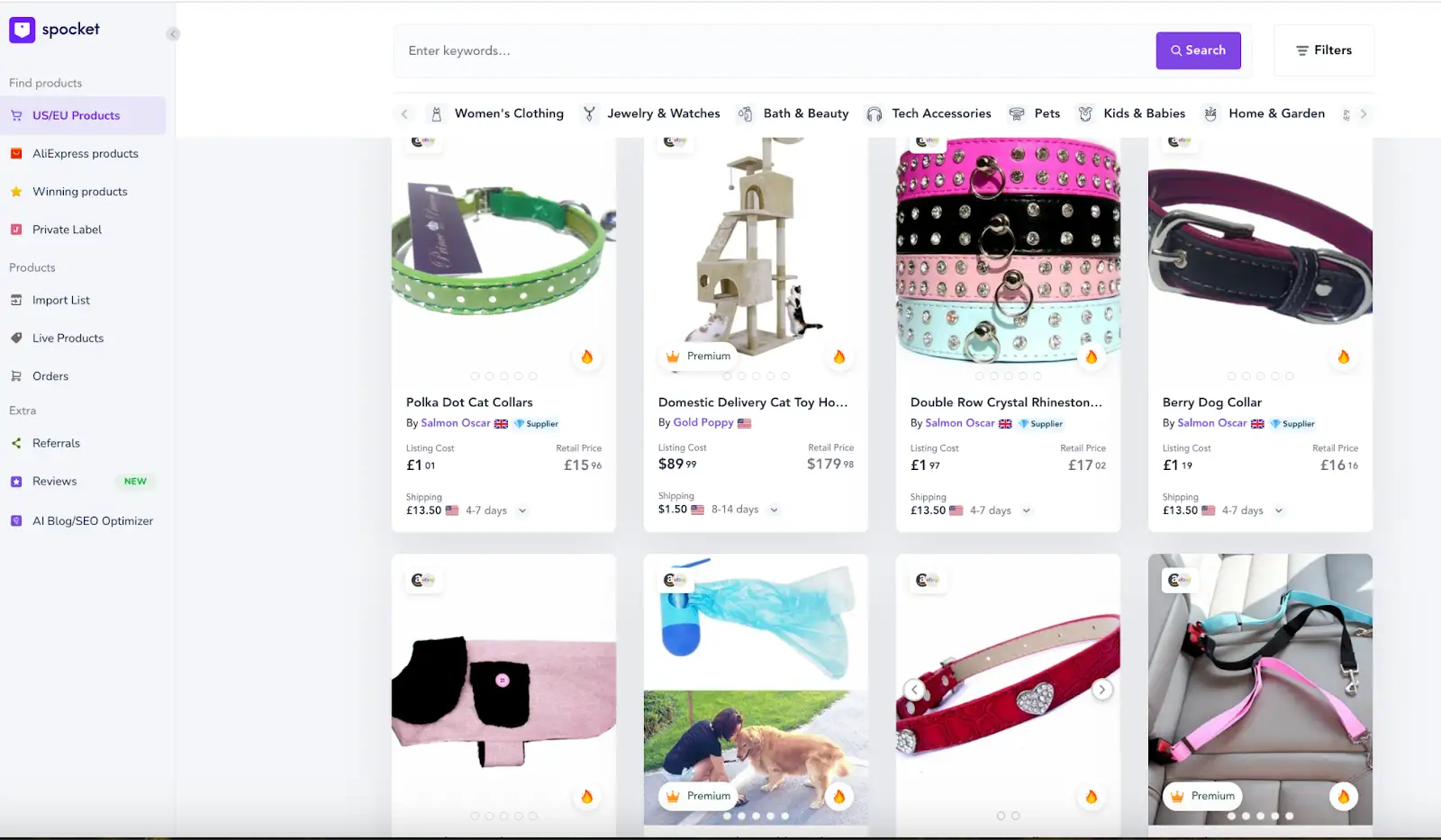
Browse supplier options in Spocket's pet dropshipping category. Avoid anything ingestible, like supplements or treats, unless you understand the labeling rules.
2. Beauty and skincare tools
Circana data shows US prestige beauty sales grew 4% to $36 billion in 2025, while mass beauty grew 5% to $72.7 billion. Tools and accessories are the dropshipper's way in: they don't need ingredient approvals the way creams and serums can, and they photograph well.
- Products that sell: ice rollers, gua sha sets, satin pillowcases, heatless curl kits, makeup organizers, travel toiletry bags.
- Less crowded sub-niches: men's skincare tools, curly-hair care accessories, beauty storage for small bathrooms.
- Typical price band: $15 to $45, with bundles at $50 to $80.
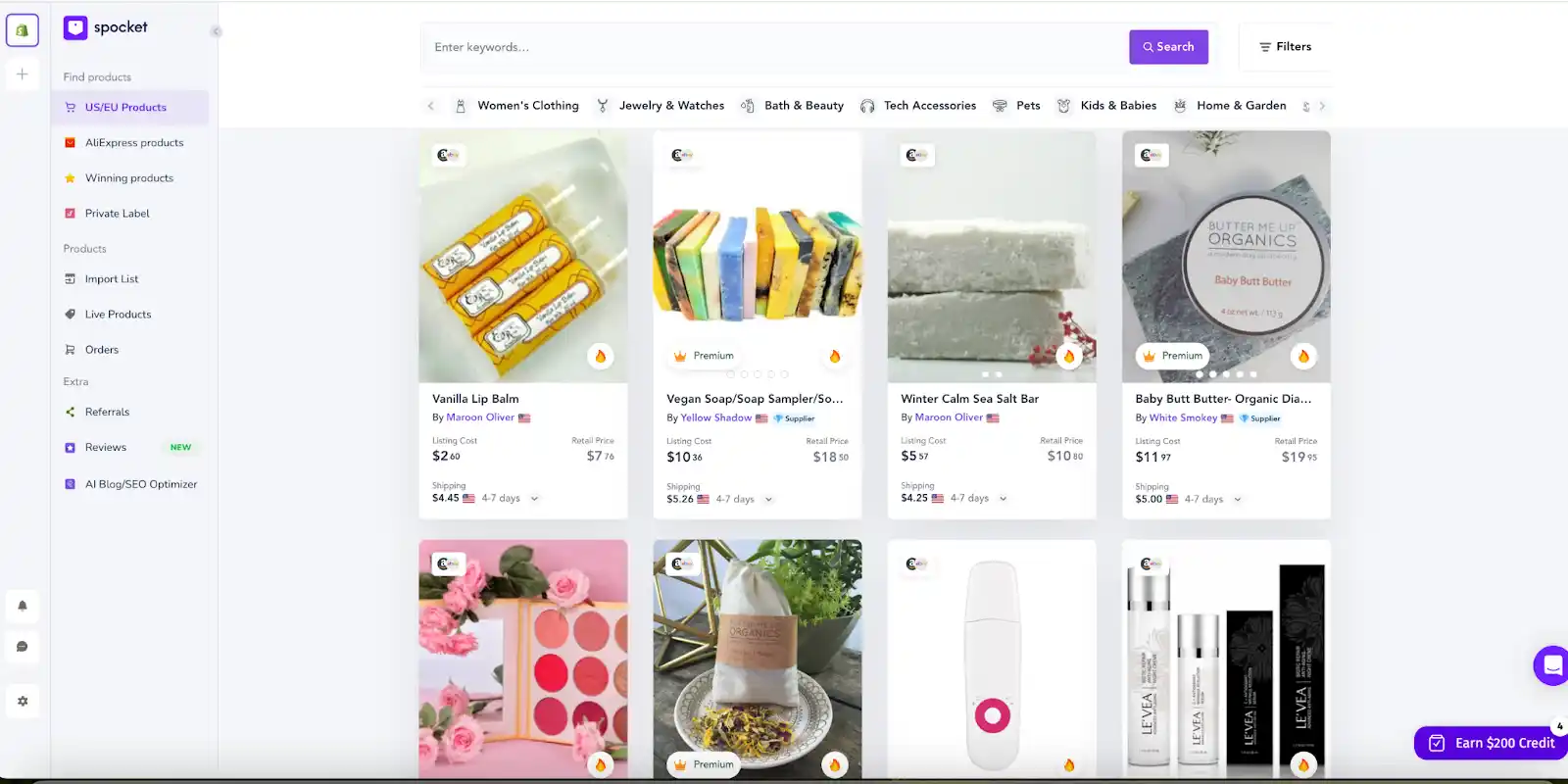
Start with Spocket's bath and beauty products.
3. Home and kitchen organization
Organization products solve a visible problem, which makes them easy to sell with before-and-after video. Renters and small-space households are a big audience because they can't renovate, but they can buy drawer dividers.
- Products that sell: drawer dividers, stackable pantry containers, under-sink organizers, floating shelves, LED cabinet lights, spice racks.
- Less crowded sub-niches: organization for small apartments, home office cable management, eco-friendly kitchen swaps such as beeswax wraps and bamboo utensils.
- Typical price band: $20 to $60.
See Spocket's home and garden category. Skip bulky furniture early on; shipping costs and damage claims add up.
4. Fitness and recovery
The Global Wellness Institute values the global wellness economy at $6.8 trillion in 2024, up 7.9% from 2023. For a store, the sweet spot is home workouts and recovery: compact gear people use daily.
- Products that sell: resistance bands, massage balls, foam rollers, yoga mats, grip trainers, posture accessories.
- Less crowded sub-niches: mobility for desk workers, gear for over-50 strength training, Pilates-at-home kits.
- Typical price band: $15 to $60.
Browse sports and outdoors products. Keep claims about comfort and convenience, never about treating medical conditions.
5. Baby and kids
Parents buy repeatedly as children grow, and grandparents buy gifts. Trust is everything here, so this niche suits sellers willing to be careful about suppliers.
- Products that sell: organic cotton clothing, muslin blankets, stroller organizers, silicone feeding sets, nursery storage.
- Less crowded sub-niches: eco-friendly baby gifts, travel gear for toddlers, Montessori-style storage.
- Typical price band: $15 to $50.
In the US, children's products need a Children's Product Certificate based on third-party testing. Ask suppliers for it before listing anything aimed at kids 12 and under. Start with Spocket's kids and babies category.
6. Tech and phone accessories
Everyone owns a phone, and every new model needs new cases and chargers. Demand is huge, and so is competition, which is why tech scores lower on competition and margin.
- Products that sell: phone stands, MagSafe-compatible accessories, cable organizers, laptop stands, creator lighting.
- Less crowded sub-niches: desk setups for remote workers, accessories for content creators, tech for travelers.
- Typical price band: $15 to $60.
See tech accessories on Spocket. Avoid cheap chargers and batteries without safety certification; returns and complaints follow.
7. Jewelry and watches
High perceived value, tiny parcels and strong gifting demand. The catch is competition from countless low-cost listings, so you need better photography and honest material details (925 silver, gold vermeil, stainless steel). If you want to go upmarket, our guide to luxury dropshipping covers what's legal to sell. Suppliers are in the jewelry and watches category.
8. Women's fashion and activewear
The biggest category in ecommerce, and the most crowded. Sizing creates returns, so pick suppliers with clear size charts. Loungewear, activewear sets and occasion collections work better than random trend pieces. Browse women's clothing.
9. Men's accessories and grooming
Men's accessories (wallets, belts, beard care, watches) often face less polished competition than women's equivalents. Gift buyers drive a lot of sales. See accessories and men's clothing.
10. Car accessories
Organizers, seat gap fillers, phone mounts and cleaning tools solve everyday problems for commuters, parents and rideshare drivers. It's an underrated niche with practical, demo-friendly products. Browse automotive products.
11. Print-on-demand gifts
Custom mugs, shirts, posters and tote bags let you sell designs nobody else has, with no stock. Margins are thinner because base costs are higher, so print-on-demand works best with a clear audience, such as nurses, teachers or a specific hobby. Explore print-on-demand products.
12. Seasonal and party
Halloween, Christmas, Valentine's Day and graduation drive sharp, predictable spikes. Open a Google Trends chart for "Halloween costumes" or "Christmas decorations" over five years and you'll see the same peak every year. That makes seasonal products great as a second collection but risky as a whole store. See seasonal products and festivals and parties.
Best dropshipping products by niche: quick reference
If you already know your niche and want product ideas, this table gives you a starting shortlist and a realistic price band for each.
| Niche | Starter products | Typical retail | Best audience |
|---|---|---|---|
| Pets | Slow feeder bowl, grooming glove, car seat cover | $15 to $60 | New dog and cat owners |
| Beauty tools | Ice roller, satin pillowcase, makeup organizer | $15 to $45 | Skincare enthusiasts, gift buyers |
| Home organization | Drawer dividers, pantry containers, LED cabinet lights | $20 to $60 | Renters, small-space households |
| Fitness | Resistance bands, massage balls, yoga mat | $15 to $60 | Home workout beginners, desk workers |
| Baby | Muslin blankets, silicone feeding set, stroller organizer | $15 to $50 | New parents, grandparents |
| Tech | Phone stand, cable organizer, laptop stand | $15 to $60 | Remote workers, creators, students |
| Jewelry | 925 silver rings, layered necklaces, minimalist watches | $25 to $150 | Gift buyers, style-led shoppers |
| Car | Seat gap filler, trunk organizer, phone mount | $15 to $45 | Commuters, parents, rideshare drivers |
For a current view of what's moving, check Spocket's trending products and winning products pages.
How to validate a dropshipping niche before you launch
Lists of the best dropshipping niches only get you to a shortlist. This seven-step check takes about a week and costs less than a failed launch.
- Check five-year search interest. In Google Trends, set the range to "Past 5 years" and compare your niche term with a related one. You're looking for a flat or rising line, or a predictable yearly cycle. A single spike followed by a slide means a fad.
- Look for buying-intent keywords. Searches like "best orthopedic dog bed" or "dog car seat cover for SUV" show people ready to buy. If Google autocomplete fills in plenty of these for your niche, there's commercial demand.
- Read marketplace bestsellers and reviews. Amazon Best Sellers, Etsy search results and eBay sold listings show what sells and at what price. One-star and three-star reviews are the most useful: they list the complaints your product can fix.
- Study competitor stores and ads. Search the Meta Ad Library and TikTok for your niche. Lots of advertisers means proven demand; generic stores with supplier photos mean room to do it better.
- Do the margin math. Add product cost, shipping, payment fees, app costs, an ad cost per sale and a returns allowance. If a $35 product leaves less than $8 after all of it, choose a different product or raise the price.
- Order samples. Check quality, packaging and real delivery time to your own address. Take your own photos while you have them.
- Launch with 10 to 20 products. A focused collection in one niche is easier to advertise than 200 unrelated items. Cut what doesn't sell after a fair test and add more of what does.
Our guide to dropshipping niche research covers each research tool in more depth.
A worked margin example by niche
Here's how the math looks for an orthopedic dog bed, a typical mid-ticket pet product. The numbers are illustrative; plug in your own supplier quotes.
| Line item | Amount |
|---|---|
| Retail price | $69.00 |
| Product cost | -$24.00 |
| Shipping from supplier | -$7.50 |
| Card processing (example 2.9% + $0.30) | -$2.30 |
| Ad cost per sale | -$20.00 |
| Returns allowance (4%) | -$2.76 |
| Profit per order | $12.44 (18%) |
Add a $19 calming blanket to 25% of orders and average profit per order rises, because the ad cost is already paid. That's why niches with natural add-ons (pets, beauty, baby) score well: the second product is where the profit is.
Dropshipping niches and products to avoid
- Branded replicas and "dupes". Trademark complaints get stores and ad accounts shut down.
- Products with medical claims. Anything promising to treat pain, anxiety or illness invites regulatory trouble and ad rejections.
- Ingestibles and supplements, unless you understand labeling and liability rules.
- Uncertified electronics and batteries. High defect and return rates.
- Fragile or oversized items. Glassware, large furniture and mirrors cost too much to ship and break too often.
- Trend-only products. If the only proof of demand is one viral video, wait for the second wave of data.
Evergreen vs trending niches
Evergreen niches (pets, beauty, home, baby) give you steady sales and let you build a brand. Trending products give you short bursts of cheap traffic. Most stores that last do both: an evergreen niche as the base, with trending products tested inside it. A pet store, for example, might test a viral lick mat while relying on beds and grooming tools for steady revenue. Our comparison of niche stores and general stores covers the trade-off in more detail.
Where Spocket fits
Once you've picked from the best dropshipping niches above, Spocket helps with the sourcing part. You can browse products by category, see product cost, suggested retail price and the supplier's shipping origin, then import products into Shopify, WooCommerce, Wix and other platforms. Many suppliers are based in the US and Europe and typically ship in 2–7 days, which helps when your customers expect shorter delivery windows, and orders can be fulfilled automatically once set up. Branded invoicing keeps your store name on the paperwork.
Plans start at $39.99/month with a 7-day trial. If you want to check supplier depth in your chosen niche before committing, open a Spocket trial and search your top three product ideas.
Choosing from the best dropshipping niches
If you're starting from zero, pick one niche from the top of the scoring table, narrow it to a sub-niche you understand, and validate it with the seven steps above. Pet supplies and beauty tools are the safest starting points for most beginners; jewelry and men's accessories suit sellers who can shoot great product photos. Whatever you choose, launch small, measure honestly and keep the products that earn their place.
Ready to see which products are available in your niche? Start your 7-day Spocket trial and build your first collection.
Start your dropshipping business today
Best Dropshipping Niches FAQs
What is the best dropshipping niche for 2026?
Pet supplies and beauty and skincare tools score highest in our ranking, thanks to steady demand, repeat purchases and easy shipping. US pet spending reached $158 billion in 2025 according to APPA, and Circana reported growth in both prestige and mass beauty. Home organization, fitness, baby products and tech accessories follow closely. The best niche for you is the one you can validate and market well.
What is the best dropshipping niche for beginners?
Pet accessories are the most forgiving starting point. Products are light, problems are easy to show on video, buyers rarely insist on big brands and add-on sales are natural. Beauty tools and home organization are also beginner friendly. Avoid fashion as a first niche, because sizing drives returns and competition is intense.
How do I know if a dropshipping niche is too competitive?
Competition alone isn't a bad sign, because it proves demand. The warning signs are many advertisers selling identical products at the same low price, marketplace listings with thousands of reviews at under $15, and no visible gaps in branding or quality. If you can't name one thing you'd do better than the top stores, narrow to a sub-niche.
Should I choose a broad niche or a sub-niche?
Start with a sub-niche inside a broad category. "Travel gear for dog owners" is easier to advertise and brand than "pet products", and you can expand into the wider category once you have customers and data. Broad general stores are harder to build trust with and usually pay more per sale in ads.
Which dropshipping niches have the best repeat purchases?
Niches built on consumables and frequently replaced accessories: pet toys and grooming supplies, beauty tools and accessories, baby products that children outgrow, and kitchen and storage items. Repeat purchases matter because the second order has no ad cost, which is often where a dropshipping store's real profit comes from.
How long does it take to validate a dropshipping niche?
About one to two weeks for a basic check. Spend a few days on search trends, marketplace bestsellers and competitor ads, order samples while you research, then run a small test with 10 to 20 products. You'll need a few weeks of sales data before deciding whether to scale.
Is print-on-demand a good niche?
It can be, especially for a specific audience such as a profession, hobby or community. Print-on-demand gives you unique designs with no inventory, but base costs are higher than standard dropshipping products, so margins are thinner. It works best when your designs, not the blank product, are the reason people buy.
Is dropshipping still profitable in 2026?
Yes, for stores that choose a validated niche, price for real costs including ads, and work with reliable suppliers. US Census data shows ecommerce reached 17.1% of retail sales in the second quarter of 2026, so online demand keeps growing. Profit depends on your margin math and marketing, not the business model itself.


Launch your dropshipping business now!
Start free trial


Related blogs
Dropshipping Supplier Directory: Where to Find Vetted Suppliers
Browse our directory of vetted dropshipping suppliers across the US and EU, complete with niches, shipping speed, and pricing. Start your free trial today.


How to Negotiate With Dropshipping Suppliers: 9 Tactics That Actually Work
Learn how to negotiate with dropshipping suppliers on price, MOQs, and payment terms. Proven tactics and email scripts to boost your margins. Try Spocket free.

Is AliExpress Legit? A Safety Check for Buyers and Dropshippers
Is AliExpress legit? Yes, but sellers vary. See how Buyer Protection works, what the EU's 2026 fine means, customs costs, and whether it's safe for dropshipping.