First Year Fumbles: 10 Common Beginner Dropshipping Mistakes Made (and Solutions)
Starting a dropshipping business is tough. We break down the 10 most common beginner dropshipping mistakes that drain your budget and show you how to solve them.
.avif)

The idea of launching an online store without holding inventory pulls thousands of new entrepreneurs into dropshipping every single day. However, the excitement of starting a new venture often blinds us to the hard reality: the business model has a steep learning curve. It is not that the concept is broken. The issue is that most beginners walk right into predictable traps. They make the same rookie dropshipping mistakes over and over again, from choosing the wrong suppliers to burning cash on ads that don't convert. If you want to beat the odds, you have to know what these beginner dropshipping mistakes look like before they drain your bank account.
In this guide, we are going to break down the 10 most common mistakes made by dropshippers in their first year. We will look at why first year dropshipping mistakes happen, and more importantly, how you can avoid them. By the end, you will have a clear roadmap to navigate your first 12 months with confidence and actually build a sustainable business.
How Beginner Dropshippers Set Unrealistic Expectations
The biggest hurdle in dropshipping isn't logistics or marketing; it's psychology. Most beginners walk in with a fantasy and walk out when reality hits. Understanding this gap between expectation and execution is the first step to survival.
The "Three Days and Quit" Mentality
One of the most damaging first year dropshipping mistakes is the belief that success should happen overnight. We have all seen the videos promising thousands of dollars in a matter of hours. Because of this, many new sellers launch a product, run ads for three days, and when they don't see a sale, they kill the product and move on to the next "shiny object." This creates a vicious cycle of failure.
You are not giving the product or the platform a chance to work. Facebook ads typically take at least seven days to fully optimize. The algorithm needs time to find the right people. If you pull the plug on day three, you are quitting right before the machine starts to work. You are essentially basing your business on luck rather than on skill and data. These common dropshipping mistakes often stem from impatience rather than a bad product.
Perfectionism Disguised as Patience
Another unrealistic expectation is waiting for the "perfect moment" to launch. Many beginners spend weeks hunting for that one magic product that will make them rich. They watch hours of videos, swiping through product pages, waiting for something to scream winner, and then never actually launch. This paralysis by analysis is a silent killer.
You do not need perfection. What you really need is progression. The goal is to choose a product, test it out, and collect feedback. You gain way more momentum from one imperfect launch than from six months of hesitation. Action beats analysis every single time. If you are 51% sure a product has potential, just run it. This approach helps you avoid the dropshipping failures that come from never starting at all.
Treating the Business Like a Creative Project
Spending three weeks perfecting a logo and a "brand story" for a product before you have had a single visitor hit the site is a massive trap. Many beginners obsess over the hex codes for the "Buy Now" button while ignoring the fact that the shipping time is 24 days and the niche might be dead.
If you are spending more than $200 on aesthetic apps and premium themes before you have confirmed that people actually want what you are selling, you are gambling on your own taste. You are treating the business like a creative project instead of a mathematical equation. The goal in the first month is not perfection; it is data collection. You need to know if the product gets clicks. If it doesn't, all the beautiful design in the world won't save you. These rookie dropshipping mistakes are costly but avoidable.
10 Common Mistakes Beginner Dropshippers Make in Their First Year

If you want to survive the first 12 months, you need to study the critical errors that sink most stores. Here are the dropshipping mistakes to avoid, along with the solutions to fix them.
1. Chasing Shiny Objects Instead of Sticking to a Strategy
The most common dropshipping mistakes beginners make is bouncing from one strategy to another based on whatever was seen on TikTok that morning. One day you are trying Facebook ads, the next day you are convinced TikTok organic is the way, and by the end of the week you are looking at influencer marketing. This lack of consistency kills momentum.
- The Solution: Pick one lane and stay in it.
- Choose one traffic source (like Facebook or TikTok) and master it for 30 days.
- Choose one store model (niche store or one-product store) and stick to it.
- Every time you switch tactics, you reset your progress. Stay disciplined.
2. Product Tunnel Vision
Many new sellers suffer from product tunnel vision. They spend weeks hunting for that perfect product, waiting for something to scream "winner." They never actually launch because they are stuck in analysis mode. This is one of the most common mistakes made by dropshippers in their first year.
- The Solution: Stack bricks, don't bet chips.
- Launch with a product that solves a real problem. Don't wait for a unicorn.
- Use the "51% rule." If you are 51% sure a product has potential, just run it.
- Let the data tell you what works, not your guesswork.
3. Not Knowing Who the Customer Is
If you do not know who you are selling to, you are guessing. And guessing costs money. Beginners often build ads and product pages for a generic "everyone," which means their message connects with no one. You need to understand the pain points of the person on the other side of the screen.
- The Solution: Build a customer avatar before you spend a dime.
- Identify specific demographics: age, job, hobbies, and frustrations.
- Ask yourself: What keeps them up at night? How does your product solve that?
- Speak directly to that pain. If you are selling a headlamp, sell it to the plumber working under a sink, not to the office worker in a cubicle.
4. Creating Forgettable Ads with Weak Hooks
You get one second to grab attention. That is it. Most beginner ads are forgettable because they have weak hooks, generic text, and basic footage. People do not owe you their time. You have to earn that click. This is a classic example of beginner dropshipping mistakes in marketing.
- The Solution: Study what works and rebuild with intention.
- Find three to five ads in your niche that are getting high engagement.
- List out what made you stop scrolling. Was it the contrast? The emotion?
- Do not copy them. Use that data to rebuild your own ad with a stronger hook.
5. Building a Store That Confuses the Customer
If a customer lands on your store and has to work to figure out what you sell, they will leave. Beginners often clutter their sites with too much information, weak images, or confusing navigation. This friction kills conversion rates.
- The Solution: Pass the "Caveman Test."
- Ask a friend to look at your store for 5 seconds.
- Can they grunt back what you sell and how to buy it?
- If not, simplify. Clear stores convert more than clever stores every single time.
6. Ignoring the Data Dashboard
Many beginners stare at their dashboard waiting for the numbers to go up instead of learning what they actually mean. If you don't read the data, you are flying blind. Content is king, but data is queen, and she is trying to tell you something.
- The Solution: Let data be your guide.
- Track your Clickthrough Rate (CTR) and Add to Cart rate.
- If CTR is low, fix your ad creative and hook.
- If Add to Cart is high but sales are low, fix your checkout process or shipping times.
- Data always tells a story. Learn to listen.
7. Underestimating the Power of Shipping Speed
Dropshipping mistakes made by newbies often involve choosing the cheapest supplier without checking the shipping times. If you promise a customer a product in 5 days, but the supplier takes 4 weeks, you will face refunds and chargebacks. Long shipping times are the fastest way to kill a store's reputation.
- The Solution: Prioritize speed over cost.
- Look for suppliers located in your target country.
- Be transparent on your product page about delivery timelines.
- Under-promise and over-deliver to build trust.
8. Thinking a Small Budget Will Work
Many beginners think they can start with $100 and turn it into a fortune. While dropshipping is low-cost compared to traditional retail, it is not free. You need a budget to test products. Without enough capital, you can't gather enough data to make informed decisions. This contributes to high dropshipping failure rates.
- The Solution: Respect the budget requirements.
- If you are learning on your own, set aside a realistic budget for testing.
- Understand that every "failed" test teaches you something.
- Do not panic when the first few ads don't hit. It is part of the process.
9. Not Preparing for Scale
Beginners often build their store in a way that will break if they actually get traffic. They use cheap themes, ignore mobile optimization, or have no systems in place to handle customer inquiries. When the traffic comes, the site crashes, and the opportunity is lost.
- The Solution: Build your store like it will blow up tomorrow.
- Ensure your site is mobile-friendly and loads fast.
- Have templates ready for customer service replies.
- Act like a brand from day one, so you are ready when the spotlight hits.
10. Trying to Go It Alone
The loneliest moment in business is staring at a screen wondering why nothing is working. Many beginners think they have to figure everything out themselves, which leads to burnout and quitting right before a breakthrough.
- The Solution: Find a community or a mentor.
- Join forums or groups where experienced sellers share insights.
- Having the right eyes on your store can save you months of stress.
- Sometimes you aren't far off; you just need a little real-time guidance.
5 Dropshipping Apps Beginners Can Benefit from in 2026
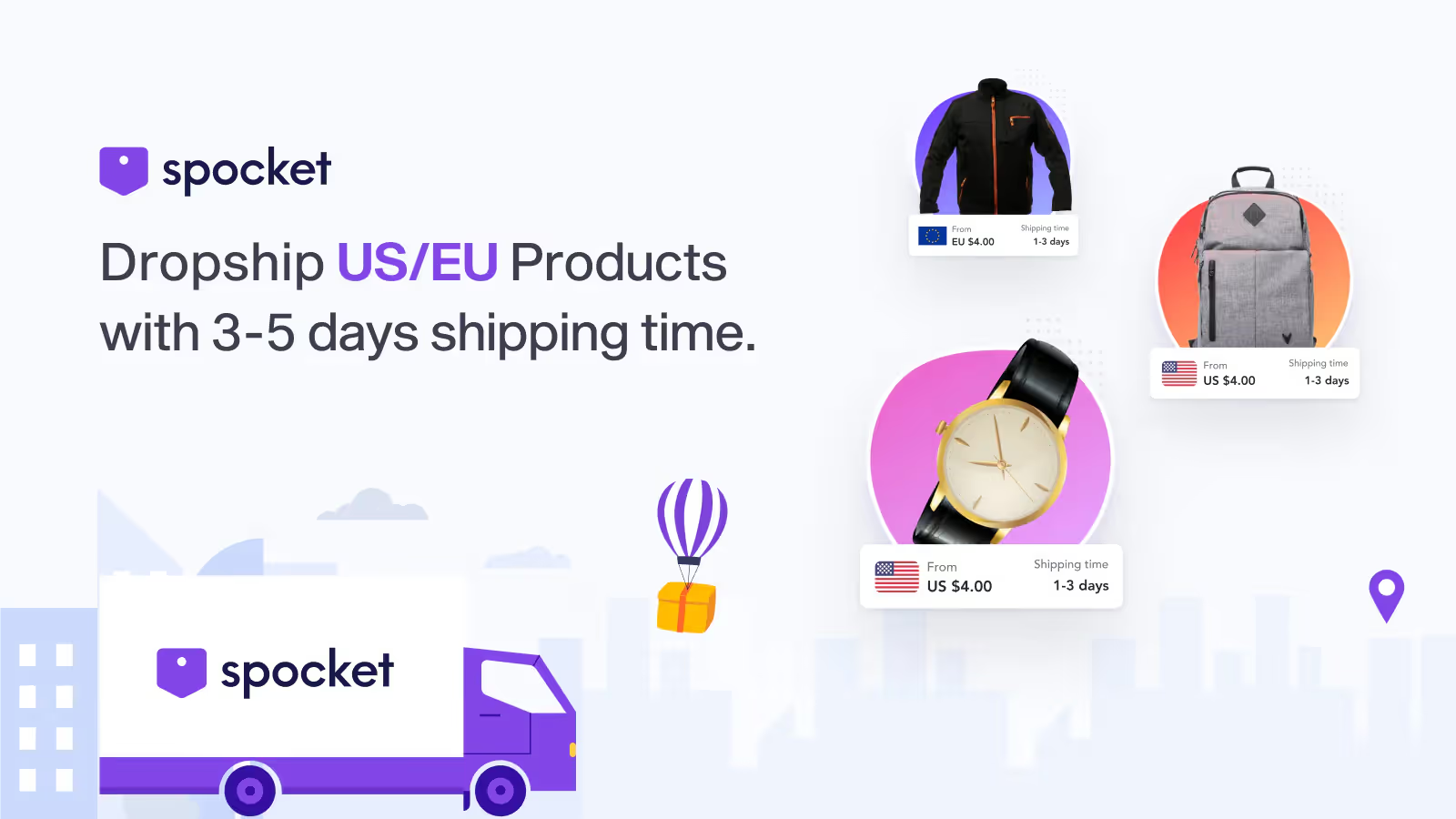
Technology is your best friend in the first year. The right apps automate the boring stuff and help you avoid operational headaches. Here are five tools that can significantly impact your business and help reduce the dropshipping failure rates associated with poor execution.
1. Spocket: Your Gateway to Fast, Reliable Suppliers
If there is one thing that kills first year dropshipping mistakes, it is fast shipping. Spocket connects you with suppliers primarily based in the US and EU. This means your customers get their products in days, not weeks, which drastically reduces refund requests and increases customer satisfaction.
- Branded Invoicing: You can send invoices with your brand logo and colors, making the unboxing experience feel professional and trustworthy. This helps you build a real brand from day one.
- Print on Demand Integration: Spocket isn't just for physical products. You can access a range of print on demand items to create custom merchandise without inventory, giving you more creative control.
- White Label and Private Label Dropshipping: For those looking to build a real brand, you can remove supplier branding and even add your own labels to products. This turns generic items into your own exclusive line, which is a huge step in avoiding common dropshipping failures.
- No MOQs: You are not forced to buy in bulk. Spocket allows you to order single items, which is perfect for testing new products without financial risk.
- VIP Customer Support: As a user, you get access to 24/7 support, ensuring that if a supplier issue arises, you have a team ready to help you solve it.
- Massive Product Catalog: With over 100 million trending products and more than 20 million winning products vetted by the platform, you will never run out of items to test. You can browse the latest trending dropshipping products to see what is currently hot.
- Pricing: The Starter plan begins at $39.99 per month, offering a cost-effective entry point to high-quality, fast shipping suppliers. Plus, they often offer a 7-day free trial to test the waters.
2. AfterShip: Turning Tracking into a Marketing Tool
Shipping anxiety is real. Customers constantly ask, "Where is my order?" Answering these emails manually is a massive time sink. AfterShip automates this process by providing a branded tracking page for every order.
- It sends proactive notifications to customers, so they don't have to email you.
- The branded tracking page is an opportunity for upselling and building loyalty.
- It reduces the "Where is my order?" inquiries by up to 80%, freeing you up to focus on marketing.
3. Klaviyo: The Email and SMS Powerhouse
Most beginners ignore email marketing because they are focused on the "next sale." However, the money is in the list. Klaviyo helps you set up automated flows that turn one-time buyers into repeat customers.
- Set up abandoned cart flows to recover lost revenue.
- Create post-purchase sequences to thank customers and recommend related products.
- Segment your audience so you aren't blasting the same message to everyone.
4. Building High-Converting Landing Pages
Default ecommerce platform themes are limiting. If you want to pass the "Caveman Test" and build pages that actually convert, you need a drag-and-drop builder like PageFly. It allows you to create custom landing pages for specific products without needing to know how to code.
- Build unique product pages that highlight benefits and social proof.
- Create sales pages that focus 100% on a single product, removing distractions.
- A/B test different page layouts to see which one converts better.
5. Loox: Visual Reviews and Social Proof
In the first year, trust is your biggest hurdle. Nobody knows who you are. Loox helps you collect photo reviews from customers. When a potential buyer sees a real photo of a happy customer with your product, the trust barrier crumbles.
- Automate review requests after a purchase is delivered.
- Display beautiful photo reviews on your product pages.
- Turn your happy customers into your best marketing asset.
How to Avoid these Top Dropshipping Mistakes in Your First Year
Knowing the mistakes is one thing. Building a system to avoid them is another. You need a framework that keeps you grounded when the market gets volatile and keeps you focused when you feel like quitting.
- Fall in love with the process, not the paycheck. Shift your focus from "making money" to "learning the system." If your goal is to learn how to read data and build better ads, you will never fail. You will only gather data. The money comes when the skills sharpen.
- Validate with speed, not perfection. Do not spend weeks on a single product. If you have a hypothesis about a product, test it with a small ad budget as fast as possible. The goal is to see if people click. You can worry about branding and perfecting the offer after you have validation.
- Audit your returns like a hawk. Profit is not just revenue minus product cost. It is revenue minus product cost, minus ads, minus returns. Watch your return rate closely. If a specific product has a return rate over 10%, it might be eating your profit, even if it looks like a winner.
- Talk to your suppliers weekly. Do not set your suppliers on autopilot. Order samples regularly. Check their stock levels. Build a relationship with them. If you treat them like a partner, they will prioritize you when things get busy.
Conclusion
The first year of dropshipping is a trial by fire. It is designed to weed out those looking for a quick buck from those serious about building a business. The path is littered with potential errors, from picking the wrong niche and running forgettable ads to partnering with unreliable suppliers. However, the difference between the high percentage who fail and the few who thrive is not luck. It is the ability to spot these dropshipping failures early and pivot.
By treating your store like a real business, respecting your budget, obsessing over data, and using tools to streamline your operations, you can navigate the minefield. Get Spocket to help you out today.
Start your dropshipping business today
Dropshipping Mistakes Beginners Make 1st Year FAQs
What are the most common mistakes made by dropshippers in their first year regarding budget?
The most common budget-related mistake is underestimating the cost of customer acquisition. Beginners often start with $100, thinking it is enough to test products. However, to properly validate a product and gather enough data for an ad platform to optimize, you generally need a more realistic budget. Without enough capital, you risk killing potentially good products before they have a chance to convert.
How can I avoid first year dropshipping mistakes related to shipping delays?
To avoid shipping delays, you must vet your suppliers thoroughly before listing their products. Order samples to see the actual delivery time. Prioritize suppliers located in your home country or region. Additionally, be transparent with your customers by displaying estimated delivery dates clearly on your product page to manage expectations from the start.
Why do rookie dropshipping mistakes with ad creatives happen so often?
Rookie dropshipping mistakes in advertising happen because beginners focus on selling the features of a product rather than telling a story. They create ads that look like commercials instead of content. New sellers also fail to study their competition. The fix is to analyze ads that are already working in your niche and identify what makes the hook engaging.
What are the biggest dropshipping mistakes beginners make when picking a niche?
The biggest mistake is picking a niche based solely on personal interest or chasing a viral trend without market research. This leads to a saturated market where price is the only differentiator. Beginners pick micro-niches where they can solve a specific problem for a specific audience, allowing them to build a brand and escape the race to the bottom.
How high are dropshipping failure rates for stores that don't use supplier vetting?
The failure rate for stores that skip supplier vetting is significantly higher than the average. Unreliable suppliers are a leading cause of business failure. Issues like stockouts, poor quality, and lack of tracking information destroy customer trust and lead to an unsustainable number of refunds and chargebacks.
What are the most common dropshipping mistakes to avoid when scaling a store?
The most critical mistake when scaling is moving too fast without operational systems in place. Beginners often scale ad spend without checking if their supplier can handle the volume. This leads to stockouts and long delays. You must also ensure your customer service is ready to handle the influx of inquiries and that your profit margins can sustain the increased ad spend.


Launch your dropshipping business now!
Start free trial.avif)


Related blogs
Dropshipping Supplier Directory: Where to Find Vetted Suppliers
Browse our directory of vetted dropshipping suppliers across the US and EU, complete with niches, shipping speed, and pricing. Start your free trial today.

How to Negotiate With Dropshipping Suppliers: 9 Tactics That Actually Work
Learn how to negotiate with dropshipping suppliers on price, MOQs, and payment terms. Proven tactics and email scripts to boost your margins. Try Spocket free.

Best Clothing Dropshipping Suppliers: The 2026 Guide
Compare the best clothing dropshipping suppliers for 2026 — US/EU shipping speeds, pricing, and product quality — and find the right fit to launch your store.