Global Trade War: US & EU Suppliers vs Chinese Suppliers
Trade tensions are reshaping US and EU suppliers vs Chinese suppliers. See how sourcing, costs, and compliance affect dropshipping decisions in 2026.


The global trade war is no longer just a political headline. It now affects how online sellers source products, manage delivery timelines, and protect margins. For dropshippers, the choice between US, EU, and Chinese suppliers shapes customer trust, cash flow, and long term stability. Rising tariffs, carbon rules, export controls, and supplier scrutiny are shifting how supply chains operate.

As trade disputes widen, US dropshipping suppliers and EU based partners are gaining attention, while China remains central due to scale and pricing. Understanding how these pressures interact helps sellers choose smarter sourcing paths as 2026 approaches.
What is the Data Saying About EU Overtaking US as China’s Top Source of Trade Disputes?
Recent trade data shows a clear shift inside the EU-China trade corridor. The European Union has overtaken the United States as the largest source of formal trade disputes with China. These disputes are driven by anti dumping probes, subsidy investigations, and regulatory actions tied to semiconductors, rare earth magnets, and display technologies. Chinese trade bodies, including the China Council for the Promotion of International Trade (CCPIT), have publicly criticized these measures as discriminatory.
This shift matters because it signals a broader change in how Europe manages China industrial capacity vs US capabilities. While Washington relies more on tariffs, Brussels is leaning on regulatory controls tied to climate rules, supplier risk labeling, and carbon accounting. The launch of carbon border mechanisms has introduced new reporting burdens that directly affect exporters. For sellers relying on cross border sourcing, this raises compliance costs and adds friction that did not exist a few years ago.
Trade tensions also show up in numbers tied to manufacturing output per capita by country and the U.S. share of global manufacturing over time. While China as a manufacturing powerhouse still dominates volume, Europe is asserting control through standards and enforcement rather than price pressure alone. This approach reshapes sourcing logic for dropshippers serving Western markets.
EU and US Dropshipping Suppliers vs China: Who is Better
China vs US manufacturing comparisons often start with unit price, but pricing alone hides deeper costs. The cost of manufacturing in China vs US production still favors China at scale, especially for electronics and home goods. However, shipping delays, tariff exposure, and compliance paperwork increase the Total Cost of Ownership (TCO). When inventory holding costs rise due to longer transit times, savings can erode quickly.
US manufacturing vs China compared to China also shows gaps in flexibility. Domestic suppliers allow smaller batch runs and quicker replenishment. This reduces cash tied up in stock and lowers risk management pressure when demand shifts. For dropshipping suppliers, these differences shape profitability more than headline unit costs.
Quality Control and Compliance
US and EU suppliers vs Chinese suppliers often differ most on consistency and certification. Domestic and European factories typically align with ISO and CE standards by default. This simplifies market access and reduces post sale disputes. In China, quality can vary across batches unless on site audits and third party inspections are routine.
IP protection also plays a role. Sellers with branded products or custom designs face higher exposure when tooling and molds sit overseas. While many Chinese factories respect contracts, enforcement remains complex. US and EU sourcing offers clearer legal recourse, which matters for long term brand value.
Speed, Communication, and Supply Chain Control
Time zones and language gaps affect daily operations. Misaligned expectations can slow revisions and sampling. US dropshipping suppliers allow direct calls, faster feedback loops, and Just in Time (JIT) manufacturing setups that shorten lead times. This matters when consumer expectations favor fast delivery.
China remains unmatched in material pipeline depth and supplier density. If one factory fails, alternatives exist nearby. This resilience supports scaling, but only when communication and oversight are strong.
How to Find the Best EU and US Dropshipping Suppliers?
Finding verified suppliers in the US and EU starts with clarity on product needs and compliance rules. Many sellers now favor platforms that pre vet suppliers to reduce early stage risk.
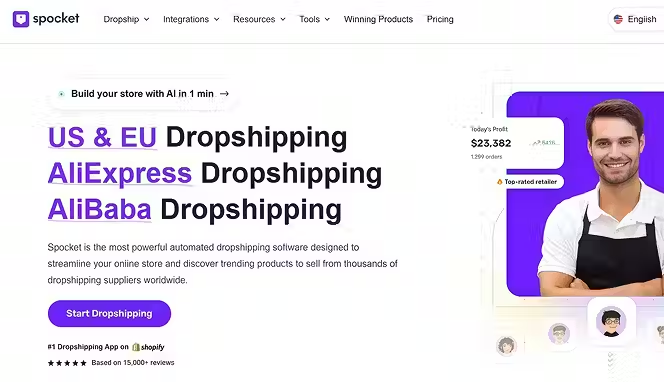
One option is Spocket, which helps you find the best US and EU dropshipping suppliers. You can source trending dropshipping products with no MOQs and access fast shipping in as little as 3 to 7 business days. Spocket also supports Print-on-demand services, white label, and private label dropshipping. Sellers gain access to over 20M+ winning products across niches like tech accessories, footwear, women’s clothing, bath and beauty, and more. Spocket offers a 7 day free trial and a Starter Plan at $39 per month.
Beyond platforms, sellers also rely on industry directories, trade fairs, and direct outreach. Phone calls and factory visits remain common in domestic sourcing. Verified certifications and transparent lead times matter more than flashy catalogs. You can also try free dropshipping directories to locate suppliers globally.
Popular US and EU Dropshipping Products
Product demand shifts when sourcing moves closer to the customer. In the US and EU, buyers often prioritize safety, durability, and compliance over novelty. They like items such as:
- Health and personal care items remain strong due to trust in domestic standards.
- Apparel categories like women’s clothing perform well when sizing accuracy and fabric consistency are reliable.
- Footwear sourced from Europe benefits from craftsmanship perception and lower return rates.
- Home goods with electrical components also gain traction when certified locally.
- Tech accessories sourced domestically reduce failure rates and warranty claims.
- Print-on-demand items sourced within the US and EU support customization without inventory risk. Faster production cycles align with seasonal demand and reduce waste.
Benefits of US and EU Dropshipping Suppliers vs China
US and EU suppliers vs Chinese suppliers for dropshipping bring structural advantages tied to speed, trust, and regulatory alignment. These benefits show up across operations and customer experience.
- Shorter delivery windows: Faster shipping reduces cart abandonment and refund requests. It also lowers inventory holding costs and simplifies demand forecasting.
- Clear compliance standards: Products aligned with ISO and CE rules face fewer border issues. This reduces shipment delays and lowers the risk of forced recalls.
- Stronger IP protection: Local legal systems offer clearer remedies for design misuse. This supports private label growth without constant monitoring.
- Easier communication: Shared language and business norms reduce misunderstandings. This supports smoother revisions and faster product iteration.
When to Source Products from China?
Despite trade tension, China remains central to global supply chains. China industrial capacity vs US output still favors China for complex assemblies and high volume runs. Electronics, furniture, and customized components benefit from dense supplier clusters.
China as a manufacturing powerhouse excels when scale and customization matter more than speed. Sellers targeting lower price segments or global markets often accept longer lead times to protect margins. China vs US manufacturing debates often overlook that many products simply cannot be produced elsewhere at scale.
Risk management becomes critical here. On site audits, third party inspections, and diversified supplier lists reduce exposure. Understanding Minimum Order Quantity (MOQ) requirements also matters.
What Else You Need to Know for 2026
Trade conditions heading into 2026 suggest continued uncertainty rather than full decoupling.
- Regulatory pressure will rise Carbon reporting and supplier risk labeling will expand. This affects EU exports to China 2026 and inbound shipments alike.
- Partial reshoring will continue Reshoring trends support domestic capacity but do not replace China fully. Can USA decouple from China remains an open question.
- Supplier transparency will matter more Verified suppliers with clear documentation gain preference. Buyers will demand traceability across the supply chain.
- Cost comparisons will stay complex Cost of manufacturing in China vs US figures must include tariffs, delays, and compliance costs. Simple unit price comparisons mislead.
How to Mitigate Risk and Build Resilience with China-Based Suppliers?
Here are some steps you can take to mitigate risks when trading with China-based suppliers. They work well and here’s what you should implement:.
- Request Business Licenses: Always ask for a copy of the supplier’s official business license. Don’t limit yourself to just Alibaba verifications.
- Conduct Video Audits: Use real-time video tours of facilities. Don’t just see showrooms; ask to see production lines and quality control stations.
- Use Third-Party Inspection Services: Companies like SGS, Bureau Veritas, or Asia Inspection can conduct pre-shipment inspections for a fraction of potential loss, checking for quality, quantity, and packaging.
- Draft Detailed Contracts: Ensure contracts specify IP ownership, quality standards, defect resolution processes, and liability. Use simple, clear English and Chinese versions.
- Secure Payment Terms: Favor secure payment channels like AliTrade Assurance or use letters of credit for large orders. Avoid large upfront payments; structure payments across milestones (e.g., 30% deposit, 40% after pre-shipment inspection, 30% after shipping).
- Diversify Your Supplier Base: Even within China, avoid relying on a single factory. Develop 2-3 qualified suppliers for critical product categories to maintain leverage and continuity.
- Aim for Realistic Lead Times: Factor in potential delays at Chinese ports, customs, and destination ports. Add a 15-25% buffer to stated lead times in your planning and customer communications.
- Explore Diversified Shipping Routes: Investigate shipping via alternative ports or countries (e.g., trans-shipment through Vietnam or Malaysia) to circumvent congestion, though this adds complexity.
- Stock Safety Stock: For products you must source from China, consider holding a buffer of safety stock in a local US or EU warehouse. This balances lower unit cost with the ability to meet sudden demand spikes.
Don’t Forget Relationship Management
Assign a dedicated point of contact for your key Chinese suppliers. Regular communication via WhatsApp or WeChat builds rapport. Celebrate their holidays, provide clear forecasts, and treat them as partners rather than anonymous vendors. This goodwill can translate into priority service during supply crunches and more honest communication about potential delays.
Conclusion
The global trade war has reshaped sourcing decisions for online sellers. US dropshipping suppliers and EU partners offer speed, compliance, and trust, while China continues to anchor global manufacturing through scale and cost. No single path fits every business. Sellers who understand trade data, supplier risk, and long term cost dynamics can adapt as conditions change. Heading into 2026, flexibility and informed sourcing choices matter more than loyalty to any one region.
Start your dropshipping business today
US Dropshipping Suppliers vs China and EU FAQs
Are US dropshipping suppliers better during the global trade war?
US dropshipping suppliers reduce exposure to tariffs, port delays, and customs checks. Faster shipping supports customer expectations in North America. While unit prices can be higher, savings often appear through lower inventory holding costs and fewer returns, which matters under current trade conditions.
How does EU sourcing compare to China for dropshipping in 2026?
EU sourcing offers regulatory alignment and stable delivery within the region. China still leads in scale and customization. Sellers choosing between them must weigh compliance costs, delivery speed, and market positioning rather than price alone.
Is China still reliable for dropshipping suppliers?
China remains reliable when due diligence is strong. Verified suppliers, clear contracts, and inspections reduce risk. Trade tension increases paperwork and lead times, but China industrial capacity continues to support large volume production.
What products should be sourced from the US instead of China?
Products tied to safety, skin contact, or regulatory scrutiny fit US sourcing better. Health, beauty, and premium home goods benefit from local trust and faster fulfillment, which supports higher price points.
Can the US fully decouple from China manufacturing?
Can USA decouple from China remains unlikely in the near term. Supply chains are deeply linked. Partial reshoring supports resilience, but China vs US manufacturing gaps in scale persist.
How do tariffs affect US and EU suppliers vs Chinese suppliers?
Tariffs raise landed costs for Chinese goods and shift attention to domestic sourcing. However, tariffs alone do not erase China’s price advantage at scale. Sellers must calculate Total Cost of Ownership (TCO) to see real impact.


Launch your dropshipping business now!
Start free trial.avif)


Related blogs
How to Set Up Automated Order Fulfillment With Spocket and Shopify
Set up a smoother Shopify dropshipping workflow with Spocket by connecting your store, importing products, processing orders, syncing tracking, and reducing manual fulfillment tasks.


How to Open a Business Bank Account for Your Dropshipping Store
Set up your dropshipping finances the right way with a dedicated business bank account built for payouts, supplier payments, taxes, and long-term store growth.
Spocket vs Dropified: Which Tool Is Better for Multi-Store Scaling?
Compare Spocket and Dropified for multi-store dropshipping, supplier quality, automation, fulfillment, product sourcing, and scaling across ecommerce platforms.