Enjoy the Ultimate Flexibility: Meet Headless Commerce
Headless commerce gives you freedom to shape every storefront experience. See where it fits into your 2026 tech stack, from CMS choices to real use cases.

Headless commerce has moved from a niche idea to a practical way to run online sales across many channels at once. Instead of fighting rigid templates and slow releases, you separate your storefront from the engine that runs pricing, inventory, and orders. If you notice, this structure lets you change content, design, and customer flows without ripping out the whole system underneath.
In this guide, you will see how headless commerce works in 2026, which platforms matter, where money is made, and how to avoid the traps that stall many projects.
What is Headless Commerce?
Headless commerce is an ecommerce architecture where the “head” (your customer-facing storefront) is decoupled from the commerce backend that holds products, pricing, customers, and checkout flows. The two sides talk to each other through APIs, so the frontend can run on any framework or device while still using the same central commerce engine.
Instead of a single monolithic platform that controls themes, templates, content, and checkout together, a headless ecommerce system treats each part as a separate service. You can run a React web app, a native mobile app, and in-store kiosks all from the same backend, which is why many teams refer to headless ecommerce as “content and commerce anywhere.” If you have ever asked what does headless commerce mean in practice, it simply means that display and logic no longer live in one fixed box.
When people talk about headless ecommerce, they also include the content layer. A headless CMS stores copy, images, and layout data, then exposes everything over APIs so developers can pull content into storefronts, apps, emails, and more. That separation is a big part of modern headless commerce architecture in 2026.
If you compare headless commerce vs traditional commerce, you will notice a mindset change. Traditional platforms treat the storefront as part of the product; headless treats it as one of many clients using the core commerce API. This shift opens the door for experiments, custom flows, and fast redesigns without waiting on backend releases.
Headless Commerce vs Traditional Commerce
Traditional ecommerce platforms bundle catalog, checkout, content, and templates into one stack. That helps during the early stages but turns slow once you add new channels, markets, or complex campaigns.
With headless commerce, you keep a strong backend engine but remove the assumption that the vendor also controls the storefront layer. You can rebuild the frontend with your own stack, swap components, and connect extra services such as search, recommendations, and loyalty tools through APIs.
For many brands, the pros and cons of headless commerce come down to control versus simplicity. The advantages of headless commerce include faster UX changes, true omnichannel delivery, and a cleaner development workflow. The disadvantages of headless commerce include higher setup effort, the need for stronger engineering skills, and more responsibility for monitoring and observability.
Types of Headless Commerce
Do you want to learn about the different headless commerce types? Let’s go over them below:
1. Pure headless commerce
In a pure headless setup, the platform exposes all commerce features only through APIs, with no built‑in storefront at all. You bring your own frontend framework, hosting, and deployment approach, while the platform focuses on products, pricing, customers, and orders.
Pure headless commerce attracts teams that want full freedom over UX and are happy to run their own hosting and pipelines. Enterprise headless commerce projects that span many brands or regions often choose this route because they can standardize the backend while tailoring each storefront.
2. Hybrid headless commerce
Hybrid models keep a default storefront while also providing strong APIs for headless builds. You can run some sites on the native theme layer and spin up headless projects where you need deeper control.
This pattern fits merchants who want to move to headless commerce in phases, instead of one large cut‑over. You can ship a new headless ecommerce experience for one region, channel, or brand while the rest of the business stays on the classic templates.
3. Composable and MACH architecture stacks
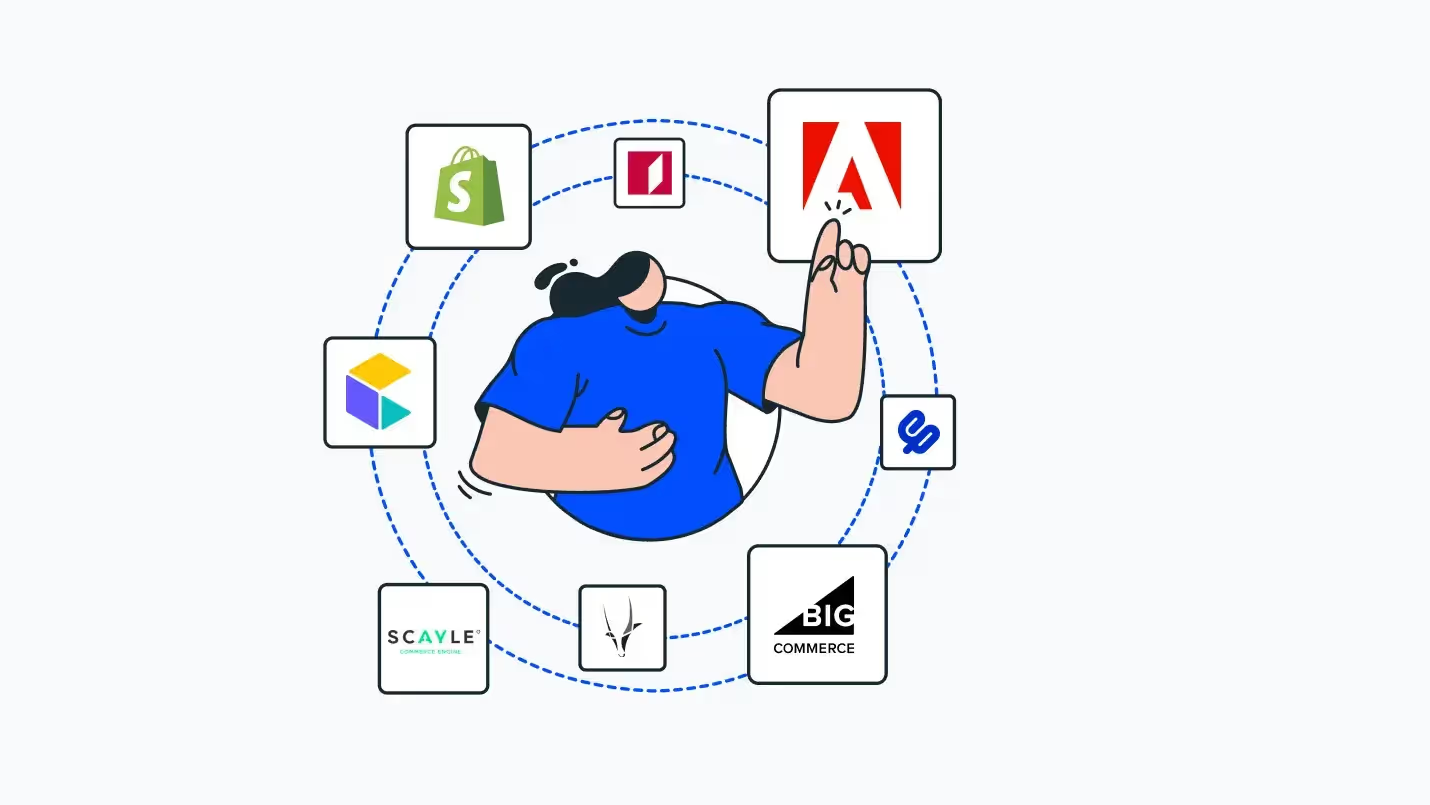
Composable setups go beyond separating frontend and backend by letting you assemble your stack from many independent services. A typical MACH architecture (Microservices, API‑first, Cloud‑native, Headless) connects search, CMS, payments, personalization, and analytics into one commerce experience through APIs.
In 2026, many teams treat composable headless commerce as a way to mix best‑in‑class services without rebuilding the entire stack whenever needs change. You could run a core headless commerce solution, pair it with a separate headless CMS, and plug in services such as tax, fraud, and recommendations as you grow.
How Does Headless Commerce Work?
There’s a lot to cover. But the gist is, here is how headless commerce works:
APIs as the connection layer
Headless commerce relies on APIs to connect every part of the system. The storefront calls APIs for product data, prices, promotions, carts, and checkout, while the backend exposes clear contracts for each operation.
You can add more frontends or services without changing the backend as long as they speak the same API language. That is why teams talk about a headless commerce solution as an API platform rather than just a storefront product.
Headless CMS in the stack
A headless CMS is often the second core pillar in a headless commerce architecture. Instead of locking content to page templates, a headless CMS stores structured entries and exposes them through REST or GraphQL APIs.
If you wonder what is a headless CMS system in this context, think of it as the source of truth for all marketing and product storytelling. Editors manage content there, and your storefront pulls the right pieces at render time to form product listing pages, campaign hubs, and guides.
Preview, releases, and collaboration
Modern headless CMS platforms in 2026 lean hard into real‑time collaboration and live preview. You can have marketers, designers, and developers editing the same document at once, with a shared preview that updates as soon as content changes.
Scheduling, releases, and rollback are also built into mature headless CMS tools. You can group content changes into a release, preview them as a whole, publish on a date, and step back through previous versions if someone overwrites important copy.
Search, AI, and instant responses
Headless ecommerce software in 2026 often pairs content and catalog data with AI‑driven search indexes. These indexes power on‑site search, product discovery, and sometimes answer‑style results that combine content and commerce.
Some headless CMS vendors now ship embeddings‑based search so editors can find and reuse content across models and channels. The same indexing patterns apply to storefront search and merchandising, which is why instant search appears on almost every modern headless CMS feature list.
How Much Money Can You Make in Headless Commerce?
You will not find a single revenue number that fits every headless commerce project, because results depend on traffic, average order value, merchandising, and execution quality. That said, case studies in 2026 show that brands often see better mobile conversion and stronger performance during high‑traffic events after moving away from rigid monoliths.
You can think about return from headless commerce in a few layers. There is the direct revenue uplift from faster pages and better UX, the saved spend from not rebuilding entire platforms every few years, and the strategic impact of shipping new experiences before competitors.
If you need to model upside, you should start with your current funnel numbers and stress points like flash sales, regional launches, or omnichannel campaigns. Then you can compare those pain points against documented headless ecommerce wins, such as handling large traffic peaks or supporting many localized storefronts from one backend.
Most Popular Headless Commerce Solutions in 2026
Here is a list of the top headless commerce solutions in 2026. These are also the best headless commerce solutions this year has to offer for now:
1. Shopify
Shopify Plus combines a familiar admin with a headless‑ready stack built on Hydrogen (React storefronts) and Oxygen (global hosting). You keep Shopify’s payments, tax, and order tools while replacing themes with custom code.
Many merchants treat Shopify headless commerce as an on‑ramp into headless rather than an instant full rebuild. You could start with a new Hydrogen storefront for one country or brand, then migrate others once the model proves itself.
2. BigCommerce
BigCommerce offers a hybrid model with strong APIs, built‑in multi‑storefront support, and good links to popular CMS and DXPs. For many mid‑market merchants, it hits a balance between SaaS simplicity and headless freedom.
BigCommerce headless CMS integrations are common in 2026, especially with headless CMS products that support GraphQL and real‑time preview. You can keep the BigCommerce backend while pairing it with a separate CMS and custom frontend for content‑heavy sites.
You can also plug sourcing tools into your store; for example, BigCommerce dropshipping with Spocket connects your catalog to vetted suppliers without adding another admin surface.
3. Commercetools
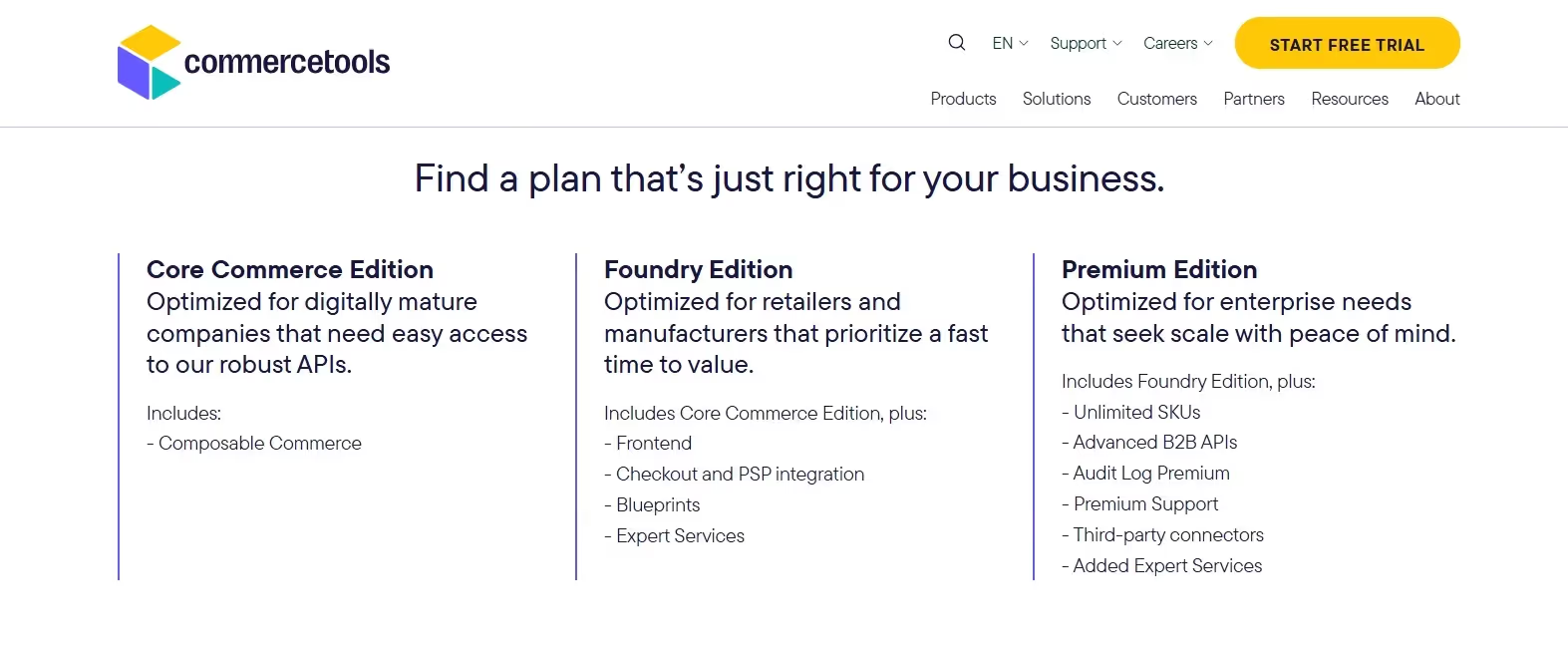
commercetools sits near the top of MACH‑aligned headless platforms for large enterprises in 2026. It offers granular APIs, multi‑tenant capabilities, and strong support for complex pricing and catalog logic.
Teams that already invest in MACH architecture often pair commercetools with a separate CMS and custom orchestration layer. That fit makes it a frequent choice for global brands with many markets, product lines, and integration needs.
4. Adobe Commerce

Adobe Commerce exposes its capabilities through GraphQL APIs and edge delivery tools that support headless storefronts. It appeals most to companies already deep inside Adobe Experience Cloud who want closer ties between content, analytics, and commerce.
5. Salesforce Commerce Cloud
Salesforce Commerce Cloud now offers “Composable Storefront” and a full API layer so teams can run headless commerce Salesforce projects without ditching existing investments. Many B2C and B2B brands use it as a steady backend while migrating frontends one slice at a time.
6. Open‑source headless platforms
Medusa and Saleor are front‑runners for open‑source headless ecommerce platforms in 2026. Both give developers full code access, strong APIs, and active communities that ship plugins and starters.
If you want open‑source headless commerce with tight control over hosting and cost structure, these two are frequent picks. You could start small, add custom logic as you grow, and swap infrastructure providers when needed without a license penalty.
Benefits of Headless Commerce for Businesses
Headless commerce gives you control over UX, content, and integrations without tying every change to a platform release cycle. You can reuse the same backend for many storefronts and channels, while tuning each experience for its audience. That flexibility is hard to reach with classic monoliths. At the same time, you will need stronger technical foundations to keep everything reliable.
- Faster UX and content changes. Product, content, and design teams can ship new layouts, campaigns, and landing pages through a headless CMS without waiting for backend updates. This shortens feedback loops around experiments and lets you respond to trends while they still matter.
- True omnichannel commerce. A headless ecommerce system serves web, mobile, in‑store screens, and new touchpoints from the same backend, which avoids duplicated logic and data. You can meet customers where they already spend time instead of forcing everything through a single storefront.
- Technology choice and MACH alignment. With headless commerce platforms that follow MACH architecture, you can select payment, search, CMS, and personalization tools service by service instead of locking into one vendor bundle. When a tool no longer fits, you can swap it for another API‑based service without a full rebuild.
- Better performance under load. Separating frontend rendering from backend processing makes it easier to tune performance for traffic spikes, launches, and sales events. Brands that struggled with monolith outages often move to headless commerce to protect high‑stakes drops and seasonal peaks.
- Closer link between content and commerce. A modern headless CMS can store rich editorial content alongside structured product data, then send both into the storefront for story‑driven commerce pages. You can build a content marketing strategy for headless commerce that reuses the same assets across campaigns, blog posts, and PDPs.
What is the Future of Headless Commerce?
There’s a lot of stuff going on in the headless world where commerce businesses are concerned. Here are all the headless commerce trends to keep an eye on for the future:
Headless plus composable stacks
In 2026, headless and composable commerce sit on the same road map for many brands. Teams use headless to separate frontend and backend, then adopt composable patterns to plug in specialist tools where they add the most value.
You will see MACH architecture language around more RFPs, especially where global brands want to avoid another decade‑long platform lock‑in. Instead of one vendor owning everything, the commerce engine becomes one service among many in a broader digital stack.
AI‑assisted content and merchandising
Headless CMS platforms now ship AI‑powered authoring, rewriting, and content suggestions inside their editors. Marketers can generate drafts, adapt tone, and restructure pages directly in the CMS, then send them to preview with a click.
That same AI layer often connects to product data, so teams can test rich “commerce plus content” layouts without manual duplication. Answer‑engine‑style search and recommendations also benefit from structured content and catalog data that headless stacks expose through APIs.
Enterprise headless commerce at scale
Large retailers and B2B brands are moving from pilots to broad enterprise headless commerce programs. They standardize on one or two core headless commerce platforms, then roll out many regional or brand storefronts on top.
Vendors respond with more governance, permissions, and observability features so large teams can operate safely across markets. That trend will continue through 2026 as more enterprises treat headless commerce as long‑term infrastructure rather than an experiment.
Headless Commerce Examples
Here are famous headless commerce examples in 2026. Check them out:
1. Nike
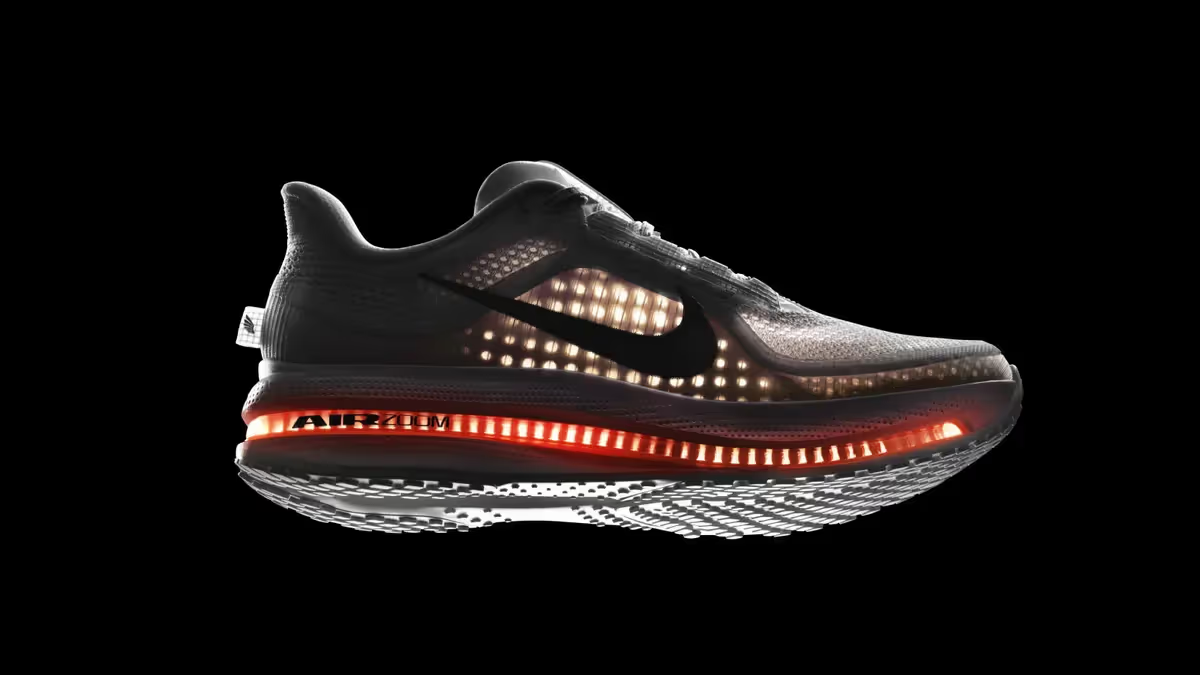
Nike uses a custom headless setup built around a Next.js frontend and internal microservices. This lets the brand run many localized storefronts that still share core services and data.
Nike’s mobile‑first direct‑to‑consumer strategy depends on fast pages and flexible merchandising across product drops. Headless commerce supports that plan by keeping storefront logic separate from the systems that handle orders, inventory, and pricing.
2. Gymshark

Gymshark moved to a Shopify Plus headless setup with a custom React frontend after painful outages on a previous platform. The old monolith could not handle huge traffic spikes during big sales.
With a headless stack, Gymshark can shape promotion flows, handle peak demand, and keep checkout reliable under heavy load. The brand also gains faster iteration on campaigns because the frontend team can move without waiting for backend upgrades.
3. Target

Target used headless commerce patterns to connect multi‑device shopping journeys. Many customers began a purchase on one device and finished on another, and the old stack dropped those sessions.
A decoupled architecture lets Target align cart, account, and content across web, mobile, and store touchpoints. That change raised conversion by making it easier for shoppers to complete the same journey across channels.
A Guide to Open Source Headless Commerce
Here is a guide to open-source headless commerce in 2026 below:
Why open‑source headless commerce matters?
Open‑source headless commerce gives engineering teams full access to source code and system behavior. Instead of waiting on a vendor roadmap, developers can add features, fix bugs, and extend APIs on their own schedule.
Projects like Medusa and Saleor show how open‑source headless commerce has matured by 2026, with active communities, starter kits, and real production deployments. You can self‑host or run them on cloud providers, which keeps cost and performance under your control.
Medusa, Saleor, and MACH
Medusa focuses on a JavaScript‑first developer experience, while Saleor leans on Python and a strong GraphQL layer. Both support API‑first patterns and work well in MACH‑inspired stacks.
Saleor even brands itself as an open‑source MACH ecommerce engine in 2026, signaling how closely it aligns to that style. Teams that want to experiment with microservices and self‑managed infrastructure often start their headless commerce development services around these tools.
Top Headless Commerce Mistakes to Avoid
Many teams fall into the same traps when they first plan a headless project. You could avoid a lot of pain by learning where others went wrong. Here are common missteps that derail projects.
- Skipping content modeling and CMS planning. Treating the headless CMS as “just another tool” leads to unstructured content that is hard to reuse across channels. You should invest early in clear content types, naming, and workflows that match the way your teams actually ship campaigns.
- Ignoring preview and editorial needs. A headless build without fast preview or multiplayer editing turns marketers back into ticket‑filers. In 2026, mature headless CMS platforms provide near‑instant preview, scheduling, releases, and history, and your shortlist should reflect that.
- Over‑engineering MACH architecture from day one. Some teams split everything into separate microservices before they have real traffic or complexity. A better path is to start with a small number of services and grow the stack only when clear needs appear.
- Underestimating monitoring and support. Headless commerce moves responsibility for uptime and performance closer to your team. Without good logging, alerting, and ownership, small issues in one service can quietly affect checkout or search.
- Not budgeting for change management. Moving designers, marketers, and merchandisers into a headless CMS and new workflows takes time. Training, documentation, and clear roles protect you from confusion once the first project goes live.
Common Headless Commerce Use Cases
Headless ecommerce shows up across many business models in 2026. You can apply the same principles to B2C, B2B, marketplaces, or mixed catalog and content experiences. Here are patterns that appear often.
- Content‑heavy brands and publishers. Companies that rely on rich storytelling use headless commerce plus headless CMS to blend articles, video, and product blocks in the same layouts. They avoid the “blog on one domain, shop on another” split that drains SEO and confuses visitors.
- Multi‑region and multi‑brand setups. Groups with many regional sites reuse the same headless commerce engine while adjusting content, currencies, and design per market. They cut duplication and still give each region freedom where it matters.
- B2B portals and custom workflows. B2B sellers use headless commerce to support complex quoting, account structures, and contract pricing that generic storefronts cannot express cleanly. Because the frontend is custom, teams can design flows that fit how buyers actually work.
- Retailers tying stores and digital together. Retail brands connect store inventory, pickup flows, and customer accounts into a single headless backend, then surface that data across web, app, and in‑store devices. This supports use cases like buy‑online‑pickup‑in‑store and store‑to‑door returns without bolt‑on hacks.
How to Get Started with Headless Commerce?
You will get the most from headless commerce when you treat it as a series of clear steps rather than one giant flip of a switch. You should start small, stay honest about team capacity, and grow your stack as you gain experience.
Clarify your headless commerce strategy
First, you need a simple headless commerce strategy that answers two questions: which customer journeys matter most, and which systems must support them. That context keeps you from chasing trends that do not line up with real goals.
You could map your current journeys across web, app, marketplaces, and stores, then mark where monolithic limits block better UX. From there, you can decide which parts of the experience should move to headless first, such as product listing pages, a campaign hub, or a specific region.
Choose your headless commerce platform and CMS
Next, shortlist headless commerce platforms that match your scale, catalog complexity, and preferred languages. Then pair each option with one or two headless CMS candidates that give editors real‑time preview, strong indexing, and sane pricing.
Possible steps:
- List your must‑have features such as multi‑store, multi‑currency, or B2B account structures.
- Filter platforms by 2026 data on market focus, ecosystem, and total cost.
- Compare at least one SaaS option and one open‑source headless commerce engine to understand trade‑offs.
On the CMS side, you should ask what is headless CMS support like for preview, scheduling, media management, and rollbacks. Those are the features that keep marketing teams productive over the long term.
Plan your first headless rollout
Your first project should be small enough to ship in months, but important enough that teams care about the outcome. A brand or region launch, a new content‑rich category, or a high‑margin product line often fits that profile.
Practical steps:
- Define a slim MVP scope for the first headless storefront, with clear “must ship” and “later” items.
- Set up CI/CD, observability, and performance budgets before you open traffic gates.
- Give marketers time in the headless CMS to practice content entry, preview, scheduling, and rollback using test environments.
If ecommerce is only one channel for you, consider how headless commerce development services partners might assist, at least for the first rollout. You can then move more work in‑house once patterns and reference implementations exist.
Connect sourcing and operations
Headless commerce still needs strong product and fulfillment operations underneath. If you run dropshipping, you can keep your storefront decoupled while sourcing products from many suppliers in the background.
Apps like Spocket let you sync products into your catalog while headless frontends control how those products appear, bundle, and upsell. You can also build niche catalogs from trending dropshipping products or add a Print‑on‑demand layer without changing how the storefront renders.
One advantage here is operational flexibility: Spocket has no MOQs, so you can test products without tying up capital in bulk inventory. When you are ready to go deeper on architecture and trade‑offs, Spocket’s headless commerce guide walks through costs, timelines, and when this model makes sense. Sprocket also integrates with Wix, WooCommerce, and other headless e-commerce platforms, so you can connect sourcing and fulfillment into your chosen stack. That way, headless e‑commerce frontends sit on top of proven logistics rather than ad‑hoc spreadsheets.
Conclusion
Headless commerce has matured in 2026 into a clear option for teams that want more control over storefronts, content, and integrations. You no longer have to accept rigid templates or slow release cycles as the trade‑off for a managed platform. If you notice, the strongest results come when brands pair a thoughtful platform choice with realistic scope, solid CMS planning, and careful operational grounding. You can start small, ship something meaningful, and grow into more advanced headless and composable patterns as your business and team are ready.
Start your dropshipping business today
Headless Commerce 2026 FAQs
Is headless commerce worth it for small online stores in 2026?
Headless commerce can suit smaller stores if you already have access to developer skills and a clear need for custom UX or multi‑channel delivery. If you run a simple catalog with a single storefront and few experiments, you may get more value by staying on a classic theme until complexity grows.
What is headless ecommerce vs headless commerce, and do they differ in 2026?
People use “headless ecommerce” and “headless commerce” interchangeably to describe the same architectural idea of decoupling frontend and backend over APIs. Some teams use “headless commerce” for broader scenarios that include B2B, subscriptions, and marketplaces, while “headless ecommerce” often focuses on direct‑to‑consumer storefronts.
How do I choose a headless CMS for commerce projects in 2026?
When you compare headless CMS tools, you should look at real‑time preview, content modeling, collaboration features, and how well they integrate with your commerce platform. Long‑term, the right choice is the one that keeps both editors and developers productive without forcing either side into awkward workarounds.
Are there disadvantages of headless commerce for B2B brands?
Yes, the disadvantages of headless commerce for B2B often include more complex setups, stronger hosting needs, and higher expectations for API stability. B2B buyer journeys can be long and complex, so teams must budget enough time for UX design, permissions, and account management features.
What is headless ecommerce software in 2026, and how is it sold?
Headless ecommerce software in 2026 usually appears in two forms: SaaS platforms that expose APIs plus optional storefronts, and open‑source engines that you host yourself. Pricing varies from usage‑based plans to enterprise licenses, so you should align choices with traffic forecasts and internal engineering capacity.
Why does headless commerce matter for content marketing teams?
Headless commerce matters because it lets content marketing teams reuse stories, images, and videos across sites, apps, and new shopping surfaces from a single CMS. That structure supports richer product education and keeps messaging consistent even as campaigns and channels multiply.


Launch your dropshipping business now!
Start free trial.avif)


Related blogs
Top WordPress eCommerce Themes for 2026
Explore the best WordPress eCommerce themes for 2026. Compare WooCommerce themes by speed, design, features, and dropshipping potential.


Saba Mohebpour Didn't Stop at Spocket: His New $50M Fund, ILA Capital, Is Buying Up Shopify and Amazon Apps
After building Spocket into a major ecommerce platform, Saba Mohebpour is launching ILA Capital with a $50M strategy to acquire Shopify and Amazon apps powering modern ecommerce.

Top Trendsi Alternatives for Fashion Dropshipping
Explore the best Trendsi alternatives for fashion dropshipping, fast shipping, branding, Shopify integration, and reliable suppliers.