How to Do Niche Research for Print on Demand Products: Profitable POD Niches for 2026?
Use AI prompts and keyword tools to spot under-served POD niches that actually sell. Stop guessing and start building a real print-on-demand brand.


You can spend hours scrolling through bestseller lists, reading generic articles, and still feel stuck. The real problem is picking a direction that gives your store a clear identity and enough space to make sales without getting buried. Many new sellers jump into broad categories, spread their designs thin, and watch nothing move. That confusion ends when you apply a repeatable print-on-demand niche research process that surfaces specific, under-served pockets of demand. The following sections walk you through a system that uses free AI prompts, keyword validation, and proven design templates to turn niche research Print-on-demand from guesswork into a straightforward checklist that consistently uncovers a money making niche.
Why a Focused Print on Demand Niche Matters?
When you try to sell hats for dads, pet clothes, and toddler shirts all inside one store, your shop looks scattered. The data that marketplaces use to rank your listings gets diluted across unrelated audiences. With printing on demand, platforms reward shops that develop deep relevance inside a well-defined segment. If your designs consistently speak to a single type of buyer, every new upload reinforces your shop’s authority instead of confusing the algorithm.
A real print on demand niche can be built around a product category, a persona, or a specific hobby. The common thread is that the niche is narrow enough that you can iterate quickly. You list a design, watch the response, and tweak the next one within the same universe. That speed matters because most sellers do not see overnight results. Staying inside a niche you understand keeps your creative energy high while the sales data accumulates.
The best print-on-demand category almost always falls into one of two buckets: occupations and hobbies. Both can be sliced into thousands of profitable sub-niches. If you think of a hobby like cycling, it does not stop there. Within cycling you find adventure cycling, Alabama cycling, Bigfoot cycling, and dozens of other micro-communities that each have their own language and inside jokes. That is where the best print on demand niches live, and where a niche that makes money often hides in plain sight.
The Two Evergreen Niches That Always Sell
If you look at years of sales data across multiple print-on-demand companies, two broad themes keep outperforming everything else: occupations and hobbies. A nurse, a welder, a dog groomer, a fantasy book reader, a CrossFit regular. Each of these identities carries built-in pride, inside humor, and a reason to wear or display something that signals belonging.
This is why so many POD companies and sellers keep returning to these two pillars. You can break “occupations” down into endless sub-lists. Instead of just “nurse,” you get “pediatric night-shift nurse,” “travel nurse,” “labor and delivery nurse.” Each sub-segment searches for different phrases and responds to different design hooks. Hobbies work the same way. “Fishing” gives way to “fly fishing,” “ice fishing,” “bass fishing.” The more specific you get, the fewer print on demand niches are already crowded, and the higher your odds of ranking quickly.
This approach lines up with what many experienced sellers call an evergreen niches for print on demand playbook. People will always have jobs, and people will always have hobbies. The sub-groups inside them shift with culture, but the umbrella never goes stale. This makes them the most reliable evergreen niches for print on demand to build a long-term catalog around.
Step 1: Use ChatGPT to Brainstorm Initial Niche Ideas
The first tool you need for print-on-demand niche research is a free AI assistant that helps you surface interests you may not have considered. Go to ChatGPT and use a specific prompt that guides the conversation instead of dumping 100 generic niches all at once.
Type this prompt exactly:
“I’m trying to pick a niche for my new print on demand business. Please ask me a series of questions one at a time to help me choose the best print on demand niche to enter. Please ask these questions until you feel like you have enough information to make an educated recommendation for a profitable print on demand niche that fits me and has the best shot at business viability.”
What follows is a back-and-forth dialogue. The system will ask you about your personal interests, whether you prefer a broad or narrow audience, if you want seasonal or evergreen demand, and whether emotional connection or aesthetic trends matter more. Each answer refines the recommendation.
One user went through this flow and said they like fantasy books, humor, and specific passionate subcultures. The tool eventually suggested humorous apparel for identity groups such as fantasy book lovers, digital nomads, and introverts. That combination, funny shirts for readers of romantasy novels, pointed to a space with strong emotional ties, growing online communities, and far less saturation than a generic “book lover” shop.
You can ask for a print on demand niches list of identity groups that are not too saturated. The AI will return ideas like plant parents, creative entrepreneurs, urban gardeners, and screen-detox enthusiasts. Each comes with starting design theme suggestions, so you are not left with just a label but with an actual creative direction. This print-on-demand research niche phase turns a vague idea into a solid shortlist of niches for print on demand worth testing.
A second, faster method with ChatGPT is to request a raw list of 50 hobbies or 50 occupations. Then refine it by adding an adjective: “50 outdoor hobbies,” “50 introverted hobbies,” “50 women’s hobbies.” The more creative your adjective, the more unique your list. This gives you a collection of raw print-on-demand ideas that few other sellers have stumbled across. You will never see “urban gardening for introverts” on a generic “top 10 niches” blog, and that is exactly the point. A make money niche often starts with a combination nobody else bothered to write down.
Step 2: Drill Into Sub-Niches with a Keyword Research Tool
A brainstormed list gets you a head start, but it does not tell you what people are actually typing into search bars. That is where a dedicated keyword tool turns niche research Print-on-demand into validated data.
Open a keyword research platform built for marketplaces. One option used by many sellers is Merch Informer and its Keyword Finder feature. Take one of your raw niche ideas, say “cycling,” and paste it into the tool. Switch the results display to 100 entries and scroll.
You will see long-tail phrases people search for, along with estimated monthly search volume and a competition score shown as a letter grade. An A-rated niche means search demand exists but competing designs are few. When “adventure cycling” surfaces with an A grade and roughly 1,500 searches per month, you have found a low competition niches for print on demand candidate. Click the details icon and you get estimated monthly sales and a snapshot of top listings.
Open Amazon or the marketplace you plan to sell on and search “adventure cycling t-shirt.” You will likely find a few generic mountain biking graphics, nothing that directly speaks to adventure cycling culture. The listings that do appear may have reviews, confirming people are buying, but the text and imagery do not match the exact phrase. That gap is your open lane.
Repeat the scan through the full alphabetical list. Alabama cycling, Bigfoot cycling, aero bar cycling. In minutes you can collect three to five high-demand, low-competition sub-niches that generic “top 10 niches” articles never mention. This is how you build a real niche for print on demand that other sellers have not crowded yet. Every POD niche you validate this way becomes a small monopoly waiting for your first listing.
What to Avoid When Choosing a Print-on-Demand Niche
Some niches look attractive on the surface but will waste your time. Spotting them early keeps your print-on-demand niche research moving in the right direction.
- Niches with no emotional hook: If a buyer cannot connect their identity, humor, or deep passion to the product, they have little reason to purchase beyond “I like that graphic.” Emotional resonance drives the impulse buy.
- Overly broad niches with zero sub-angle: “Dog mom” alone is crowded. “Introverted dog mom who would rather read fantasy than go to the dog park” is a sub-niche. Without that sharp angle, your design drowns.
- Markets where every listing looks the same: If a search result page shows 40 nearly identical designs, do not enter unless you have a fresh visual approach or a completely new phrase that changes the conversation.
- Niches tied to risky intellectual property: Meme formats and pop-culture references can spike interest fast, but copyright issues can shut down a listing overnight. Always verify that your concept does not infringe on trademarks or protected content.
- Fads without an evergreen base: A seasonal spike can generate quick cash, but if you want a catalog that compounds, build around sub-niches where some part of the audience is always active, like milestone birthdays or anniversary celebrations.
Proven Design Templates That Work Across Niches
Once you have a list of validated sub-niches, the next bottleneck is design creation. Many sellers slow down because they try to invent a completely new design for each sub-niche. A faster method is to keep a library of proven print-on-demand ideas in the form of adaptable phrase templates. This is where a niche print on demand research template proves its worth, giving you a repeatable way to pair words with demand.
One phrase that has sold across dozens of hobbies: “Introverted but willing to discuss [niche].” For adventure cycling, it becomes “Introverted but willing to discuss adventure cycling.” For Alabama cycling, it is “Introverted but willing to discuss Alabama cycling.” The structure remains the same. Only the niche keyword changes. Because the core sentiment, introvert humor, resonates widely, you can deploy this template across almost any hobby, occupation, or identity group you uncovered in your research.
Other winning templates follow milestone patterns. “Hello 21” birthday shirts tap into a daily, year-round demand that never dries up. Age-specific variations like “Hello 20,” “Hello 10,” “Hello 8” each become their own listing, each targeting a distinct search. By changing a number and a color accent, you turn one design concept into a mini catalog. The same logic applies to anniversary couple shirts: “Happily married since 2010,” “Celebrating 25 years,” “Anniversary at sea.” Each variation targets a different search phrase and buyer.
When you combine a template-driven design approach with the low-competition sub-niches you already validated, you move from research to listings extremely fast. You are not hoping a design works. You are pairing a phrase that has proven buying intent with a niche that has clear, under-served search volume. That is the core of what separates a make money niche from a hobby project. It also answers the question what niche makes the most money: the one where emotional language meets validated search demand.
Top 10 Niches for Print on Demand (2026)
If you want a best niche for print on demand 2026, the list below draws directly from the brainstorming and keyword validation process described above. Each represents a POD niche where demand exists but where personalized, well-targeted designs are still rare. You can treat this as a print on demand niches list to test one by one. These are among the 10 most profitable niches you can enter right now, and they make up a solid top 10 profitable niches starter kit.
1. Adventure Cycling
A-rated competition scores and 1,500 monthly searches on Amazon. Existing designs rarely speak to the emotional identity of an adventure cyclist. Text-based humor and “introverted but willing to discuss” variations fit well. This is consistently one of the most profitable print on demand niches for hobby sub-groups.
2. Digital Well-Being and Screen Detox
A growing cultural movement around reducing phone usage and taking screen-free challenges. Design themes include self-care quotes, tech-addiction humor, and group challenge slogans. This is one of the most under-developed most profitable niches because awareness is rising but product supply lags. As more people seek a make money niche in wellness, this sub-niche stands out.
3. Fantasy Book Lovers (BookTok)
Romantasy readers, “Onyx Storm” fans, and BookTok subcultures have strong online communities. Shirts that reference inside jokes about fictional worlds or late-night reading habits tap into an identity group that buys merchandise to signal belonging. This is a niche that makes money by converting fandom into wearable statements.
4. Milestone Birthday Shirts
“Hello 21,” “Hello 10,” “Hello 8” and their endless age variants. Year-round demand, high personalization potential, and a repeat purchase pattern across friend groups. One design concept branches into dozens of listings, each targeting a separate search term. These are top niches to make money because birthdays never stop.
5. Anniversary Couple Apparel
Searches for “anniversary couple t-shirt,” “10-year anniversary shirt,” and “anniversary cruise shirt” draw buyers in gift mode. Most competition uses generic couple illustrations. Adding a specific year, a location, or a humorous line sets you apart. This is one of the best pod niches for year-round gift purchases.
6. Introvert Humor
A persona-based print on demand niche that attaches to almost any hobby or profession. “Introverted nurse,” “introverted plant parent,” “introverted CrossFit.” The humor lands because introverts recognize themselves in it, and the sub-niche attachment adds the specificity that algorithms reward. This remains one of the best print on demand niches across multiple categories.
7. Kid’s Birthday Party Themes
Parents search for “disco cowgirl birthday shirt,” “three-raccoon party shirt,” and themed birthday outfits for the whole family. Age-number variations and color customizations build a deep catalog from a single concept. This is one of the top niches to make money consistently because children’s birthdays happen every day, making it a money making niche with built-in repeat buyers.
8. Eco-Friendly and Sustainability Advocates
A value-driven identity group that is growing but not yet flooded with merchandise. Design angles include planet-first humor, “plant-based and unbothered,” and subtle graphic statements. The community aspect makes this a strong evergreen niches for print on demand candidate. It fits well within any POD niches list aimed at conscious consumers.
9. Non-Mainstream Fitness Subcultures
Cold shower enthusiasts, biohacking fans, mouth-taping for better sleep. These micro-communities bond over niche wellness experiments. Funny text shirts like “I tape my mouth so you don’t have to hear my opinions” resonate because they feel like insider signals. This is a niche that makes money by blending humor with identity.
10. Local and Regional Pride (e.g., Alabama Cycling)
Geographically anchored sub-niches combine hobby and location. “Alabama cycling,” “Texas kayak fishing,” “Colorado trail runners.” Search demand is real, and competition is often limited to a handful of generic designs that do not speak directly to the regional identity. These are low competition niches for print on demand with built-in community loyalty.
When people ask what is the best niche to make money, the honest answer is the one where you combine real search demand, low design competition, and an emotional angle that prompts a quick buy. The list above gives you ten starting points that match that criteria, and they collectively answer what niche makes the most money in today’s market: a hyper-specific identity with a proven phrase template.
Scaling Your Niche Research with the Right Fulfillment Partner
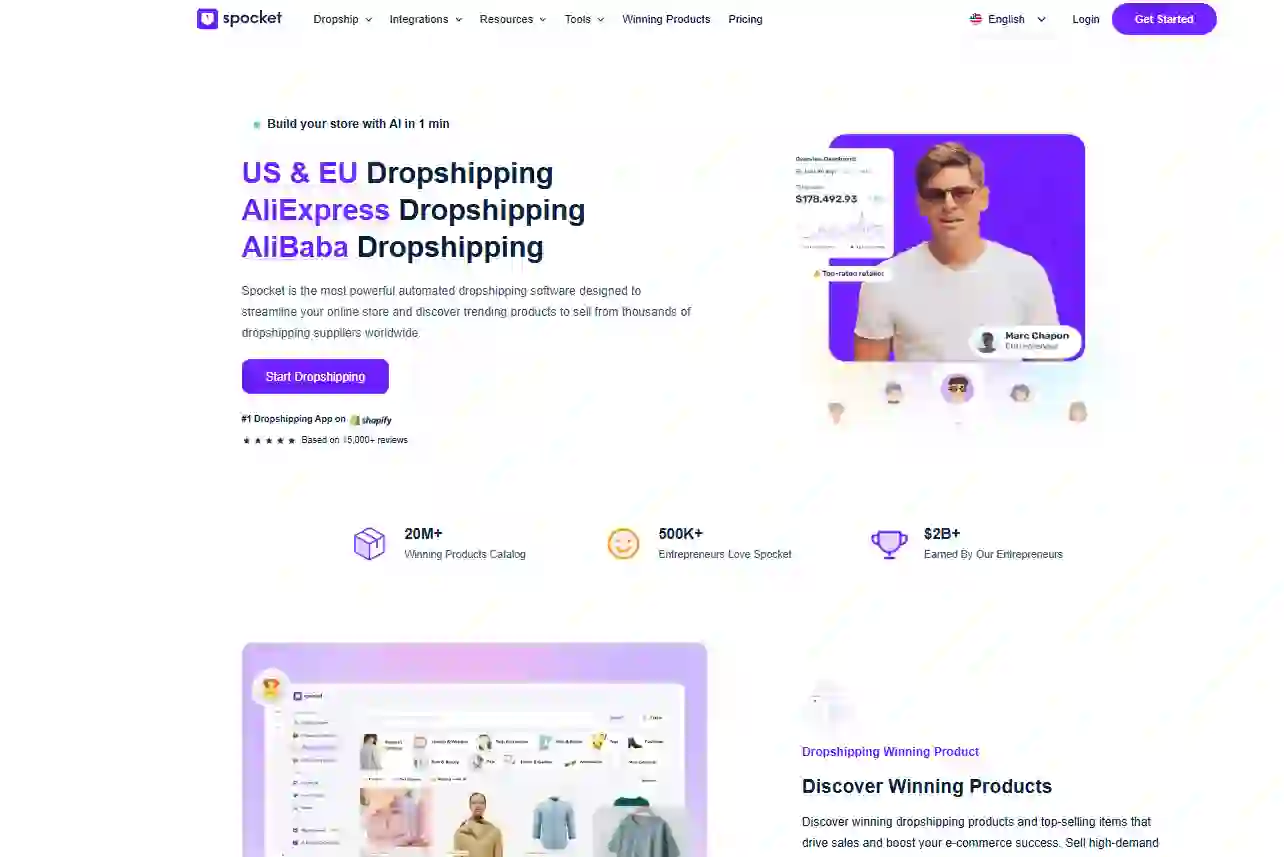
Finding the most profitable print on demand niches is only half the equation. Once your catalog is live, you need a fulfillment setup that does not slow you down with inventory risk or long shipping times. Spocket offers Print-on-demand services that let you test new niche designs without upfront stock. Spocket has no MOQs, so you can add a fresh “Hello 10” birthday shirt or an adventure cycling design and only pay when an order comes in.
If you want to reach buyers across multiple best print on demand sites, the platform supports that out of the box. Spocket integrates with Wix, WooCommerce, eBay, and BigCommerce. That means a single verified niche design can appear on your personal store, on eBay, and on your BigCommerce site without duplicating fulfillment work. For anyone running a print-on-demand niche business, these integrations turn one design into multiple revenue streams across the most profitable print on demand sites available today.
Staying on top of trending dropshipping products helps you spot when a new sub-niche is gaining momentum. Spocket’s dashboard lets you act on those signals quickly, which matters when you are building a catalog of most profitable print on-demand sites products. The combination of a disciplined niche print on demand research template and a fulfillment partner that removes inventory friction creates a repeatable system. You research a sub-niche, launch a handful of template-driven designs, watch the data, and double down on what moves. This is how dropshipping with a print-on-demand angle becomes a scalable business rather than a one-off experiment.
Conclusion
A repeatable print-on-demand niche research process replaces hope with evidence. When you combine AI-assisted brainstorming, keyword validation, and template-driven design, you stop guessing which print on demand niches might work. You start building a catalog where every listing targets a specific, under-served search term that real people type in every day. The stores that grow predictably are not the ones chasing the broadest trends. They are the ones that go narrow, speak directly, and validate before they design. Do that once, and the system works for every new POD niche you want to enter. That is how a niche print on demand research template turns a scattered idea into a repeatable business asset that keeps finding most profitable print on demand niches season after season.
Use Spocket to start Print-on-demand dropshipping today.
Start your dropshipping business today
Print on Demand Niche Research FAQs
What is the easiest way to find low competition niches for print on demand?
Start with a broad category like hobbies, use ChatGPT to list sub-groups, then validate each one in a keyword tool like Merch Informer. Look for A-rated competition scores and real search volume above a few hundred queries per month. Check the live marketplace to confirm that existing designs do not directly match the search phrase.
Should I choose a niche I am passionate about or chase what seems most profitable?
A niche you genuinely enjoy keeps you engaged during the slow early months. If you have no interest in the topic, you will struggle to research the humor, phrases, and design angles that resonate. The most profitable print on demand niches often sit at the intersection of personal interest and validated demand data.
How do I know if a print-on-demand niche is oversaturated?
Search the main keyword on your target platform. If the first three pages show highly polished, review-heavy listings with exact-match text, the niche is likely saturated at the top level. Drill deeper into a sub-segment of that niche until you find a phrase where generic designs still dominate and few listings directly speak to the sub-audience.
How many niches should I target in one store?
Start with one tight niche or a small cluster of related sub-niches that share a common audience. A store selling introvert humor for different professions feels cohesive. A store mixing pet clothes, toddler shirts, and dad hats feels random and confuses both buyers and marketplace algorithms.
Can I build a profitable catalog using only template phrases?
Yes, if the templates are proven sellers and you adapt them to under-served sub-niches. The key is pairing a phrase that already converts with a niche that has low competition. This reduces the guesswork in the early stages while you build enough data to develop original concepts.
What is the best niche to make money in 2026?
There is no single answer, but the most consistent earners come from identity-driven niches with year-round demand, such as milestone birthdays, anniversary apparel, and occupation humor. Pair those evergreen themes with fresh sub-niches like digital well-being or local outdoor hobbies to stay ahead of saturation. That combination answers what is the best niche to make money for most new sellers.


Launch your dropshipping business now!
Start free trial.avif)


Related blogs

Dropshipping Supplier Directory: Where to Find Vetted Suppliers
Browse our directory of vetted dropshipping suppliers across the US and EU, complete with niches, shipping speed, and pricing. Start your free trial today.


How to Negotiate With Dropshipping Suppliers: 9 Tactics That Actually Work
Learn how to negotiate with dropshipping suppliers on price, MOQs, and payment terms. Proven tactics and email scripts to boost your margins. Try Spocket free.

Best Clothing Dropshipping Suppliers: The 2026 Guide
Compare the best clothing dropshipping suppliers for 2026 — US/EU shipping speeds, pricing, and product quality — and find the right fit to launch your store.