


How to Start a Thrift Store Business (for Beginners)?
Thinking about starting a thrift store business in 2026? This guide covers sourcing, permits, platforms, and how to make money as a thrift store reseller.

Second-hand shopping has moved well beyond just the latest trends. Gen Z thrift stores are filling parking lots on weekends, resale apps are packed with buyers, and sellers are quietly earning serious income from items most people walk straight past. Whether you want to start small from your garage or build a thriving online thrift store that runs full-time, the barrier to entry here is lower than in most other business models.
This guide covers everything you need to know about how to start a thrift store business in 2026: picking the right model, finding cool thrift store finds that actually sell, navigating permits, and building a plan that holds up long-term.
What Is a Thrift Store Business?
A thrift store business sources pre-owned, donated, or discounted items and sells them at a markup. The model runs as a physical storefront, an online-only operation, or a combination of both. A brick-and-mortar thrift store accepts donations, prices them, and moves them to walk-in customers. An online thrift store works differently: you source items yourself, photograph them, and list them on resale platforms or your own website.
Starting a thrift store does not require prior retail experience. What it does require is knowing what sells, pricing items accurately, and staying consistent with sourcing and listing. The sellers who grow fastest in this reselling business are not waiting for rare $5-to-$500 flips. They are buying $2 to $5 items and selling them for $20 to $25, week after week, building real volume.
Types of Thrift Store Businesses
Here are the different types of thrift store business models you can explore:
1. Physical Thrift Store
A traditional brick-and-mortar thrift store operates out of a retail space. Inventory comes from community donations, estate sales, or bulk sourcing. You sell directly to walk-in customers. Physical thrift stores have higher startup costs, including rent, fixtures, staffing, and utilities, but benefit from foot traffic, community repeat customers, and the ability to move larger items like furniture at better margins.
2. Online Thrift Store
An online thrift store runs without a physical retail space. You source from Goodwill, Salvation Army, estate sales, and Facebook Marketplace, then list on resale platforms or your own website. No rent, no staffing overhead, and buyers nationwide. This is the lowest-cost way to start a thrift store business with no money or a minimal starting budget, and it is where most new resellers begin.
3. Booth in an Antique Mall
Renting a booth inside an antique mall sits between the two models above. You fill the space with vintage furniture, collectibles, restored pieces, handmade textiles, and cast iron cookware. Monthly rent is typically flat with no commission deductions on sales. Antique malls attract buyers who already know what they are after, so curation matters more than volume here.
4. Consignment and Live Selling
In a consignment model, you sell other people's items and take a cut. You carry no upfront inventory cost. Platforms like Whatnot have turned live consignment selling into a real full-time business for many sellers, generating hundreds of thousands of dollars in annual revenue out of a home garage. Live shows build a buying audience in a way that static listings cannot replicate.
How Does a Thrift Store Business Work?
How do thrift store businesses work? Here’s how:
The Sourcing-to-Sale Loop
The core of the business repeats: source items at low cost, check their resale value, price them correctly, list or display them, and sell. For online resellers, this cycle can turn over in days. The key decision at each step is what to buy and at what price. Experienced thrift store resellers check sold listings on eBay before committing to any purchase. Sold listings show what buyers actually paid, not just what sellers hope to get.
Single-Platform vs. Multi-Platform Selling
New resellers often start on one platform and expand over time. eBay handles the widest range of categories. Depop skews toward vintage and Gen Z-oriented styles. Running multiple platforms simultaneously puts the same inventory in front of more buyers without requiring additional sourcing.
Best Thrift Store Business Ideas in 2026
Here are some of the top thrift store business ideas you can check out. They all work wonderfully this year:
1. Online Reselling on Marketplaces
This is one of the most accessible paths to starting a thrift shop or online reselling operation without a large upfront budget. You source from local stores and list on eBay, Poshmark, Mercari, and Depop. Branded shoes like Hoka and On Cloud, Ralph Lauren polos, Brooks Brothers shirts, Tommy Bahama shirts, and vintage Levi's are all consistent sellers. You can learn how to sell on Poshmark on your own.
If you want to add new products alongside your thrifted inventory without carrying extra stock, Print-on-demand lets you sell custom-designed items that are printed and shipped when orders come in.
2. Dropshipping Alongside Thrifted Goods
If you want to know how to open a thrift store online without physically sourcing every item, pairing thrift reselling with dropshipping is a practical move. You build a store around a vintage or secondhand aesthetic, stock it with dropshipped products, and supplement with items you personally source. This keeps your store active even during slow sourcing weeks.
3. DIY Flip Business
Some of the strongest thrift store resellers focus on transforming items. A $2 candle stand missing its cups, repainted and fitted with thrifted teacups and hand-poured candles, becomes a saleable cottage-style piece worth several times its original cost. Frames, oil cans, shadow boxes, wire baskets, and painted canvases all work well for this model and photograph beautifully for online listings.
4. Consignment and Live Selling
Consignment removes upfront inventory cost entirely. You take a percentage when items sell. Live selling on platforms like Whatnot builds an audience fast, especially for clothing and collectibles, and drives faster sales than static listings ever will.
Thrift Store Business Examples
Check out these thrift store examples for businesses:
The High-Volume Garage Reseller
Some of the most transparent examples of what a thrift business can become come from sellers who operate entirely out of their home. Running eBay, Poshmark, Mercari, and Whatnot simultaneously, with sourcing done at local thrift stores several days per week, this model scales to six figures annually without a warehouse or staff. The inventory system is simple: everything is photographed, labeled, and stored by category, with shoes in bins and clothing in sorted racks. Buying $2 to $5 clothing items and flipping them for $20 to $25 is the engine. Consignment live shows on Whatnot add a second revenue stream that requires no additional sourcing.
The Vintage Furniture Restorer
A furniture-focused thrift reseller spends mornings hitting Goodwill locations, Salvation Army stores, and Facebook Marketplace looking for mid-century pieces, antique dressers, and signed artwork. A Roy Hill Brazilia gentleman's chest of drawers bought at market price for restoration can sell for nearly double once refinished, and the restoration process itself creates content that generates additional income through YouTube ad revenue and brand sponsorships. Even a $10 signed painting from 1962 has resale potential in the $200 to $300 range depending on the market. This model works best when paired with an online audience that follows the restoration process.
The Antique Booth Seller
Booth sellers inside antique malls focus on sourcing items that fit a consistent aesthetic: vintage brass animals, cast iron cookware, handmade afghans in desirable colors, and collectible pennants. A handmade afghan bought for $5 to $8 can resell for $30 to $40. A cast iron skillet at $5 has sold for $100 to $200 depending on the maker. The booth acts as a curated gallery rather than a clearance rack, and pricing reflects the curation.
Best Thrift Store Products to Sell Online Now
Not every thrift store find is worth reselling. Knowing which categories have real demand and what specific items move quickly is what separates a casual shopper from a productive thrift store reseller.
1. Athletic Shoes
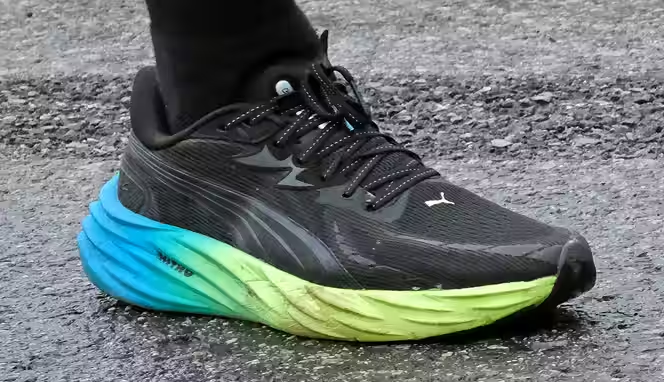
Athletic shoes are one of the most reliable categories. Hoka, On Cloud, Nike Air Vapormax, Jordan sneakers, and Allen Edmonds dress shoes all sell well. Check the tread before buying: dirty uppers clean up, but worn soles cannot be fixed. Shoes bought for $8 to $25 regularly sell for $35 to $60. On Vapormax models specifically, squeeze the sole before purchasing. A popped air bubble makes the shoe unsellable at any price.
2. Branded Clothing
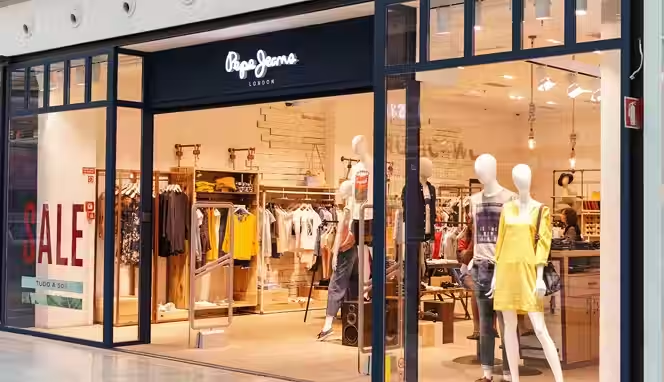
Branded clothing is the bread-and-butter of most online thrift resellers. Ralph Lauren, Brooks Brothers, Lululemon, Vori, Tommy Bahama, and Holderness and Bourne move consistently on eBay and Poshmark. Linen and cashmere blends, larger sizes (2XL and up), and all-over print patterns sell faster and for higher prices than plain common styles.
3. Vintage Furnishings and Antiques

Vintage furniture and collectibles take more time but deliver stronger returns. Signed original artwork, mid-century dressers, Green Bay Packers memorabilia, Pyrex sets, handmade afghans, and cast iron cookware all have active buyer markets when priced right.
4. DIY Home Decor

DIY-transformed home decor is a growing category: repurposed candle stands, styled wire baskets, repainted picture frames, and oil cans dressed with faux flowers sell at a premium over raw thrift store prices.
Where and How to Find the Best Thrift Store Products?
Check trending dropshipping products on Spocket to get a real-time read on what product categories buyers are searching for alongside vintage finds. Here is where else you can find the best thrift store products for your online store:
1. Goodwill and Salvation Army

Goodwill and Salvation Army are the two most reliable sourcing spots for new and experienced resellers. Timing matters more than most people realize. Many stores rotate color-coded discount tags on set days, with some tags at 50% or 75% off. Arriving when the store opens on discount tag days gives you first access to fresh stock before other resellers do.
Go through every rack. Resellers who skim racks consistently miss profitable items. The work is feeling fabrics, checking brand labels, and inspecting condition on each item. Doing that on every piece is what the job actually requires.
2. Facebook Marketplace and Estate Sales
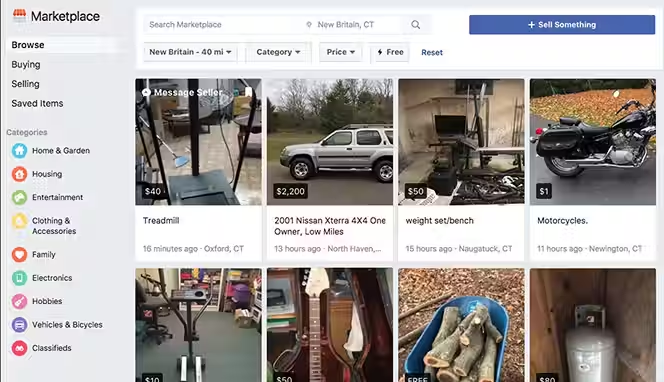
Facebook Marketplace delivers furniture deals, bulk lot purchases, and mid-century collectibles at prices with real profit room. Estate sales carry higher-quality inventory: vintage clothing, signed artwork, and name-brand items being cleared out by families. Planning sourcing days around estate sale listings in your area adds a different tier of inventory to your supply. Check out our Facebook Marketplace dropshipping guide.
3. Small and Church-Run Thrift Stores

Independently operated thrift stores often see less competition and price items more aggressively to clear space quickly. These locations are overlooked by resellers focused only on national chains, which creates a consistent advantage for those willing to travel further. Whether you are opening a thrift store in LA, opening a thrift store in Canada, opening a thrift store in Europe, or opening a thrift store in the UK, the same principle applies: smaller independently run stores often have better pricing and lower competition than large chain operations.
4. Thrift Store Product Market Research
Good thrift store product market research starts with checking sold listings on eBay, not active ones. Learn the latest product market research techniques for thrift shopping and selling. Sold listings show what buyers actually paid. Active listings show only what sellers are asking. Filter by "Sold Items," compare condition and size, and let the data drive every buying decision. This discipline is what makes opening a thrift store with real margins possible rather than guessing at what might sell.
Thrift Store Business Plan: A Complete Guide
A solid thrift store business plan keeps your operation from running on guesswork. Before spending anything, get clear on the following:
- Business model: Are you selling on marketplaces, running a booth, building an online storefront, or a combination?
- Startup budget: Online reselling can start under $100. A physical store needs a lease deposit, fixtures, signage, and working capital.
- Sourcing schedule: Which stores, how often, and which categories are your focus?
- Sales platforms: eBay, Poshmark, Mercari, Depop, Whatnot, and your own site each reach different buyer pools.
- Pricing rules: Buy only at prices that allow you to at least double your money. Volume builds the business more reliably than single high-ticket wins.
- Thrift store marketing plan: Post sourcing content on Instagram and TikTok, show before-and-after transformations, and write specific SEO-optimized product titles to pull organic traffic from listings.
For your own storefront, BigCommerce, Wix, and WooCommerce all integrate with supplier tools that extend your product range beyond what you can source manually.
What Permits Do You Need to Open a Thrift Store?
What permits do I need to open a thrift store online or in person depends on your location and business structure.
In the US, most sellers need a general business license and a seller's permit or resale certificate, which lets you buy goods for resale without paying sales tax upfront. Physical retail locations may require zoning permits.
- How to start a thrift store business in Texas: Register with the Texas Secretary of State and get a sales and use tax permit through the Texas Comptroller's office.
- How to start a thrift store business in California: Get a seller's permit from the California Department of Tax and Fee Administration, plus a local business license from your city or county. Opening a thrift store in LA may require additional city-level permits depending on neighborhood zoning.
- Opening a thrift store in the UK: Register with HMRC as self-employed or set up a limited company, and register for VAT once revenue crosses the current threshold.
- Opening a thrift store in Canada: Register your business provincially and apply for a GST/HST number once annual revenue hits the federal threshold.
- Opening a thrift store in Europe: Requirements vary by country, but VAT registration is standard once sales reach the applicable threshold in most EU member states.
- Opening a thrift store in USA broadly: Check city or county licensing requirements, especially if your location accepts and resells donated goods.
How Much Money Can You Make with a Thrift Store Business?
Thrift store owner salary in 2026 spans a wide range depending on model, volume, and how consistently you source and list.
Part-time online resellers sourcing a few days per week typically earn $500 to $2,000 per month. Full-time sellers running eBay, Poshmark, Mercari, and live Whatnot shows can push six figures annually. According to data from BusinessDojo, urban physical thrift store owners in high-traffic areas earn between $58,000 and $162,000 annually, while smaller rural operations typically see lower revenue due to reduced foot traffic.
The sellers who consistently make money from thrift stores are not chasing single wins. They are buying $2 to $5 items, flipping them for $20 to $25, and repeating that cycle daily. Consistent volume is the actual driver of income in this model.
Pros and Cons of Opening a Thrift Store
Before diving into all the advantages, it is worth seeing the full picture. Understanding the pros and cons of opening a thrift store upfront prevents surprises after you have already committed time and money.
Pros
- Low startup costs, particularly for online models where listing is free and fees are only charged on sales
- Location independence: the online model lets you source anywhere and ship from home
- You can start a thrift store business for free using AI tools to generate listing descriptions, pricing research, and social media content without adding any cost
- Strong per-item margins when you source smart: 200% to 400% returns on individual items are common
- Growing demand, particularly among younger buyers who treat secondhand shopping as their default
Cons
- Sourcing is time-consuming and unpredictable. Some days, you come back with nothing worth listing.
- Inventory sits unsold when you misjudge the market or skip the sold-listing research step
- Physical stores carry ongoing overhead costs that do not pause during slow sales periods
- Competition inside popular thrift stores is increasing as more resellers enter the space each year
Benefits of Running a Thrift Store Business
Starting a thrift store business in 2026 offers practical advantages that are genuinely difficult to match in most other retail models. You do not need a product manufacturer, a warehouse, or a team to get going. The income potential is real at multiple levels of commitment, from part-time side income to full six-figure operations.
- Low barrier to entry. Online reselling requires almost no upfront investment. You list on free platforms and pay fees only when items sell.
- Flexible schedule. You decide when you source, when you list, and how fast you want to grow. There is no fixed schedule requirement.
- AI cuts your workload. AI tools now handle listing copy, pricing comparisons, and even social captions. Knowing how to start a thrift store business for free using AI means running a polished operation without hiring anyone.
- Strong demand from younger buyers. According to ThredUp's 13th Resale Report, the U.S. secondhand apparel market grew 14%, outpacing the broader retail clothing market by five times. Gen Z and millennials are projected to spend nearly half their apparel budget on secondhand goods in the next twelve months.
- Multiple revenue streams. One sourcing session can yield items for eBay, Poshmark, Whatnot live shows, and your own website simultaneously.
Most Popular Thrift Store Reselling Platforms in 2026
Here are some of the most popular thrift store reselling platforms in 2026. Try them out:
1. eBay

eBay remains the most versatile resale platform for thrift resellers. It handles clothing, shoes, collectibles, vintage furniture, electronics, and sports memorabilia in one place. The sold-listing filter makes thrift store product market research fast and reliable. eBay's broad buyer pool means niche items that might not move on fashion-focused platforms sell quickly here.
2. Poshmark
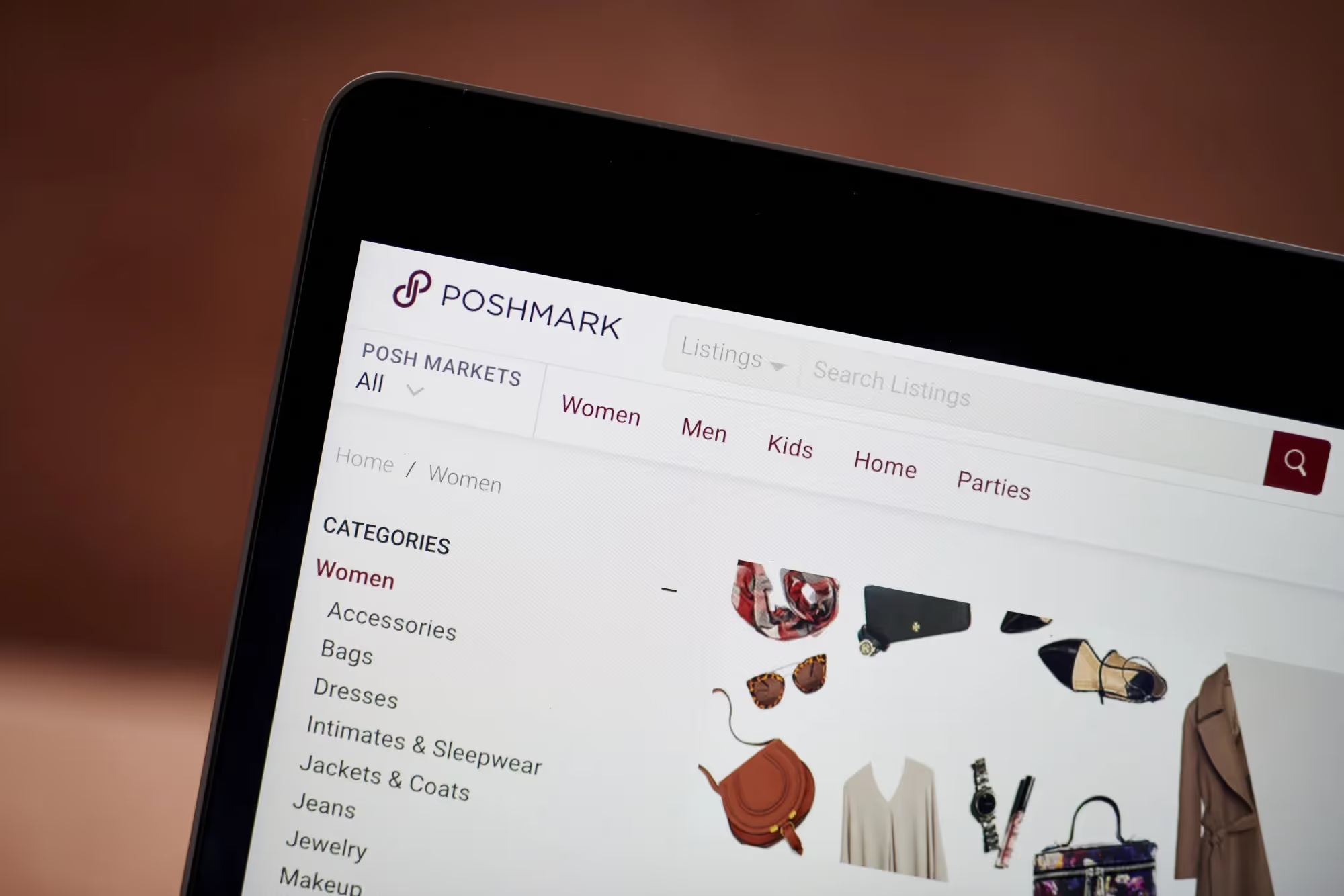
Poshmark is strongest for women's fashion, designer items, and brand-name clothing. The platform's social features, including follows, likes, and shares, reward sellers who engage consistently. Ralph Lauren, Brooks Brothers, Lululemon, and Tommy Bahama all perform well here.
3. Mercari

Mercari covers a broad mix of categories with a simpler listing process than eBay. It attracts buyers looking for everyday brands at a discount, which makes it a good secondary platform for clothing and shoes that might be slower to sell on more specialized platforms.
4. Whatnot

Whatnot's live selling format turns the resale experience into an event. Sellers who build a following on the platform can move large volumes of clothing, shoes, and collectibles in a single live show. Consignment selling through live shows is a natural extension of how to open a thrift store online and scale it without needing a large inventory of your own.
Common Thrift Store Business Use Cases
Thrift businesses operate in more contexts than most people expect. The model is not limited to charity shops accepting donations. It shows up in garages, on phones, at antique booths, and inside custom-built online stores.
- Part-time resellers source on weekends and list on eBay or Poshmark to earn $500 to $1,500 per month alongside a day job. Shoes and branded clothing are the most common starting categories.
- Full-time garage operations run inventory from multiple sourcing channels, sell on five or more platforms simultaneously, and generate six figures annually. Whatnot live shows add a real-time selling layer that accelerates income.
- Furniture restorers source mid-century pieces at estate sales, refinish them, and sell for double or more on Facebook Marketplace or through an antique booth. The restoration process also generates content-based income.
- DIY flippers transform cheap thrift finds into styled home decor, sell on Etsy or Poshmark, and document the process on TikTok and Instagram to build an audience that buys directly.
- Hybrid online store owners combine personally sourced thrifted items with dropshipped products to keep their store stocked and active. This is a practical way to make money online from a thrift business without being entirely dependent on finding enough inventory each week.
What Is the Future of Thrift Stores?
Here is our forecast. We have drawn from the latest industry research and multiple sources online. This is what the future of thrift store businesses looks like:
1. Gen Z Driving the Secondhand Default
Gen Z thrift stores and online resale platforms are growing because younger buyers treat secondhand as their first choice, not a fallback. According to ThredUp's latest data, Gen Z and millennials are expected to spend nearly 46% of their apparel budget on secondhand over the next twelve months. That generational shift is not reversing. Social platforms like TikTok are turning individual thrift sellers into full businesses by making sourcing and reselling content naturally engaging and shareable.
2. AI Making the Business Cheaper to Run
AI tools are changing how resellers price, list, and market. You can now generate product descriptions, identify brand value from photos, automate pricing based on real-time market data, and create social content without manual effort. Knowing how to start a thrift store business for free using AI means running a more competitive operation without paying for staff or software subscriptions.
3. Trade Policy Creating Demand
ThredUp's Resale Report found that 59% of consumers say if new trade policies make apparel more expensive, they will shift more spending toward secondhand options. This positions thrift reselling as a business model that benefits from economic pressure rather than being hurt by it, which is unusual for any retail category.
Top Thrift Store Business Mistakes to Avoid
New resellers and store owners tend to make the same early mistakes. Knowing these in advance cuts out months of expensive trial and error when you are first starting a thrift store.
- Buying without checking comps. Picking up items based on gut feeling rather than eBay sold data leads to unsold inventory piling up in corners. Check comps before every single purchase without exception. This is the single most important habit in the business.
- Pricing too high and waiting it out. Overpriced listings do not sell. Pricing at the lower end of sold comps moves items faster, keeps cash flowing, and lets you buy more inventory sooner.
- Missing condition problems during sourcing. Worn soles on shoes, stains on clothing, chips on collectibles, and missing parts on furniture all tank resale value. Catching these at the thrift store costs nothing. Missing them costs you the purchase price plus the listing time.
- Skimming the racks. Going through every single piece is what the job requires. Resellers who skim consistently miss profitable items that those willing to check everything will find. The resellers who complain about never finding anything are usually the ones not doing the actual work.
- Sourcing only one category. Specializing makes sense eventually, but early on, wider sourcing teaches you faster which categories carry the best margins in your specific area.
- No thrift store marketing plan. Great inventory sitting without traffic does not sell. Consistent content on TikTok and Instagram builds both followers and buyers over time without paid advertising.
How to Start a Thrift Store Business Online?
Whether you are asking how do I start up a thrift business from home or how to start a thrift store with no prior retail experience, the process follows the same steps. You do not need to figure out everything at once. Get one step working before moving to the next.
Step 1: Choose Your Starting Model
Decide whether you are starting as an online marketplace reseller, a booth seller, a physical store operator, or a hybrid. For most beginners, starting online is the least risky entry point because costs are low and you can test the market before committing to any overhead.
Step 2: Source Your First Inventory
Visit Goodwill or Salvation Army with a small test budget of $50 to $100. Focus on recognizable brands in shoes and clothing. Inspect condition carefully: check tread on shoes, look for staining on clothing, confirm working parts on collectibles. Use eBay's sold listing filter on your phone before buying anything.
Step 3: List Every Day
Consistent daily listing outperforms sporadic large batches. Resale platforms reward sellers who list regularly with better search visibility.
- Set a daily listing target and stick to it, even if it is just three to five items
- Write specific product titles that include brand name, size, color, and condition
- Photograph against a clean background in natural light
- Price at or just below the lower end of recent sold comps to move inventory quickly
Step 4: Set Up Your Own Store
Once you know what sells, creating your own storefront lets you own the customer relationship outside third-party platforms. Sign up on Spocket to access verified suppliers who can supplement your thrifted inventory with new products. Spocket has no MOQs, so you can test new products without committing to bulk purchases upfront.
If you want full control over your store's design and backend architecture as it scales, a headless commerce setup gives you the flexibility to build a custom storefront while relying on a solid fulfillment backend.
Step 5: Build Your Marketing Presence
Your thrift store marketing plan does not need to be complicated. Post content that shows your sourcing process, the items you find, and before-and-after transformations. This type of content performs well on TikTok and Instagram organically and pulls in buyers who follow your sourcing journey before they ever visit your store.
Make money online from a thrift business long-term by treating content as a consistent part of the operation, not an afterthought you get to when there is spare time.
Conclusion
The path to a profitable thrift store business in 2026 is open to anyone willing to source consistently, price accurately, and list without stopping. You do not need a big budget, retail experience, or a warehouse to begin. Whether you are starting a thrift store from your living room, opening a thrift store in USA or the UK, or scaling a garage operation into six figures, the same rules apply: know your products, know your market, and show up every day. The income follows volume and consistency far more reliably than it follows luck or a single rare find. Find the best dropshipping products for your thrift store business today with Spocket!
Start your dropshipping business today
How to Start a Thrift Store Business FAQs
How do I start up a thrift business with no experience?
Visit a local Goodwill or Salvation Army and look for branded clothing, shoes, and small collectibles. Before buying anything, check eBay's sold listings to confirm there is an active buyer market for the specific item. List on eBay or Poshmark, pay attention to what sells and what does not, and adjust your sourcing accordingly. No prior retail experience is required, but consistent thrift store product market research before each purchase is what separates profitable resellers from those who sit on dead inventory.
What does it take to start a thrift store business online in 2026?
You need a sourcing habit, a resale platform account, a phone with a decent camera, and a small starting budget for inventory. How to start a thrift store business online in 2026 is more accessible than ever because free platform accounts, AI listing tools, and sold-listing data are all available at no cost. Pick one platform, source from local thrift stores, and list items consistently. Once income grows, you can add platforms and create your own website.
How do I open a thrift store in the USA with a tight budget?
Opening a thrift store in USA as an online operation requires very little upfront. Source from Goodwill or Salvation Army with $50 to $100, list for free on eBay or Poshmark, and reinvest profits into more inventory. A physical retail location requires more capital for a lease, fixtures, and signage, but starting online-first lets you learn the market before committing to that kind of overhead.
What thrift store products sell the fastest online?
Branded athletic shoes from Hoka and On Cloud, name-brand clothing from Ralph Lauren, Brooks Brothers, and Lululemon, vintage Levi's, handmade afghans in desirable colors, and mid-century collectibles all move quickly online. The fastest-selling items tend to be in popular sizes, great condition, and sought-after colorways or styles. Always confirm active demand by checking eBay sold listings before buying to avoid dead inventory taking up space and cash.
How much does a thrift store owner make in 2026?
Thrift store owner salary in 2026 varies widely based on scale and model. Part-time online resellers typically earn $500 to $2,000 per month. Full-time sellers working across multiple platforms and running live shows can generate well over $100,000 annually. Urban physical store owners in high-traffic areas can earn between $58,000 and $162,000 per year. Income is directly tied to how consistently you source, list, and manage inventory.
Do I need permits to sell thrift items online?
Yes, in most places. You typically need a business license and a seller's permit or resale certificate. What permits do I need to open a thrift store online will vary by state, so check with your local government before selling at volume. How to start a thrift store business in Texas and California both involve state-specific permits through their respective tax and business registration portals, both of which have online registration options.


Launch your dropshipping business now!
Start free trial.avif)


Related blogs
How to Set Up Automated Order Fulfillment With Spocket and Shopify
Set up a smoother Shopify dropshipping workflow with Spocket by connecting your store, importing products, processing orders, syncing tracking, and reducing manual fulfillment tasks.

How to Open a Business Bank Account for Your Dropshipping Store
Set up your dropshipping finances the right way with a dedicated business bank account built for payouts, supplier payments, taxes, and long-term store growth.
Spocket vs Dropified: Which Tool Is Better for Multi-Store Scaling?
Compare Spocket and Dropified for multi-store dropshipping, supplier quality, automation, fulfillment, product sourcing, and scaling across ecommerce platforms.
