Guide to Write Dropshipping Welcome Email Sequences That Convert
Learn how to write high-converting dropshipping welcome email sequences that boost engagement, build trust, and drive first-time sales.
.avif)

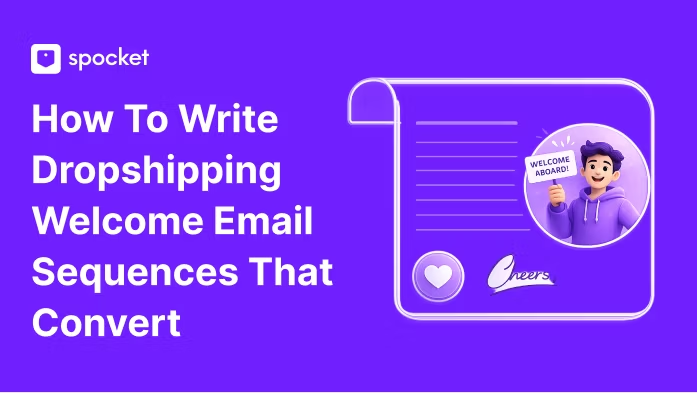
Your first interaction with a customer can make or break your dropshipping business—and that’s exactly where dropshipping welcome email sequences come in. Instead of relying on a single generic email, successful stores use a strategic series of messages to build trust, showcase value, and guide customers toward their first purchase. With rising competition in ecommerce, simply getting traffic isn’t enough; you need to nurture it effectively. A well-crafted welcome sequence can increase open rates, boost conversions, and turn casual visitors into loyal buyers. In this guide, you’ll learn how to write high-converting email sequences that not only engage your audience but also drive consistent sales for your dropshipping store.
Why Dropshipping Welcome Email Sequences Matter
A visitor may forget your store minutes after signing up. A strong dropshipping welcome email sequence keeps the conversation going, builds trust, and nudges them toward a first purchase. Email also remains one of the strongest owned marketing channels, with many brands seeing $10–$36 back for every $1 spent.
The Role of First Impressions in Ecommerce
Your welcome email is often the first real brand interaction after someone joins your list. It should quickly answer:
- Who are you?
- Why should shoppers trust your store?
- What should they do next?
For dropshipping stores, this matters even more because customers may not know your brand yet. A clear welcome email helps reduce hesitation by showing your value, product quality, shipping expectations, and support promise early.
Why Most Dropshipping Stores Lose Customers Early
Many dropshipping stores lose leads because they only focus on traffic, not follow-up. Shoppers browse, compare prices, abandon carts, and move on. Baymard reports the average ecommerce cart abandonment rate is around 70.19%, which shows how easily intent can disappear without timely nurturing.
Common reasons leads drop off include:
- No clear reason to buy now
- Weak brand trust
- Unclear shipping or return expectations
- Generic product messaging
- No follow-up after signup
How a Welcome Sequence Increases Conversions and Trust
A welcome sequence works because it does not ask for the sale too soon. It warms up the customer step by step.
A good sequence can:
- Introduce your brand story
- Highlight best-selling products
- Share reviews or social proof
- Explain shipping, returns, and support
- Offer a first-purchase discount
- Bring shoppers back before they forget you
Klaviyo notes that welcome emails average a 51% open rate, while top-performing welcome flows can reach 15% click rates and nearly 10% placed order rates.
What Is a Dropshipping Welcome Email Sequence?
A dropshipping welcome email sequence is an automated series of emails sent to new subscribers after they join your list, create an account, or claim an offer. Its job is simple: turn a new lead into a confident buyer.
Difference Between Single Welcome Email vs Sequence
A single welcome email says, “Thanks for joining.”
A sequence builds a relationship.
For dropshipping, a sequence usually performs better because customers often need reassurance before buying from a new store.
Where Welcome Emails Fit in Your Sales Funnel
Welcome emails sit near the top and middle of your ecommerce funnel. They connect the gap between “I’m interested” and “I’m ready to buy.”
Typical journey:
- Visitor lands on your store
- Visitor signs up for a discount or updates
- Welcome sequence starts automatically
- Emails educate, reassure, and recommend products
- Shopper clicks back and buys
This makes welcome emails a key part of email marketing for dropshipping, not just a nice extra.
Key Goals of a Welcome Email Series
Your welcome series should focus on more than discounts.
The main goals are to:
- Build trust quickly
- Explain what makes your store different
- Guide users to best-selling products
- Reduce purchase anxiety
- Encourage first-time orders
- Set expectations for future emails
Building a Profitable Dropshipping Email Strategy
Before writing your emails, get the strategy right. The best ecommerce email automation is not about sending more emails. It is about sending the right message to the right shopper at the right time.
Understanding Your Target Audience
Start by asking what your customer needs before they feel ready to buy.
For example:
- Are they price-sensitive?
- Do they care about fast shipping?
- Are they buying gifts?
- Do they need sizing, usage, or product guidance?
- Are they new to your niche?
The more specific your answers, the stronger your email copy becomes. Instead of saying “Shop now,” you can say something useful like “Find practical home upgrades under $25” or “Explore gift-ready products with reliable shipping.”
Choosing the Right Email Marketing Platform
For a dropshipping store, choose an email platform that supports automation, segmentation, templates, and Shopify integrations. Tools like Klaviyo, Omnisend, Mailchimp, and Shopify Email can help you build automated welcome flows.
Look for features like:
- Drag-and-drop email builder
- Shopify product sync
- Customer behavior triggers
- A/B testing
- Revenue tracking
- Segmentation options
If your store uses reliable suppliers from platforms like Spocket, you can also use product quality, faster shipping, and supplier reliability as trust-building points inside your emails.
Segmenting Your Email List for Better Results
Not every subscriber should receive the same message. Segmentation helps make your welcome email sequence ecommerce strategy feel personal.
Useful segments include:
- New subscribers who have not purchased
- First-time buyers
- Visitors interested in a specific category
- Discount seekers
- High-intent cart abandoners
- Location-based shoppers
Even simple segmentation can improve relevance. For example, someone who signed up from a pet product page should receive pet-focused product recommendations, not random storewide promotions.
How to Write Dropshipping Welcome Email Sequences That Convert
A strong dropshipping welcome email sequence does more than say “thanks for subscribing.” It introduces your brand, builds trust, answers buying doubts, and gently moves new subscribers toward their first purchase.
For dropshipping stores, this matters because customers are often buying from a brand they have just discovered. Your welcome sequence should make them feel confident, informed, and ready to shop.
Step 1: Craft a Strong First Email
Your first email should feel warm, clear, and useful. Welcome the subscriber, briefly introduce your brand, and explain what they can expect from you.
A good first email should include:
- A friendly welcome message
- A short brand story
- Your unique value proposition
- A clear next step
- Any promised discount or offer
Use subject lines that feel natural and curiosity-driven, such as:
- “Welcome — here’s what makes us different”
- “You’re in! Let’s help you find your first favorite”
- “Thanks for joining us — here’s your first treat”
Also, set expectations early. Tell subscribers whether they will receive product updates, styling tips, exclusive discounts, or helpful shopping guides. This reduces unsubscribes and builds trust from the start.
Step 2: Build Trust With Value and Social Proof
Trust is one of the biggest challenges in dropshipping. New customers may wonder whether your products are good, whether shipping is reliable, or whether your store is legitimate.
Your welcome emails should remove those doubts.
Include trust-building elements such as:
- Customer reviews
- Product ratings
- Testimonials
- User-generated photos
- Clear shipping and return information
- Secure payment reminders
Instead of only promoting products, show why people choose your store. For example, you can highlight product quality, customer support, fast shipping options, or curated collections. If you source products through reliable platforms like Spocket, this is also a natural place to reinforce quality and supplier reliability without sounding promotional.
Step 3: Educate Customers About Your Products
A high-converting welcome email sequence should help customers understand what makes your products worth buying.
Do not just list features. Explain the benefit behind each feature.
For example:
- Instead of “Made with soft fabric,” say “Soft fabric that feels comfortable for everyday wear.”
- Instead of “Compact design,” say “Easy to carry, store, and use even in small spaces.”
- Instead of “Premium material,” say “Designed to last longer and handle regular use.”
This approach makes your emails more helpful and less sales-heavy.
You can also educate customers by sharing:
- Product use cases
- Size or buying guides
- Care instructions
- Best-selling collections
- Problem-solving product recommendations
The goal is to make the customer think, “This store understands what I need.”
Step 4: Introduce an Irresistible Offer
Once you have welcomed, educated, and built trust, introduce an offer that encourages action.
Popular welcome sequence offers include:
- First-order discount
- Free shipping
- Buy-one-get-one deal
- Bundle offer
- Limited-time coupon
- Free gift with purchase
For most dropshipping stores, a simple first-order discount or free shipping offer works well because it removes purchase hesitation.
You can also add light urgency, such as:
- “Your welcome offer expires in 48 hours”
- “Use your discount before it disappears”
- “Last chance to claim your first-order offer”
Keep urgency honest. Fake countdowns or false scarcity can damage trust.
Step 5: Create a Clear Call-to-Action
Every email in your dropshipping welcome email sequence should have one main goal. Do not confuse readers with too many links or competing messages.
Use clear CTAs such as:
- Shop Best Sellers
- Claim Your Welcome Offer
- Explore New Arrivals
- Find Your Favorite
- Start Shopping
Place your CTA near the top of the email and repeat it once near the end if the email is longer. Make the button easy to see, especially on mobile.
Avoid friction by making sure:
- The link goes to the right page
- The offer code works
- Product pages load quickly
- Checkout is simple
- Shipping details are easy to find
A good CTA does not pressure the reader. It simply makes the next step obvious.
Step 6: Optimize Timing and Frequency
Timing plays a major role in email marketing for dropshipping. Send too many emails too quickly, and subscribers may unsubscribe. Wait too long, and they may forget your store.
A simple welcome email sequence can look like this:
- Email 1: Immediately after signup
- Email 2: After 24 hours
- Email 3: After 2–3 days
- Email 4: After 4–5 days
- Email 5: After 6–7 days
This gives you enough time to introduce your brand, build trust, educate customers, and promote an offer without overwhelming them.
Also monitor your open rates, click-through rates, unsubscribes, and conversions. If people stop engaging after the second email, your sequence may be too long, too sales-heavy, or not relevant enough.
Proven Welcome Email Sequence Structure With Examples
A good welcome email sequence for ecommerce should feel like a natural conversation. Each email should have a purpose and move the subscriber one step closer to buying.
Email 1: Welcome and Brand Introduction
Send this email immediately after someone subscribes.
Use it to thank them, introduce your brand, and deliver any promised incentive.
Example structure:
Subject: Welcome to [Brand Name]
Body:
Thanks for joining us. We’re excited to have you here.
At [Brand Name], we help shoppers discover practical, stylish, and reliable products that make everyday life easier. Over the next few days, we’ll share our best finds, helpful tips, and exclusive offers to help you shop with confidence.
Your welcome offer is ready. Use code WELCOME10 at checkout to get 10% off your first order.
CTA: Shop Now
Email 2: Value and Education
Send this email after 24 hours.
Use it to help customers understand your products better. This email should feel useful, not pushy.
Example structure:
Subject: Not sure where to start?
Body:
Choosing the right product can be easier when you know what to look for.
Here are a few quick tips:
- Start with your biggest need
- Check product details carefully
- Look at reviews and customer photos
- Choose items that fit your lifestyle
We’ve also curated our best-selling products to make shopping easier for you.
CTA: Explore Best Sellers
Email 3: Social Proof and Trust
Send this email after 2–3 days.
Use it to show that other customers trust your store.
Example structure:
Subject: Why shoppers choose us
Body:
We know trying a new store takes trust. That’s why we focus on clear product information, reliable support, and carefully selected products.
Here’s what customers love:
- Easy shopping experience
- Useful product collections
- Helpful support
- Quality-focused sourcing
- Secure checkout
You can also highlight a real review or testimonial here.
CTA: See Customer Favorites
Email 4: Offer and Incentive
Send this email after 4–5 days.
This is where you remind subscribers about their offer and give them a reason to act.
Example structure:
Subject: Your welcome offer is still waiting
Body:
Your first-order offer is still available, but not for long.
Use code WELCOME10 to save 10% on your first purchase. Whether you are browsing best sellers, new arrivals, or everyday essentials, this is a great time to find something you love.
CTA: Claim My Offer
Email 5: Urgency and Final Push
Send this email after 6–7 days.
This email should be short and direct. Remind subscribers of the value and the deadline.
Example structure:
Subject: Last chance to use your welcome offer
Body:
Just a quick reminder — your welcome discount ends soon.
If something caught your eye, now is the time to grab it before your offer expires. Your code WELCOME10 is still active, but only for a limited time.
CTA: Use My Discount
Best Practices for High-Converting Email Sequences
The best dropshipping welcome email sequences are simple, helpful, and easy to act on. They do not feel like random promotions. They feel like a guided shopping experience.
Personalization That Actually Works
Personalization should go beyond adding the customer’s first name.
Use behavior-based personalization such as:
- Products viewed
- Categories browsed
- Signup source
- Purchase history
- Location
- Discount interest
For example, if someone signs up from a skincare product page, send skincare-related recommendations. If someone browses pet products, show pet-focused best sellers.
This makes your emails feel relevant instead of generic.
Writing Subject Lines That Get Opened
Your subject line decides whether the email gets opened or ignored. Keep it clear, short, and benefit-driven.
Good subject lines include:
- “Your welcome offer is inside”
- “Start here: our best picks for you”
- “New here? These are customer favorites”
- “A quick guide to shopping with us”
- “Your discount ends soon”
Avoid spammy subject lines like:
- “BUY NOW!!!”
- “FREE FREE FREE”
- “You won’t believe this deal”
Aim for curiosity, clarity, or value.
Mobile Optimization for Emails
Most people check emails on their phones, so your emails must be easy to read on mobile.
Use:
- Short paragraphs
- Clear headings
- Large CTA buttons
- Simple layouts
- Compressed images
- Enough white space
Avoid long blocks of text, tiny buttons, or image-heavy emails that load slowly. A mobile-friendly email makes it easier for readers to click, browse, and buy.
Avoiding Spam Filters
Even the best welcome email will not convert if it lands in spam.
To improve deliverability:
- Use a verified sending domain
- Avoid too many links
- Do not overuse emojis
- Keep a healthy text-to-image ratio
- Avoid misleading subject lines
- Make unsubscribe links easy to find
- Send emails consistently
Also, keep your list clean. Remove inactive subscribers over time so your engagement rates stay strong.
A clean, well-timed, and relevant sequence helps your emails reach inboxes and perform better.
Common Mistakes to Avoid in Dropshipping Email Sequences
Even a well-planned dropshipping welcome email sequence can underperform if it feels rushed, generic, or too sales-focused. The goal is not just to send emails, but to guide new subscribers toward trust and action.
Sending Too Many Emails Too Fast
New subscribers should hear from you quickly, but not constantly. Sending multiple emails in one day can feel pushy and may increase unsubscribes.
A better approach:
- Send the first email immediately
- Wait 24 hours before the second email
- Space the rest over 5–7 days
- Stop or slow down if the subscriber purchases
Think of your welcome sequence as a conversation, not a hard sell.
Focusing Only on Sales Instead of Value
If every email says “buy now,” readers will tune out. Your sequence should give people reasons to trust your store before asking for the sale.
Add value through:
- Product tips
- Buying guides
- Customer reviews
- Best-seller recommendations
- Shipping and return clarity
- First-time customer support information
This makes your emails feel useful, not desperate.
Ignoring Analytics and Optimization
Many store owners set up email automation once and never review it. That is a mistake.
Track key metrics like open rate, click rate, conversion rate, unsubscribe rate, and revenue per recipient. Klaviyo recommends using flow benchmarks to compare welcome series performance against similar businesses and spot areas for improvement.
Weak Copywriting and Generic Messaging
Generic emails like “Welcome to our store” do not give people a reason to care. Your copy should sound specific, helpful, and brand-led.
Avoid:
- Long blocks of text
- Vague product claims
- Too many CTAs
- Overused phrases like “best quality”
- Copy that could belong to any store
Instead, speak directly to the customer’s need. Show them why your products matter and what makes your store worth trusting.
Tools to Automate Your Dropshipping Email Sequences
Email automation helps you send the right message at the right time without manually following up with every subscriber. For dropshipping stores, this is essential because many customers need multiple touchpoints before making their first purchase.
Email Automation Platforms
Popular email automation tools for ecommerce include:
- Klaviyo
- Omnisend
- Mailchimp
- Shopify Email
- ActiveCampaign
- Drip
Look for features like automated flows, segmentation, product recommendations, A/B testing, revenue tracking, and Shopify integration. American brands generated $1.4 billion in revenue from automated email, SMS, and push campaigns in 2024, showing how powerful automated lifecycle marketing can be when used well.
Integrating With Your Shopify Store
Your email platform should connect smoothly with your Shopify store so it can pull customer behavior automatically.
This helps you trigger emails based on:
- Signup activity
- Product views
- Cart abandonment
- First purchase
- Repeat purchase
- Category interest
- Discount usage
For example, if someone signs up from a product page, your welcome flow can recommend related products instead of sending a generic storewide message.
Leveraging Supplier Data for Better Messaging
Supplier quality affects how confident your emails sound. If you know your products are reliable, shipping details are clear, and suppliers are vetted, your messaging becomes stronger.
This is where Spocket can be a great asset for you. By helping merchants access quality products from reliable suppliers, Spocket gives store owners stronger trust signals to use in welcome emails, such as product quality, faster shipping options, and curated supplier standards.
How to Measure the Success of Your Welcome Email Sequence
You cannot improve what you do not measure. A high-converting welcome email sequence for ecommerce should be reviewed regularly so you know what is working and what needs fixing.
Open Rate Benchmarks
Open rate shows how many people opened your email. It is useful, but not perfect because privacy features can affect tracking.
MailerLite lists ecommerce open rate benchmarks around 32.67%, while retail benchmarks are around 37.47%. Use these as a general reference, not a fixed rule.
Click-Through Rate
Click-through rate shows whether your email made people take action. For welcome emails, this matters more than open rate because clicks show real interest.
Improve CTR by:
- Using one clear CTA
- Matching the email promise to the landing page
- Making buttons easy to tap
- Highlighting one product category at a time
- Keeping the copy short and benefit-focused
Conversion Rate
Conversion rate tells you how many subscribers actually bought after clicking. This is one of the most important metrics for dropshipping email marketing.
If open rates are good but conversions are low, check:
- Product page quality
- Pricing
- Shipping clarity
- Checkout speed
- Trust badges
- Offer relevance
Sometimes the email is not the problem—the landing page is.
Revenue per Subscriber
Revenue per subscriber shows how much each subscriber is worth to your store. This helps you understand whether your welcome flow is actually profitable.
Track:
- Revenue per recipient
- Average order value
- First-purchase rate
- Repeat-purchase rate
- Coupon redemption rate
A sequence with fewer opens but higher revenue may be better than one with high opens and no sales.
Advanced Tips to Maximize Conversions
Once your basic welcome sequence is working, improve it with smarter personalization, testing, and retargeting. These tactics help your emails feel more relevant and increase the chances of turning subscribers into buyers.
Using Behavioral Triggers
Behavioral triggers send emails based on what a shopper actually does.
Examples include:
- Viewed a product but did not buy
- Clicked a category link
- Added to cart
- Used a discount code
- Purchased once
- Browsed best sellers
These emails feel more personal because they respond to customer intent.
A/B Testing Email Copy
Do not guess what works. Test it.
You can A/B test:
- Subject lines
- Preview text
- CTA buttons
- Discount offers
- Product images
- Email length
- Send times
Change one element at a time so you know what caused the improvement.
Dynamic Content Personalization
Dynamic content changes based on the subscriber’s behavior or profile. For example, a customer interested in pet products can see pet-related recommendations, while someone browsing home decor sees home-focused products.
Use dynamic blocks for:
- Product recommendations
- Location-based shipping notes
- Category-specific offers
- Recently viewed items
- New arrivals by interest
This makes your dropshipping welcome email sequences feel less generic and more useful.
Retargeting With Email and Ads
Email works even better when paired with retargeting ads. If someone opens your emails, clicks a product, but does not buy, you can retarget them on platforms like Meta or Google.
A simple strategy:
- Email introduces the product
- Retargeting ad reminds them of it
- Final email offers an incentive
- Cart email captures high-intent shoppers
This creates multiple touchpoints without relying on one channel alone.
Conclusion
A strong dropshipping welcome email sequence helps turn new subscribers into confident buyers. It gives your brand a proper introduction, builds trust, answers objections, and encourages action without overwhelming the reader.
For dropshipping stores, trust is everything. When your emails are backed by clear messaging, reliable products, and dependable suppliers through platforms like Spocket, your welcome sequence becomes more than a sales flow—it becomes a better first customer experience.
Start your dropshipping business today
Writing Dropshipping Welcome Email Sequence FAQs
What is a dropshipping welcome email sequence?
A dropshipping welcome email sequence is a set of automated emails sent to new subscribers to introduce your brand, build trust, and guide them toward making their first purchase.
How many emails should a welcome sequence have?
A high-converting welcome email sequence usually includes 3–5 emails spaced over several days, helping nurture leads, build trust, and increase conversions without overwhelming subscribers.
What should I include in my first welcome email?
Your first welcome email should include a friendly introduction, brand story, value proposition, expectations, and a clear CTA like exploring products or claiming a first-time offer.
Do welcome emails really increase sales?
Yes, welcome emails often have the highest open rates and can significantly boost conversions by building trust early and guiding new subscribers toward their first purchase.
Which tools are best for dropshipping email automation?
Top tools for dropshipping email automation include Klaviyo, Omnisend, Mailchimp, and Shopify Email, offering features like segmentation, automation, and analytics for better performance.
How do I improve my email open rates?
Improve email open rates by using engaging subject lines, personalization, optimal send times, and relevant content that matches subscriber intent and expectations.
Can I use discounts in welcome emails?
Yes, offering discounts, free shipping, or incentives in your welcome email sequence can increase first-time purchases and encourage quicker conversions.
How long should a welcome email sequence last?
A typical dropshipping welcome email sequence lasts 3–7 days, allowing enough time to build trust, educate customers, and drive conversions without losing engagement.


Launch your dropshipping business now!
Start free trial


Related blogs
Dropshipping Supplier Directory: Where to Find Vetted Suppliers
Browse our directory of vetted dropshipping suppliers across the US and EU, complete with niches, shipping speed, and pricing. Start your free trial today.

How to Negotiate With Dropshipping Suppliers: 9 Tactics That Actually Work
Learn how to negotiate with dropshipping suppliers on price, MOQs, and payment terms. Proven tactics and email scripts to boost your margins. Try Spocket free.

Best Clothing Dropshipping Suppliers: The 2026 Guide
Compare the best clothing dropshipping suppliers for 2026 — US/EU shipping speeds, pricing, and product quality — and find the right fit to launch your store.