Is AliExpress Bad for Dropshipping? Pros and Cons
Discover whether AliExpress dropshipping is worth it. We weigh real pros, cons, alternatives & expert tips for 2026 dropshipping success.
.avif)

AliExpress dropshipping is often pitched as the easiest way to start an online store: low upfront costs, endless product options, and suppliers ready to ship for you. But is it actually a smart foundation for a serious business—or does it create problems you’ll spend months fixing? The truth is AliExpress dropshipping isn’t “bad” by default. It’s a marketplace with real advantages, along with risks that can hurt your brand fast—like inconsistent product quality, long shipping times, supplier communication gaps, and messy returns. In this guide, we’ll break down the real-world pros and cons, who AliExpress works best for, and when you’re better off choosing more reliable supplier options. By the end, you’ll have a clear, practical decision framework.
What is AliExpress Dropshipping?
Dropshipping is a retail model where you sell products online without holding inventory. When a customer places an order, you purchase the item from a supplier, and the supplier ships it directly to the customer. In AliExpress dropshipping, AliExpress acts as the product marketplace—connecting you with thousands of third-party sellers offering items at low prices, often shipped from overseas.
The appeal is simple: you can test products quickly, launch with minimal cash, and build a store around trending items. The trade-off is that your customer experience depends heavily on supplier reliability, shipping speed, and product consistency—things you don’t fully control.
How Dropshipping Works on AliExpress
- Pick a niche + product: You browse AliExpress listings, check reviews, order volume, and seller ratings.
- List the product in your store: Add photos, rewrite the description, set your margin, and publish.
- Customer buys from you: They pay your retail price, and you capture the profit difference.
- You place the order on AliExpress: You buy it at the AliExpress price and enter your customer’s shipping details.
- Supplier ships to your customer: Tracking is provided (sometimes limited), and delivery time varies by method.
- Support + disputes: If there’s a delay, damage, or wrong item, you handle the customer—and then deal with AliExpress disputes/returns on the back end.
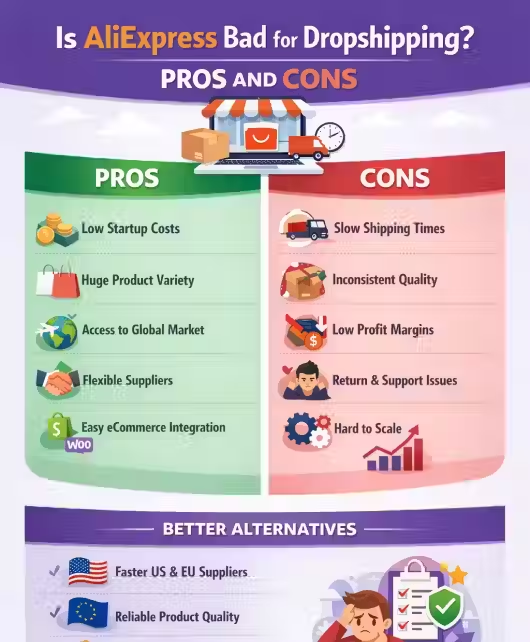
Pros of AliExpress Dropshipping
AliExpress isn’t “bad” across the board—it’s popular because it’s accessible and flexible. These benefits are real, especially for beginners validating a niche.
Extremely Low Startup Costs
You don’t buy inventory upfront, rent storage, or commit to bulk orders. That makes AliExpress dropshipping one of the lowest-barrier ways to start selling online—great for testing offers before scaling.
Massive Product Variety
AliExpress is huge. You’ll find products across virtually every niche (home, beauty, gadgets, pet, fashion accessories), which helps when you’re searching for new angles or trying to spot early trends.
Access to Global Market
Many sellers ship internationally, so you can target customers in multiple countries—useful if your store’s traffic is global and you want broad reach.
Flexible Supplier Access
You can compare multiple sellers for the same product, test different price points, and switch suppliers if one becomes unreliable. This “swap ability” is one of the core advantages of AliExpress as a marketplace.
Easy Integration with e-Commerce Tools
AliExpress products are commonly imported into Shopify/WooCommerce through dropshipping apps, which speeds up listing creation and order workflows.
Cons of AliExpress Dropshipping
This is where most people decide if AliExpress is “bad” for their specific business. If your brand depends on fast delivery, premium quality, or a clean post-purchase experience, these drawbacks matter.
Slow and Unreliable Shipping
Shipping can be inconsistent—especially on cheaper methods—with delivery windows that often stretch from weeks to over a month, and tracking that may not update cleanly end-to-end.
If you’re selling impulse buys or gifting products, long ETAs can spike refunds, chargebacks, and angry emails.
Quality Control Challenges
AliExpress is a marketplace, not a single supplier. Two listings that look identical can arrive totally different in materials, sizing, packaging, or durability. If you don’t sample products yourself, you’re basically letting the first customer do QA.
Low Profit Margins
Because so many sellers source from the same catalogs, competition gets intense fast. Your margins shrink when competitors undercut prices—or when you need to spend more on ads to win customers for similar products.
Returns & Customer Service Issues
Returns are rarely simple in cross-border orders. Even when refunds are possible through disputes/buyer protection, the process can be slow, evidence-heavy, and frustrating to manage at scale.
Difficult to Scale Efficiently
Scaling exposes operational cracks: manual ordering, split shipments (one order arriving in multiple packages), supplier stock changes, and inconsistent tracking. These things increase support load and reduce repeat purchases.
Platform Risks & Reputation
AliExpress has faced regulatory scrutiny in the EU under the Digital Services Act, including concerns about preventing illegal products and risk mitigation—issues that can affect marketplace trust and brand perception by association. Even if you sell legit products, customers may still worry about counterfeits or “too cheap to be real” quality.
If you’re building a long-term brand, AliExpress can work—but usually only after you treat it like a sourcing database (sample, vet, tighten shipping options), not a plug-and-play supplier network. For faster delivery and fewer support headaches, many sellers eventually move part of their catalog to vetted supplier platforms like Spocket.
Common Problems Dropshippers Face Using AliExpress
If you’ve spent any time in dropshipping communities, you’ll notice the same patterns come up again and again. These aren’t “rare edge cases”—they’re the day-to-day friction points that make AliExpress dropshipping feel risky once you start getting consistent orders.
Supplier Reliability & Communication
On AliExpress, you’re not dealing with one supplier—you’re dealing with thousands of independent sellers. Some are solid, some disappear, and some reply only when it’s convenient. The real pain shows up when a product goes out of stock, a variant changes, or the supplier ships the wrong item. You’re the one explaining delays to customers, even though you didn’t cause them.
Fake or Counterfeit Listings
AliExpress is a marketplace, so listings can be misleading. Photos may look premium while the product that arrives is cheap, unbranded, or not what the description promised. The biggest risk isn’t just refunds—it’s chargebacks, bad reviews, and brand trust taking a hit. If you’re selling anything that resembles a known brand style, you’re also flirting with IP complaints.
Payment & Currency Costs
Even when product prices look “cheap,” costs stack up: currency conversion, card fees, tax/VAT handling (depending on destination), and shipping upgrades. If you don’t track your true landed cost, your margins in AliExpress dropshipping can quietly shrink until you’re working hard for almost nothing.
Competition & Saturation
Most AliExpress dropshipping products are widely available, meaning lots of stores sell the exact same items with the same photos. That creates a race to the bottom on pricing and makes paid ads more expensive. If you’re not differentiating with branding, bundles, better delivery expectations, or unique angles, saturation can kill momentum fast.
How to Mitigate AliExpress Dropshipping Challenges
AliExpress isn’t automatically a bad idea—you just can’t treat it like a “set and forget” supplier source. The goal is to reduce variables: shipping uncertainty, quality surprises, and supplier inconsistency.
Use ePacket or Faster Shipping Options
When possible, choose faster shipping methods and be honest on your product pages about delivery windows. A realistic ETA prevents angry emails later. Pro tip: test shipping times to your top countries before scaling ads—don’t guess.
Vet Suppliers Rigorously
Do this like a pro, not a beginner:
- Prefer suppliers with consistent recent reviews, not just high lifetime ratings
- Check review photos for real product quality
- Order samples of your top sellers (especially anything over $20)
- Avoid “too good to be true” pricing—it usually is
This is one of the biggest make-or-break steps in AliExpress dropshipping.
Automated Order & Inventory Tools
Manual ordering becomes chaos once you hit 10–20 orders/day. Use automation that syncs pricing, inventory, and variants—because AliExpress listings change often. Also set alerts for stock changes so you don’t sell items that can’t be fulfilled.
Diversify with Alternative Suppliers
If your store is growing, don’t rely on AliExpress alone. Diversifying protects you from supplier issues and helps you offer faster shipping for your best sellers. Many brands transition winning products to vetted supplier networks like Spocket (especially for US/EU fulfillment), while keeping AliExpress for testing new products. This hybrid approach usually improves delivery speed, reduces support load, and helps you scale more confidently.
AliExpress Dropshipping vs Better Alternatives
Here’s the honest way most experienced sellers treat AliExpress dropshipping: it’s great for testing products, but it’s not always the best place to scale a brand. Once you care about delivery speed, consistent quality, and fewer support tickets, vetted supplier platforms usually win.
Best Alternatives for Reliable Dropshipping
If your goal is a smoother customer experience (and fewer “where’s my order?” emails), consider platforms with curated US/EU suppliers and clearer fulfillment standards—like Spocket—plus other vetted supplier networks and private sourcing options.
What typically improves when you switch (or go hybrid):
- Delivery times:
AliExpress often ranges from “okay” to “painfully slow,” depending on the seller and shipping method. US/EU supplier platforms like Spocket tend to offer faster, more predictable shipping—especially for customers in North America and Europe. - Returns & customer experience:
AliExpress returns can be messy (international shipping, disputes, back-and-forth). With vetted suppliers, returns are usually simpler and expectations are clearer—meaning fewer refunds, fewer chargebacks, and better reviews. - Margins & pricing control:
AliExpress can be competitive to the point of margin pressure (everyone sells the same item). With curated suppliers, you often get better consistency, more brand-friendly packaging, and less direct product duplication—so you can defend pricing with experience, not just discounts.
Most stores don’t “quit” AliExpress—they graduate from using it as the only source. A common setup is: AliExpress to validate winners → Spocket (or vetted suppliers) to scale the winners with faster shipping and fewer headaches.
Is AliExpress Dropshipping Worth It in 2026?
Yes—AliExpress dropshipping can still be worth it in 2026 if your business goal is product testing and fast experimentation, and you’re willing to manage the trade-offs (shipping uncertainty, quality variation, supplier inconsistency).
It’s less worth it if you’re trying to build a long-term brand where repeat purchases, fast delivery, and strong trust matter. In that case, AliExpress works best as a research-and-testing engine—while your best sellers move to more reliable supplier options like Spocket or other vetted US/EU networks.
Simple rule:
- Testing phase: AliExpress
- Scaling + brand building: Hybrid or vetted suppliers
Conclusion
AliExpress dropshipping isn’t “bad,” but it’s not effortless either. It can be a solid starting point for testing products and validating demand, especially when budgets are tight. The downside shows up when you scale: slow shipping, inconsistent quality, supplier issues, and complicated returns can quickly damage trust and eat into profits. If your goal is to build a reliable store customers come back to, your supplier setup matters as much as your marketing. That’s why many sellers use AliExpress to test ideas, then move winning products to faster, vetted suppliers. With Spocket, you can access reliable US/EU suppliers, improve delivery times, and create a better customer experience—without the constant fulfillment headaches.
Start your dropshipping business today
Is AliExpress Worth It FAQs
What is AliExpress dropshipping?
AliExpress dropshipping is a retail model where you list products from AliExpress sellers in your store without holding inventory. When a customer orders, you purchase the item from the supplier, and they ship it directly to your customer. You earn the price difference.
Is AliExpress bad for dropshipping beginners?
AliExpress can be beginner-friendly because it’s cheap to start and offers huge product variety. But it can feel “bad” when beginners face slow shipping, inconsistent quality, and difficult returns. It’s best for testing products—less ideal for building a premium brand fast.
Is AliExpress good for dropshipping?
AliExpress is good for dropshipping if your goal is quick product testing, low startup costs, and broad product access. It’s less good for stores that need fast delivery, consistent quality, and smooth customer support. Many sellers use it early, then switch suppliers to scale.
Is dropshipping from AliExpress illegal?
Dropshipping from AliExpress is generally legal, but legality depends on what you sell and where you sell it. Avoid counterfeit items, trademarked brands, and restricted products, and follow consumer protection, tax/VAT, and shipping disclosure rules in your target country.
Why do many dropshippers avoid AliExpress?
Many dropshippers avoid AliExpress dropshipping due to slow and unpredictable shipping, variable product quality, supplier communication issues, and complicated refunds. As stores scale, these problems create more support tickets, chargebacks, and negative reviews—making growth harder and riskier.
What are the biggest AliExpress dropshipping disadvantages?
The biggest disadvantages are long shipping times, inconsistent quality across suppliers, thin profit margins due to heavy competition, unreliable stock levels, and difficult returns. Supplier risk is real—listings change, items go out of stock, and customer experience can suffer quickly.
Can you still make money with AliExpress dropshipping in 2026?
Yes, you can still make money with AliExpress dropshipping in 2026, but it’s harder without differentiation. Profit comes from strong product research, good creatives, clear shipping expectations, and supplier vetting. Many sellers improve results by switching winners to faster suppliers.
How can I reduce shipping issues with AliExpress?
Choose faster shipping options (when available), test delivery times to your main countries, and avoid sellers with poor tracking feedback. Set realistic ETAs on product pages and use apps that track orders reliably. Ordering samples first helps confirm shipping consistency.
What are better alternatives to AliExpress?
Better alternatives include vetted supplier platforms like Spocket, which focuses on US/EU suppliers for faster delivery and smoother fulfillment. You can also explore private agents, local wholesalers, or curated marketplaces. Many stores use AliExpress for testing, then scale with reliable suppliers.
How do I choose reliable AliExpress suppliers?
Check recent reviews (especially photo reviews), consistent order volume, clear shipping options, and responsive messaging. Avoid sellers with frequent “item not as described” complaints. Order samples of top products, verify packaging quality, and prefer suppliers with stable pricing and inventory.


Launch your dropshipping business now!
Start free trial


Related blogs
Dropshipping Supplier Directory: Where to Find Vetted Suppliers
Browse our directory of vetted dropshipping suppliers across the US and EU, complete with niches, shipping speed, and pricing. Start your free trial today.

How to Negotiate With Dropshipping Suppliers: 9 Tactics That Actually Work
Learn how to negotiate with dropshipping suppliers on price, MOQs, and payment terms. Proven tactics and email scripts to boost your margins. Try Spocket free.

Best Clothing Dropshipping Suppliers: The 2026 Guide
Compare the best clothing dropshipping suppliers for 2026 — US/EU shipping speeds, pricing, and product quality — and find the right fit to launch your store.