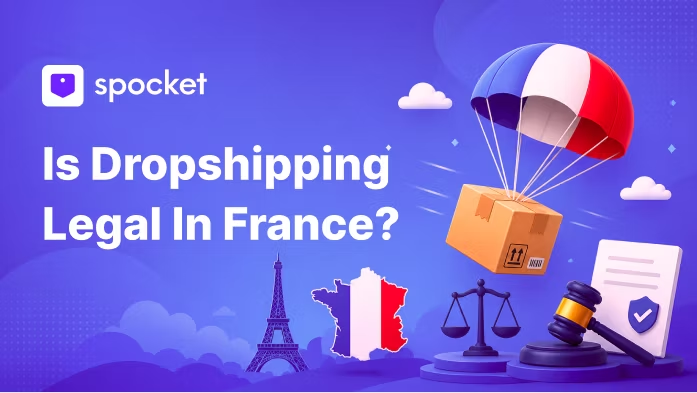
Is Dropshipping Legal in France?
Is dropshipping legal in France? Learn business, VAT, consumer rights, product, GDPR, and supplier rules before starting a compliant store.
.avif)

Dropshipping has become one of the most popular ways to start an online business, especially for entrepreneurs looking to make money online without holding inventory. But before launching a store, one question often comes up: is dropshipping legal in France? The short answer is yes—but it comes with strict regulations that every seller must follow. France has clear rules around consumer protection, VAT, product safety, and data privacy, and ignoring them can lead to penalties or even business shutdowns. Whether you're planning to sell locally or target French customers from abroad, understanding the legal framework is essential. In this guide, you’ll learn exactly how dropshipping works in France, what laws apply, and how to run a compliant and profitable business.
Is Dropshipping Legal in France?
Yes, dropshipping is legal in France, but it is not a “sell anything, ship from anywhere” model. It falls under French and EU rules for distance selling, consumer protection, VAT, product safety, advertising, and data protection.
The most important point: you are responsible as the seller, even if a third-party supplier packs and ships the product. France’s DGCCRF clearly states that dropshipping sellers remain responsible for delivery issues and product quality defects, even when the supplier handles shipping.
So, to run a legal dropshipping business in France, you need to:
- Register your business properly.
- Clearly display your seller identity and contact details.
- Respect consumer rights, including returns and refunds.
- Be transparent about prices, delivery times, and product details.
- Avoid fake reviews, false discounts, or misleading urgency.
- Make sure products meet French and EU safety standards.
- Follow VAT, GDPR, and ecommerce compliance rules.
In simple terms, dropshipping is allowed in France, but customers must be protected as if you stocked and shipped the product yourself.
What Is Dropshipping and How Does It Work in France?
Dropshipping is an ecommerce model where you sell products online without keeping inventory. When a customer places an order, you forward that order to a supplier, and the supplier ships the item directly to the customer.
Here’s how it usually works:
- You list products on your online store.
- A customer buys from your website.
- You send the order details to your supplier.
- The supplier ships the product directly to the customer.
- You earn the difference between your selling price and supplier cost.
In France, the customer may never interact with the supplier. They buy from your store, receive your order confirmation, and expect support from you. That means you remain the legal point of contact for delivery, refunds, defective products, and complaints.
This is why choosing reliable suppliers matters. Platforms like Spocket can help sellers reduce risks by sourcing from vetted suppliers, improving product quality, and offering faster shipping options compared to random overseas suppliers.
Why Dropshipping Gets Legal Attention in France
Dropshipping gets extra attention in France because some sellers use the model irresponsibly. The issue is not dropshipping itself, but poor business practices around it.
Common problems include:
- Fake customer reviews
- Orders that are delayed or never delivered
- Unsafe, banned, or poor-quality products
- Misleading “limited-time” discounts
- Hidden seller identity
- Unclear return and refund policies
- Poor customer support after purchase
The DGCCRF investigated 215 dropshipping websites in 2022 and found shortcomings on 116 of them, meaning more than half had compliance problems. These included fake reviews, delivery failures, and dangerous or prohibited products.
Legal Requirements for Dropshipping in France
To run a legal dropshipping business in France, you need more than a good product page. You must operate like a real ecommerce seller, because French law treats you as the customer’s main point of contact, not your supplier.
Registering Your Business
Before selling regularly, you should register your business under a suitable legal structure. Common options include:
- Micro-entreprise: simple setup for beginners and small sellers
- SASU: flexible structure for solo founders planning to scale
- EURL: limited liability option for single-owner businesses
Registration helps you issue invoices, declare income, manage VAT, and prove your business identity. Without it, your dropshipping store can quickly become non-compliant.
Displaying Legal Website Information
A French ecommerce website must clearly show who is selling. Your store should include:
- Business name and registration number
- Contact email and business address
- Legal notice or mentions légales
- Terms and conditions of sale
- Privacy policy
- Return and refund policy
Professional websites in France must publish mandatory identity and contact information, so customers know exactly who they are buying from.
Providing Clear Pre-Contract Information
Before checkout, customers must understand what they are buying and from whom. Include:
- Product features and specifications
- Total price, including tax and shipping
- Delivery timeframes
- Seller identity
- Return rights
- Customer service contact details
This is especially important for dropshipping in France because long shipping times, hidden costs, and vague product details are common causes of complaints.
Consumer Rights Dropshippers Must Respect in France
French consumer law applies fully to dropshipping stores. You cannot avoid customer obligations by saying the supplier handles shipping.
14-Day Right of Withdrawal
For online purchases, French consumers generally have 14 days to change their mind after a distance purchase. This right applies to most ecommerce orders and must be clearly explained before purchase.
Your return policy should tell customers:
- How to request a return
- Who pays return shipping
- When refunds are processed
- Which products are excluded, if any
Delivery Responsibility
Even if your supplier ships the item, you are responsible for delivery. The DGCCRF states that dropshipping sellers remain responsible for delivery and product quality defects, even when a supplier handles fulfilment.
That means if the item is late, missing, damaged, or never delivered, the customer expects you to solve it.
Legal Guarantee and Defective Products
Customers can claim a remedy if the product is:
- Defective
- Unsafe
- Not as described
- Different from what was advertised
Depending on the case, you may need to offer repair, replacement, refund, or another legal solution. This is why reliable suppliers matter. Platforms like Spocket can help reduce fulfilment risk by connecting sellers with vetted suppliers and better product standards.
VAT and Tax Rules for Dropshipping in France
VAT is one of the biggest compliance areas for dropshipping in France. It can apply whether you sell to French customers, other EU buyers, or import products from outside the EU.
When VAT Applies
VAT rules depend on the transaction:
- French customers: French VAT may apply
- EU customers: VAT is usually due in the customer’s country of consumption
- Imported goods: Import VAT may apply, especially for products shipped from outside the EU
France and the EU have become stricter with ecommerce VAT because many dropshipping models involve foreign suppliers, low-value parcels, and cross-border sales.
OSS and IOSS for EU Ecommerce
The OSS and IOSS systems help simplify VAT reporting for ecommerce sellers. France’s tax authority explains that OSS-IOSS was created to simplify VAT declaration and payment for eligible EU ecommerce transactions.
In simple terms:
- OSS helps with cross-border EU sales
- IOSS helps with imported goods valued at €150 or less
Using them correctly can make tax handling cleaner and reduce customs issues for customers.
Why the 2024–2026 VAT Updates Matter
France has tightened dropshipping VAT rules, especially for imported goods where sellers do not use IOSS. The goal is to stop sellers from declaring only the supplier cost instead of the real customer sale price.
For dropshippers, this means:
- Declare the real sale value
- Keep clean invoices and order records
- Understand import VAT before selling
- Avoid suppliers who underdeclare parcels
The takeaway is simple: dropshipping is legal in France, but only when your business, website, consumer policies, and VAT setup are compliant.
Product Compliance and Safety Rules
If you are asking “is dropshipping legal in France?”, product compliance is one of the biggest parts of the answer. You can legally dropship in France, but you cannot sell products that are unsafe, fake, restricted, or missing required EU compliance.
Avoid selling:
- Counterfeit branded products
- Unsafe electronics or chargers
- Non-compliant cosmetics or skincare
- Children’s toys without required safety standards
- Health products with restricted or exaggerated claims
- Products that require CE marking but do not have it
- Items with unclear labels, missing instructions, or no safety documentation
The EU explains that CE marking applies only to products covered by specific EU rules, while other consumer products still need to meet general product safety requirements.
For dropshippers, the safest approach is simple: check every product before listing it. Ask suppliers for certificates, safety documents, product labels, and EU compliance proof. If a supplier cannot provide them, do not sell the item.
Advertising, Influencer, and Pricing Rules
France also takes misleading ecommerce marketing seriously. Your dropshipping store should never create pressure or trust signals that are not real.
Avoid tactics like:
- Fake reviews or copied testimonials
- False “only 3 left” stock messages
- Fake countdown timers
- Misleading discounts or inflated “before” prices
- Exaggerated delivery promises
- Hiding that a post is sponsored
- Unclear seller identity or missing contact details
The DGCCRF has specifically warned about dropshipping risks such as fake reviews, pressure-based sales tactics, false stock claims, missing seller identity, delivery failures, and dangerous products. In its 2022 investigation, 116 out of 215 dropshipping websites checked had anomalies, showing how common these issues are.
Good marketing is honest marketing. Tell customers what they are buying, when it will arrive, what it costs, and how returns work. That builds more trust than fake urgency ever will.
GDPR and Customer Data Protection
A dropshipping store collects personal data every day. This can include:
- Customer names
- Email addresses
- Delivery addresses
- Phone numbers
- Payment details
- IP addresses
- Cookie and tracking data
GDPR applies to businesses that process personal data of people in the EU, including non-EU companies that target EU customers.
To stay compliant, your store should have:
- A clear privacy policy
- Cookie consent where required
- Secure payment processing
- Limited data sharing with suppliers
- A process for data access or deletion requests
- Only necessary customer data collected
For dropshipping in France, this matters because customer information is often shared with third-party suppliers for fulfillment. Be transparent about that in your privacy policy.
How to Start Dropshipping Legally in France
Starting a legal dropshipping business in France is not complicated, but you need to set it up properly from day one. The goal is simple: sell transparently, protect customers, and stay compliant with French and EU ecommerce rules.
Choose a Legal Business Structure
Before selling, register your business under a suitable structure. Many beginners choose a micro-entreprise because it is simple to manage, while growing sellers may prefer SASU or EURL for more flexibility and liability protection.
Make sure you have:
- A registered business status
- SIRET/SIREN number
- Tax setup
- Proper invoicing process
Work With Reliable Suppliers
Your supplier affects your delivery speed, product quality, refund rate, and customer trust. Since you are responsible for the order even when the supplier ships it, avoid random suppliers with poor tracking, vague product details, or no compliance documents.
This is where Spocket can help. It connects sellers with vetted suppliers, making it easier to reduce risks linked to poor-quality products, long shipping delays, and unreliable fulfillment.
Create Transparent Store Policies
Your website should clearly explain:
- Shipping timelines
- Return and refund rules
- Product exclusions
- Customer support process
- Legal business details
- Privacy and cookie policies
Clear policies reduce disputes and help customers feel confident before they buy.
Set Up VAT and Accounting Correctly
VAT is a major compliance area in France. Depending on your business location, customer location, and supplier setup, you may need to manage:
- French VAT
- EU VAT
- Import VAT
- OSS/IOSS declarations
- Invoices and accounting records
Work with an ecommerce accountant if you sell across borders or import products from outside the EU.
Check Product Compliance Before Listing
Do not list a product just because it looks profitable. Check whether it is safe, legal, and compliant for the French and EU market.
Pay extra attention to:
- Electronics
- Toys and children’s products
- Cosmetics
- Supplements and health products
- Branded goods
- Products requiring CE marking
Avoid Misleading Marketing
France takes misleading ecommerce practices seriously. Avoid:
- Fake countdown timers
- Fake reviews
- False “limited stock” claims
- Inflated discounts
- Unrealistic delivery promises
- Hidden influencer promotions
Honest marketing may look less aggressive, but it builds stronger long-term trust.
Keep Customer Support and Return Processes Clear
Customers should know how to contact you, return a product, request a refund, or report a delivery issue. Since the customer bought from your store, you remain their first point of contact—not your supplier.
A simple support system can include:
- Clear contact email
- Return instructions
- Refund timelines
- Order tracking updates
- FAQ page
Dropshipping Legal Checklist for France
Common Mistakes That Make Dropshipping Risky in France
Dropshipping becomes risky when sellers treat it like a quick product-flipping model instead of a regulated ecommerce business. The most common mistakes include:
- Not registering a business before selling
- Selling counterfeit or unsafe products
- Hiding long supplier shipping times
- Not displaying legal identity and contact details
- Avoiding VAT or customs obligations
- Using fake reviews or countdown timers
- Ignoring returns, refunds, and delivery complaints
- Copying product images without permission
These mistakes can damage customer trust, trigger complaints, and expose your store to penalties.
Final Verdict: Is Dropshipping Legal in France?
Yes, dropshipping is legal in France, but only when it is treated as a real ecommerce business. You need proper business registration, transparent website information, clear customer policies, VAT compliance, product safety checks, honest advertising, and GDPR-compliant data handling.
The safest way to build a long-term dropshipping store is to focus on trust, not shortcuts. Choose reliable products, work with dependable suppliers, and be clear with customers from the first click to final delivery.
Ready to start with better supplier confidence? Explore Spocket to source quality products from vetted suppliers and build a more reliable dropshipping business for French and EU customers.
Start your dropshipping business today
Is Dropshipping Legal in France FAQs
Is dropshipping legal in France?
Yes, dropshipping is legal in France, but it is regulated. Sellers must comply with ecommerce laws, VAT rules, consumer protection, product safety standards, advertising guidelines, and GDPR. Non-compliance can lead to penalties, so operating transparently is essential.
Do I need to register a business for dropshipping in France?
Yes, if you sell regularly for profit, you must register a legal business structure such as micro-entreprise, SASU, or EURL. This ensures compliance with tax laws, invoicing requirements, and legal accountability in France.
Do dropshippers pay VAT in France?
Yes, in most cases, dropshippers must pay VAT in France. VAT depends on customer location, product origin, and sales volume. You may also need OSS or IOSS to manage VAT for EU and imported ecommerce transactions efficiently.
Is AliExpress dropshipping legal in France?
Yes, AliExpress dropshipping is legal in France if you follow all regulations. This includes product compliance, proper VAT handling, accurate delivery timelines, and clear return policies. Failing these can result in legal issues or customer disputes.
Who is responsible if the supplier ships a bad product?
The seller is fully responsible for the customer experience, even if the supplier handles fulfillment. If a product is defective, delayed, or incorrect, the dropshipper must resolve the issue with refunds, replacements, or support.
Can I sell any product through dropshipping in France?
No, you cannot sell all products. Avoid counterfeit, unsafe, or restricted items. Products like cosmetics, electronics, toys, supplements, and branded goods must meet strict EU safety and compliance standards before being sold.
Do I need a return policy for dropshipping in France?
Yes, a clear return policy is mandatory. French and EU laws require sellers to inform customers about their 14-day withdrawal right, refund terms, and return process before purchase. Missing this can lead to legal penalties.
Is dropshipping from China to France allowed?
Yes, dropshipping from China to France is allowed, but you must handle VAT, customs duties, product safety, and delivery timelines properly. Transparency about shipping times and potential delays is crucial for compliance and customer trust.
Can I run dropshipping in France as a micro-entrepreneur?
Yes, many beginners start dropshipping as micro-entrepreneurs due to its simplicity. However, as your business grows, you may need to switch structures based on VAT thresholds, liability concerns, and long-term scalability goals.
Is dropshipping profitable in France?
Dropshipping can be profitable in France, but success depends on product selection, supplier reliability, VAT management, shipping costs, marketing efficiency, and customer satisfaction. Building trust and offering quality products are key to long-term profitability.


Launch your dropshipping business now!
Start free trial


Related blogs
Dropshipping Supplier Directory: Where to Find Vetted Suppliers
Browse our directory of vetted dropshipping suppliers across the US and EU, complete with niches, shipping speed, and pricing. Start your free trial today.

How to Negotiate With Dropshipping Suppliers: 9 Tactics That Actually Work
Learn how to negotiate with dropshipping suppliers on price, MOQs, and payment terms. Proven tactics and email scripts to boost your margins. Try Spocket free.

Best Clothing Dropshipping Suppliers: The 2026 Guide
Compare the best clothing dropshipping suppliers for 2026 — US/EU shipping speeds, pricing, and product quality — and find the right fit to launch your store.