


Pinterest Affiliate Marketing for Home Decor in 2026: Beginner's Guide
Pinterest affiliate marketing can be tricky but we’ve broken it down for you. Home decor is doing really well and here’s how you can make good money.
.avif)

Pinterest is where people go when they're hunting for home décor inspiration, saving product ideas, and ready to buy. If you're serious about creating income from home, this platform offers real opportunity. You don't need followers, a huge email list, or a prior audience to start. What you do need is focus, the right setup, and an understanding of how Pinterest actually works.
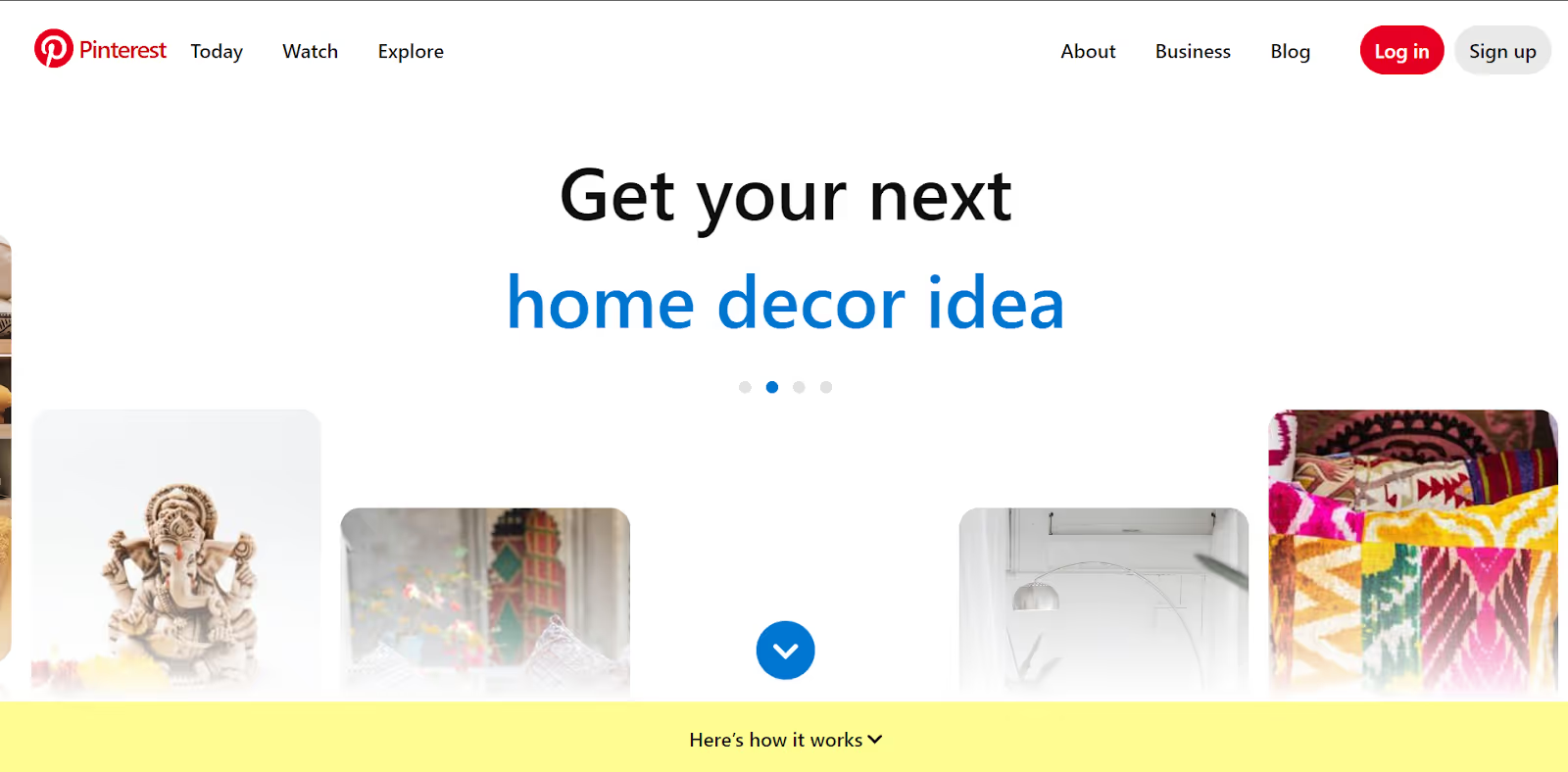
Home décor is one of the strongest niches on the platform—high purchase intent, visual appeal, and affiliate programs that pay well. This guide walks you through everything, from account setup to compliance to finding keywords that actually converts. Whatever suggestions we make below will also work for other niches. So if you're new, start here.
What is Pinterest Affiliate Marketing?
Pinterest affiliate marketing is where you promote products on Pinterest, earn commission when someone buys. You create pins with images and descriptions, add an affiliate link, and when users click through and purchase, you get paid.
Unlike Instagram or TikTok, Pinterest works more like a search engine. People use it to find products they want to buy. They save pins to boards, search for specific items, and click links that lead them somewhere. This makes how to make money on pinterest fundamentally different from other social platforms.
The home décor niche is ideal because:
- High average order value (furniture, art, décor runs $50-500+)
- Users actively search for products and inspiration
- Pins stay visible for months or years, not hours like other platforms
- Visual content performs naturally on the platform
When you do pinterest affiliate marketing right, you're not interrupting someone's day. You're providing the exact product they were already looking for.
Why Home Décor for Pinterest Affiliate Marketing?
Home décor performs better than most niches on Pinterest for concrete reasons.
- First, intent. Someone searching for "minimalist wall art" or "mid-century modern furniture" is actively looking to buy. They're not browsing casually. This converts better than almost any other category.
- Second, visuals. Home décor is inherently visual. A great photo of a styled room with product links gets clicks. The niche lets you create pins that actually look good, which matters on a visual platform.
- Third, affiliate programs. Major retailers like Wayfair, Overstock, Amazon Associates, and Etsy all have strong affiliate programs. Commission rates range from 3-8% depending on the program, which adds up fast at scale.
How to Set Up Your Pinterest Business Account
Before you do anything else, create a business account or convert your personal account. Go to Pinterest.com and sign up with an email (not Facebook or Google, since you want to own the account directly). If you already have a personal account, click your profile and convert it to a business account.
A business account gives you access to Pinterest Analytics, which shows impressions, clicks, saves, and engagement rates. You need this data to improve over time.
Fill in your profile:
- Profile photo: Use a professional headshot or logo (not a generic image)
- Bio: Write 150 characters describing your niche. Example: "Modern home décor inspiration | Minimalist designs | Affordable finds." Include a relevant keyword naturally.
- Website link: Add your blog, landing page, or Etsy shop
- Verify your website (if you have one): This unlocks rich pins and better visibility
Your bio should reflect your niche clearly. If you're focused on minimalist home décor, say that. Don't be vague.
Finding Your Niche and Picking Affiliate Programs
Pinterest affiliate marketing works best when you pick one niche and own it rather than jumping between categories.
For home décor, these sub-niches convert well:
- Minimalist/modern design
- Bohemian/eclectic style
- Industrial/farmhouse
- Small-space living
- Budget home improvement
- Plant décor and living walls
Pick one: If you like minimalist design and have opinions about it, go there. Your genuine interest will show in your pins and descriptions.
Once you've picked your niche, join affiliate programs that fit:
- Amazon Associates - Easiest to join, huge product range, 3% commission on furniture. Start here if you're new.
- Wayfair - Furniture-specific, higher AOV, 8% commission. Worth joining even if commission is lower than some programs.
- Overstock - Home décor specialist, 5-7% commission, strong brand recognition.
- Etsy Affiliate - If you're promoting unique, handmade pieces, Etsy's program is solid.
- Spocket affiliates - great dropshipping affiliate program with high earnings potential, no limits.
When you join these programs, you'll get affiliate links. Don't share links directly yet. You need a landing page or blog post first.
How Pinterest Affiliate Marketing Works (And What Not to Do)
There are two ways people try how to make money on pinterest:
1. Direct Links (Not Recommended)
You create a pin, add an affiliate link directly in the pin description, and hope people click. This works, but barely. People are skeptical of random links, and Pinterest increasingly restricts direct affiliate links to comply with their community guidelines.
2. Landing Pages or Blog Posts (Recommended)
You create a pin linking to a blog post or landing page on your site. That page has product info, images, and the affiliate link. This works because:
- Builds trust (you provide context, not just a link)
- Complies with Pinterest's policies
- Gives you email capture opportunities
- Ranks better for SEO
- Easier to A/B test
Redditor "Neat-Dream-5787" said it best: they started getting real traction when they stopped promoting the same links repeatedly and instead created varied content pointing to different destinations.
Don't repeat the same affiliate link in pins more than once every 1-2 weeks. Pinterest flags this as spam. Vary your links. Point to different blog posts, different products, different landing pages.
How to Create Pins That Actually Convert
Pins are your main tool for pinterest affiliate marketing. Bad pins get no clicks. Good pins drive traffic consistently.
What makes a pin work:
- Clear, readable text (use contrasting colors)
- High-resolution image (at least 1000x1500 pixels)
- Text overlay with benefit or hook ("Save $50 on This Modern Sofa" works. "Furniture" doesn't.)
- Vertical format (Pinterest prefers tall pins)
- Consistent branding (same fonts, colors across pins so your account looks cohesive)
- Use Canva (free version works fine) or Adobe Spark to design pins. Don't overthink it. A clear image with bold text beats a designer-looking pin with unclear messaging.
Pin description strategy:
- First 20 characters matter most (that's what shows in search)
- Use keywords naturally: "Minimalist wall art for modern living rooms"
- Describe the product benefit, not just the product
- Add a call-to-action: "Shop now" or "See price" (Pinterest allows this)
- Include a hashtag or two: #MinimalistHome #InteriorInspo
Example: "Transform your living room with this minimalist wall art. Gold frame, prints available in multiple sizes. Perfect for small spaces and modern homes. Shop now →"
Write descriptions for humans, not algorithms. But include keywords naturally.
How to Build Themed Boards and Organize Your Pins
Create boards around specific sub-niches. Don't dump all pins into one board. Here is how you can go about this:
Let’s take these examples:
- "Minimalist Wall Art"
- "Budget Furniture Under $300"
- "Small Apartment Living"
- "Bohemian Home Décor"
- "Plant Stands and Garden"
For these product ideas, each board should have 10-50 pins of related content. When a user finds one pin they like, they can click the board and see more options. This increases clicks and engagement.
Board titles and descriptions matter too:
- Use keywords: "Small Space Living Room Ideas | Minimalist Décor for Apartments"
- Write 150 characters describing what's in the board
- Make it searchable: people use the search bar on Pinterest to find boards
You can also join group boards (boards managed by others where multiple people can pin). This expands your reach beyond your followers. Search for group boards in your niche and request to join.
Keyword Research That Wins on Pinterest
This is where most people fail at how to make money on Pinterest. They don't research keywords.
Pinterest works like a search engine, not Instagram. People type specific things and expect specific results. If you don't match that search behavior, nobody finds you.
How to find Pinterest keywords
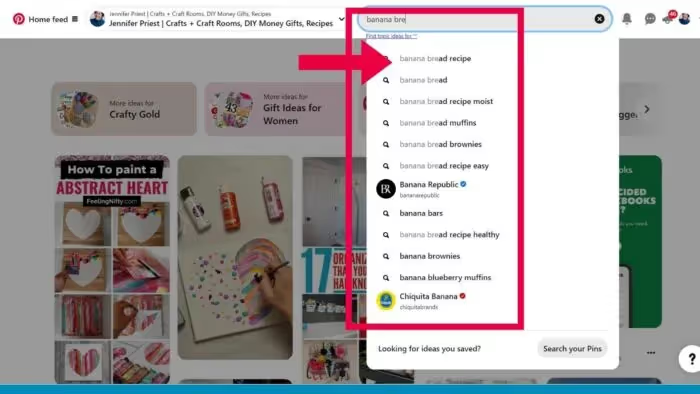
- Go to the Pinterest search bar and start typing. Pinterest auto-suggests related searches. These suggestions are gold. They show real searches people are doing right now.
- Search "minimalist wall art" and notice what pops up: "minimalist wall art black and white," "minimalist wall art affordable," "minimalist wall art for living room." These are long-tail keywords with lower competition.
- Use Pinterest's search bar as your research tool. The more specific phrases are easier to rank for. "Wall art" is competitive. "Minimalist wall art for small living rooms" ranks faster.
Write down 15-20 keyword phrases you want to target. Create pins and descriptions around these exact phrases.
Try Pinterest Trends
Pinterest Trends shows what's popular right now. Use this for seasonal content. In January, "new year home refresh" spikes. Use that timing. Avoid super broad terms. "Home décor" is too general. "Modern home office on a budget" is better. You'll rank faster for specific phrases.
Pinterest Business Account Features That Matter
Your business account unlocks features regular accounts don't have.
Pinterest Analytics shows performance data:
- Impressions (how many times your pins show up in searches)
- Clicks (people leaving Pinterest through your link)
- Saves (people saving pins to their boards)
- Engagement (likes, comments, shares)
Check analytics weekly. Note which pin descriptions, images, and topics get the most saves and clicks. Do more of that. If a pin gets 500 impressions but 2 clicks, something's wrong with the description or image.
Types of Pins that Work for Pinterest Affiliate Marketing
Rich Pins are enhanced pins that show real-time product info (price, availability). If you have a website or blog, you can set up rich pins so your products show live pricing. This increases clicks because users see price before clicking.
Idea Pins (video pins) are growing fast. A simple video pin showing a room makeover or product styling gets more engagement than static pins. You don't need professional equipment—use your phone.
Pinterest Ads are optional but helpful if you want faster growth. The "$10 spend = $100 credit" promotion Pinterest runs periodically can give you thousands of impressions for free if you time it right. But organic is plenty to start.
How to Disclose Affiliate Links (and Avoid Getting Flagged)
This matters. Getting it wrong can get your account shadowbanned or suspended.
Pinterest's rules:
- Be transparent about affiliate relationships
- Don't hide the commercial nature of your content
- Don't use shortened URLs that hide the destination
- Don't mislead about product benefits
- Don't spam the same link repeatedly
What to do:
If you're linking to your blog or landing page, add a disclosure at the top: "This post contains affiliate links. I earn a small commission if you purchase through these links at no extra cost to you."
If you're using a link-in-bio landing page (Linktree alternative), note on your profile: "Contains affiliate links."
In your pin descriptions, you can say "Shop now" or "Check price" without spelling out the affiliate part. That's fine. Just don't pretend it's not a commercial link.
What not to do:
- Don't create fake accounts to spam the same link
- Don't use bit.ly or other URL shorteners that hide the real destination
- Don't post the same affiliate link in 10 pins within a week
- Don't claim you own products you don't own
Follow the guidelines and you won't have problems. Pinterest actually wants creators to monetize—they just want it done honestly.
Creating a Landing Page (Optional But Recommended)
A landing page is a simple webpage focused on one topic. Example: "10 Best Minimalist Wall Art Picks Under $100."
You put affiliate links to specific products on this page, then create multiple pins all linking back to it.
Why do this?
- Builds trust (users read about products before clicking links)
- Email capture (add an email signup if you want to build a list)
- SEO benefits (Google ranks landing pages, sending you traffic beyond Pinterest)
- Compliance (clearer disclosure of affiliate nature)
If you have a blog or website, post the landing page there. If not, use a simple tool like Carrd or ConvertKit to build a one-page site.
You don't need to build a landing page to start. Pins linking directly to Amazon or Wayfair work fine. But once you get 50-100 pins, a landing page multiplies your earnings.
How to Find Suppliers and Products to Promote
If you're new to home décor affiliate marketing, start with established retailers:
- Amazon
- Wayfair
- Overstock
- Etsy
- Target
These have affiliate programs and products people trust.
Later, when you understand your audience, you can test niche suppliers. Spocket can help you find the best US and EU dropshipping suppliers help you find unique home and garden products. Spocket also offers products in other niches like trending dropshipping products, pet supplies, tech accessories, and others with higher margins that work well for Pinterest affiliate marketing.
For now, stick with what you know. Pick 5-10 products you genuinely like from major retailers and create pins around them. Authenticity drives clicks.
Monitoring Performance and How to Scale Up
Check your Pinterest Analytics weekly. Don't obsess daily, but weekly reviews catch trends.
Watch these numbers:
- Which pins get the most impressions? (You're doing something right with the image or description. Do more pins like that.)
- Which pins get the most clicks? (This is money. These are your best performers. Repin them regularly.)
- Which boards drive the most traffic? (Focus on content for these boards.)
- What keywords show up in traffic sources? (You're ranking for these. Create more pins targeting similar keywords.)
After 30 days, you'll see patterns. "Minimalist wall art" pins get clicks. "Budget furniture" pins get saves but fewer clicks. Adjust accordingly.
Once you have 50+ pins up and consistent traffic, earnings often follow. Most people make their first $10-50 in month two or three. By month four or five, if you're creating consistently and optimizing, $50-200/month is achievable. $500+/month happens when you have hundreds of high-performing pins and a solid landing page.
Common Mistakes That Kill Your Pinterest Affiliate Income
Now, take note of these. Avoid these mistakes at all costs:
1. Creating pins but not organizing them
Pins with no board structure get lost. Organize aggressively. Create boards, add descriptions, pin consistently to the same boards.
2. Ignoring analytics
You might think a pin is good. Analytics show it's not. Trust data over instinct.
3. Repeating the same link
Don't pin the same product link 10 times. Vary your content. Create pins around different products, different angles, different keywords. This keeps your account healthy.
4. Using bad images
A blurry, poorly lit photo of furniture tanks. Use high-quality product images. If the retailer provides them, use those. Otherwise, take clean photos or find stock images.
5. Vague descriptions
"Nice wall art" gets no clicks. "Minimalist black and white geometric wall art | Modern home décor | Affordable prints under $50" gets clicks because it answers what someone might search for. If you’re struggling to write good product description, try Smartli’s AI tools to help you out.
6. Expecting fast money
Most people make their first dollar after 6-8 weeks. Weeks one through four are setup and learning. This is normal.
7. Not disclosing affiliate relationships
Be honest. Transparency builds trust. Dishonesty gets you banned.
What Can You Realistically Expect as a Pinterest Affiliate Marketer?
Based on what successful Pinterest affiliates report, here is a breakdown of the timelines:
- Weeks 1-2: Setup, create initial pins, understand the platform. Zero income. This is normal.
- Weeks 3-8: Creating consistently (5-10 pins per week), learning what works, getting impressions. Possible earnings: $0-10.
- Weeks 9-16: Optimization kicks in. You know which pins work. Traffic increases. Possible earnings: $10-100.
- Months 4-6: If you've stayed consistent and followed guidelines, money accelerates. Possible earnings: $100-500+.
Where to Go From Here
Start your Pinterest business account this week. Pick your home décor sub-niche tomorrow. Join two affiliate programs by the end of the week.
- Create 10 initial pins targeting keywords you found in Pinterest search. Schedule them to post over 2-3 weeks. Don't dump all at once.
- Track your analytics after two weeks. Which pins are getting impressions? Which descriptions could be better?
- Adjust and keep going. This is where pinterest affiliate marketing becomes real income. Not from theory. From showing up weekly and improving based on data.
If you want to scale faster and explore more print-on-demand services or tech accessories beyond home décor, there are platforms that help. But for now, focus on home décor. Get good at one thing.
Check out more insights on Pinterest age demographics to understand who you're reaching. Understanding your audience helps you create pins that resonate.
Conclusion
Pinterest is a legit income source if you approach it correctly. The platform rewards consistency, keyword research, and genuine product recommendations. Home décor works because users actively search for products, visual content performs naturally, and affiliate programs pay well.
You don't need a massive following or technical skills to start. You need focus, patience, and willingness to optimize based on data. Start this week, stay honest about affiliates, and track what works. By month four or five, you'll have real income. Try Spocket for Pinterest dropshipping today! Good luck!
Start your dropshipping business today
How to Make Money on Pinterest FAQs
How long before I make money with pinterest affiliate marketing?
Most people earn their first sale within 4-8 weeks of consistent pinning, though some see results as early as 3 weeks. Success depends on pin quality, keyword targeting, and niche selection. Home décor typically converts faster than other categories because of high user intent and product search behavior on the platform.
Can I do pinterest affiliate marketing without a blog?
Yes, but linking directly to retailer product pages is riskier. Pinterest prefers links to your own content. Use a free landing page tool like Carrd to create a simple page linking to affiliate products. This protects your account and improves conversion rates significantly.
What's the best way to find low competition pinterest keywords for home décor?
Use Pinterest's search bar auto-suggestions and look for long-tail phrases. Search "minimalist wall art" and note what appears: "for small spaces," "affordable," "black and white." These 3-4 word phrases have lower competition than broad terms. Pinterest Trends also shows what's trending currently.
Can I get shadowbanned for pinterest affiliate marketing if I follow guidelines?
No. Shadowbanning happens when you violate terms: spam the same link repeatedly, hide affiliate intent, use fake accounts, or mislead about products. If you disclose affiliate relationships, vary your links, and create genuine content, your account stays healthy and visible.
Which affiliate programs pay best for home décor pinterest marketing?
Wayfair pays 5-8% commission with high AOV. Amazon Associates pays 3% but has huge product range. Overstock offers 5-7% for furniture. Etsy pays 5% for handmade items. Start with Amazon, add Wayfair after 100+ pins. Test others once you understand your audience.
Should I use paid pinterest ads to boost how to make money on pinterest faster?
Organic growth works fine and is free. Paid ads accelerate reach but cost money. Only use Pinterest Ads after you've created 100+ pins and understand what content converts. The $10 spend to $100 credit promotion is a good entry point if you're testing.


Launch your dropshipping business now!
Start free trial


Related blogs
Conversion Rate Optimization Audit Checklist That Works
Run a powerful conversion rate optimization audit with this proven checklist. Improve UX, boost sales, and fix conversion leaks fast.


Social Media Giveaway Ideas and Contest Examples for 2026
Discover high-converting social media contests and giveaway ideas with real examples to boost engagement, followers, and sales.

Power of Micro-Influencers: How to Scale Your Store via Partnerships
Micro influencer marketing drives higher ROI than traditional ads. Learn where to find creators, what to pay them, and how to land deals that grow your store.

