Shipping Across Europe — Carriers, Costs & Delivery Expectations
Learn how shipping across Europe works. Compare carriers, costs, delivery times, and tips to optimize your logistics for faster and cheaper shipping.
.avif)

Shipping across Europe has become a critical part of modern ecommerce, especially for businesses looking to scale beyond local markets. With diverse regions, multiple carriers, and varying delivery expectations, understanding how cross-border logistics works in Europe can directly impact your customer experience and profit margins. Whether you're an online seller, dropshipper, or growing brand, choosing the right shipping strategy is essential to stay competitive. From comparing top carriers like DHL and DPD to understanding shipping costs, delivery times, and VAT regulations, there’s a lot to consider. In this guide, we’ll break down everything you need to know about shipping across Europe, helping you make smarter decisions, reduce costs, and deliver faster to customers across the continent.
What Does Shipping Across Europe Mean?
Shipping across Europe means moving goods between countries in the European region, whether that is from France to Germany, Spain to Italy, or Poland to Sweden. For online sellers, it usually refers to cross-border shipping within Europe through courier networks, postal services, or fulfillment partners.
It is important to understand the difference especially if you are planning to dropship in EU. Domestic shipping happens within one country. Intra-EU shipping happens between countries inside the European Union. International shipping covers shipments between Europe and non-EU countries, or between EU and non-EU European markets like the UK, Norway, or Switzerland.
For ecommerce and dropshipping businesses, this matters because shipping speed, customs rules, delivery costs, and carrier coverage can directly affect conversions, customer trust, and repeat purchases. Faster and more predictable European shipping often leads to fewer complaints and better margins.
How Shipping Across Europe Works (Step-by-Step)
Shipping across Europe is not just about handing a parcel to a courier. It is a chain of steps that starts with order confirmation and ends with final delivery. When each step is handled well, businesses can reduce delays, lower costs, and improve the buyer experience.
Order Processing and Packaging
The process starts when a customer places an order. The seller confirms payment, prepares the item, and packs it for transit. Good packaging matters because it protects the product, reduces damage claims, and helps avoid extra carrier charges caused by incorrect parcel dimensions.
For European shipping, labels should be clear and complete. The package should include the customer’s full address, contact details, and any required shipping documents. Businesses that ship often usually save time by standardizing packaging sizes and using a consistent pick-and-pack workflow.
Carrier Selection
The next step is choosing the right carrier. This depends on delivery speed, shipping zone, parcel size, tracking quality, and budget. A premium carrier may be the right choice for urgent or high-value products, while a lower-cost ground service may work better for everyday orders.
This is where supplier location also matters. If products are stored closer to the buyer, shipping across Europe becomes faster and often cheaper. For dropshippers, working with partners that offer access to European suppliers, such as Spocket, can help shorten delivery routes and improve customer satisfaction.
Customs and VAT Considerations
Customs and VAT rules depend on where the parcel is going. Shipments within the EU are usually simpler because goods move through a shared market structure, though VAT compliance still matters. Shipping to non-EU European countries can involve customs declarations, duties, and extra paperwork.
This step is where many delays happen. Missing product values, incorrect HS codes, or incomplete invoices can slow delivery and create unexpected charges for buyers. Clear documentation helps shipments move faster and makes the checkout experience more transparent.
Last-Mile Delivery Across EU Countries
Last-mile delivery is the final part of the journey, when the parcel moves from a local hub to the customer’s door or pickup point. This stage has a big impact on customer experience because it is the part buyers notice most.
Delivery expectations can vary by country. Some customers prefer home delivery, while others prefer lockers or collection points. A strong last-mile partner improves tracking, reduces failed deliveries, and helps businesses maintain trust across different European markets.
Top Carriers for Shipping Across Europe
Choosing the right shipping partner is one of the biggest decisions for any ecommerce business selling across Europe. Some carriers are better for speed, some for cost control, and others for wider international reach. The best option depends on your product type, margins, and customer expectations.
1. DHL – Premium Cross-Border Logistics
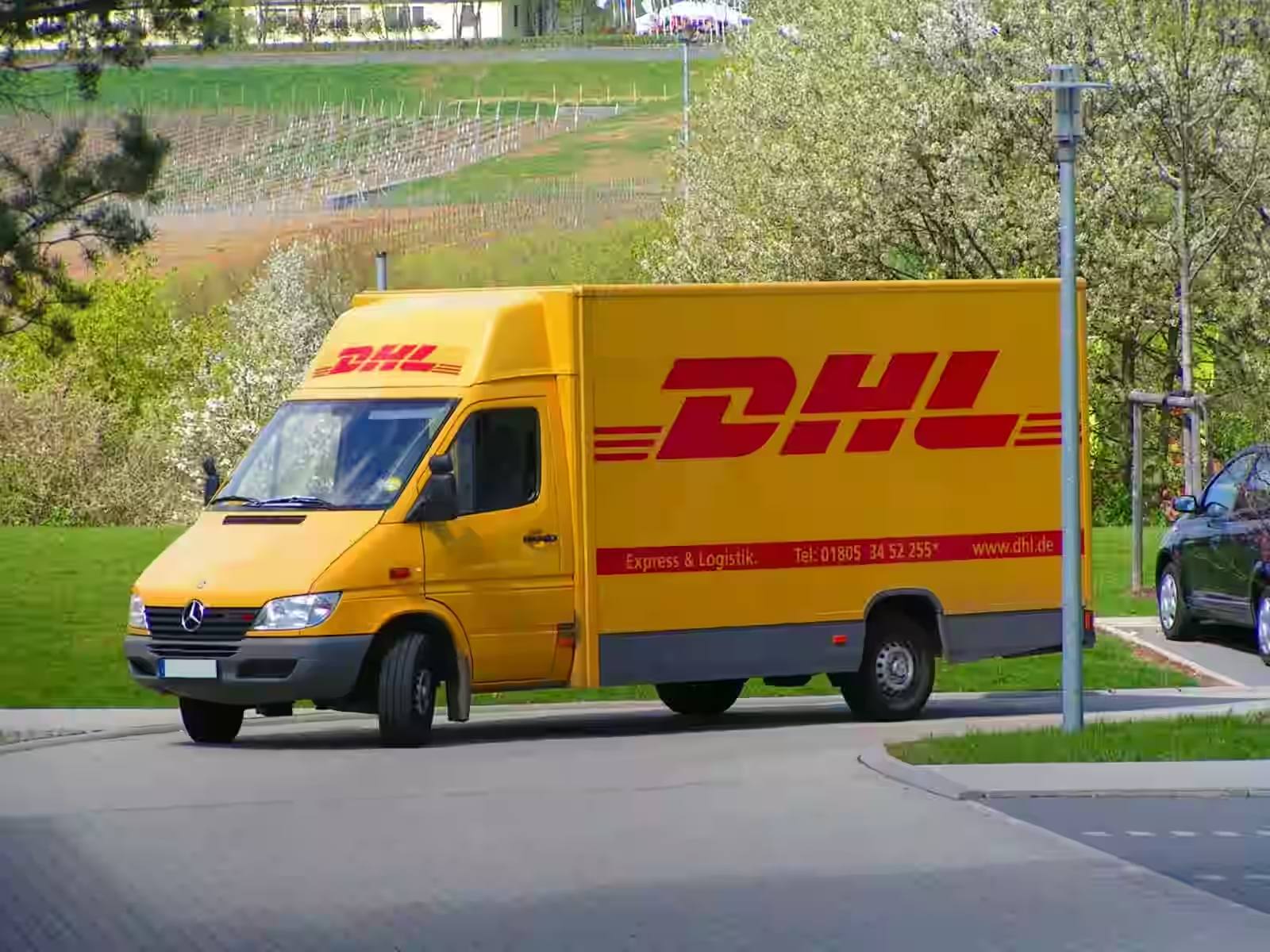
DHL is often a strong option for businesses that value speed, reliability, and strong international infrastructure. It is commonly used for express shipping, premium customer experiences, and time-sensitive orders.
For sellers shipping across Europe, DHL is a good fit when tracking quality and delivery consistency matter more than the lowest price. It is especially useful for brands selling higher-value products where delays can damage trust.
2. DPD – Cost-Effective EU Deliveries
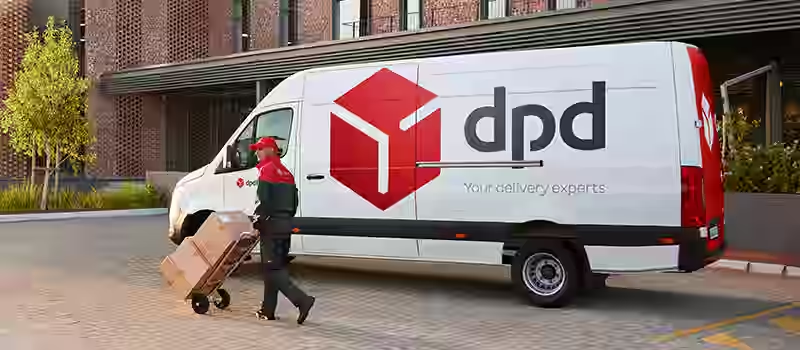
DPD is known for its strong road network across Europe and is often chosen by ecommerce brands looking for a balance between cost and service quality. It works well for regular parcel deliveries within European markets.
For businesses that want dependable intra-EU shipping without paying premium express rates, DPD can be a practical option. It is often a good match for merchants shipping medium-volume orders across several EU countries.
3. GLS – Reliable Ground Shipping
GLS is popular with ecommerce businesses because it offers reliable ground delivery across many European destinations. It is often used for standard shipping where predictable transit times and manageable rates are more important than express speed.
This makes GLS a solid choice for businesses that want steady performance for routine cross-border deliveries. It is especially useful for stores selling everyday products with moderate delivery urgency.

4. UPS – Fast International Coverage
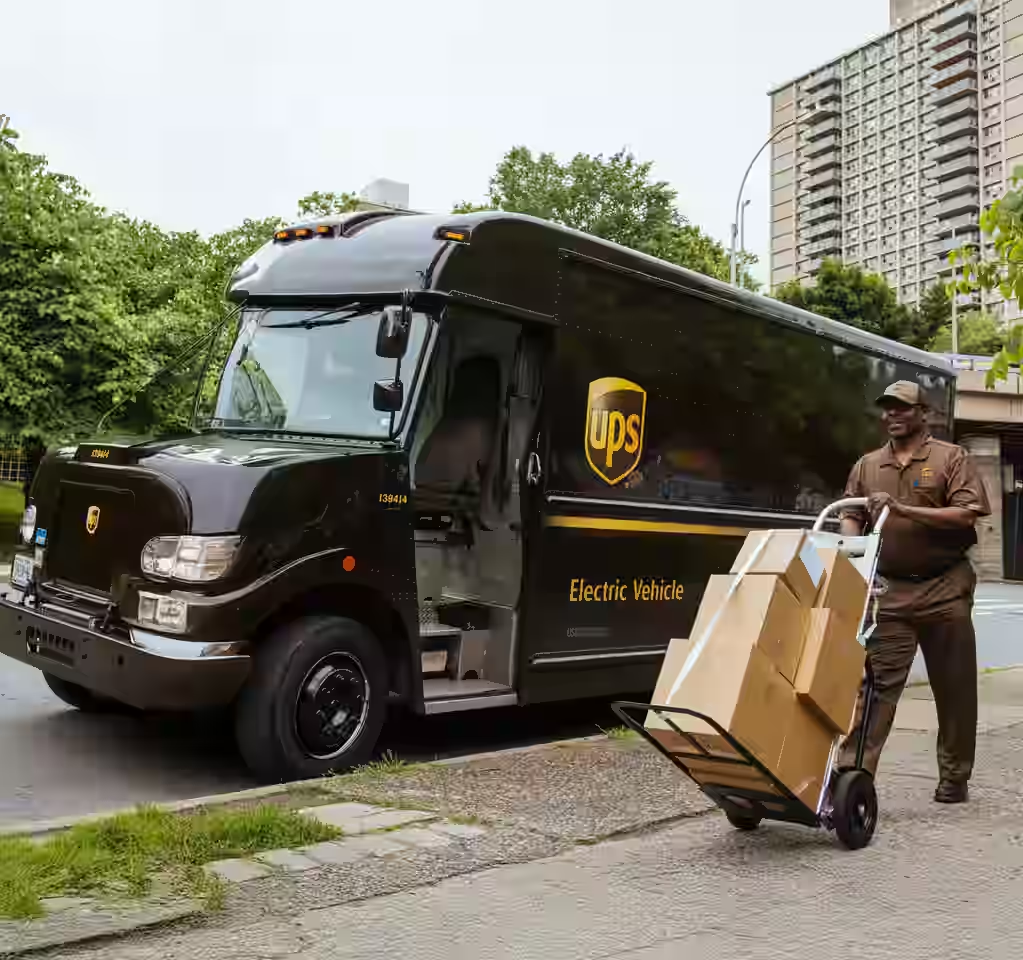
UPS is a strong choice for businesses that need fast shipping, dependable tracking, and wide service coverage. It is commonly used for express deliveries and cross-border shipments that need more control throughout the delivery journey.
For shipping across Europe, UPS can work well for brands that serve both European and global customers. It is particularly useful when a business wants a single carrier that can handle regional and international orders with a similar service standard.
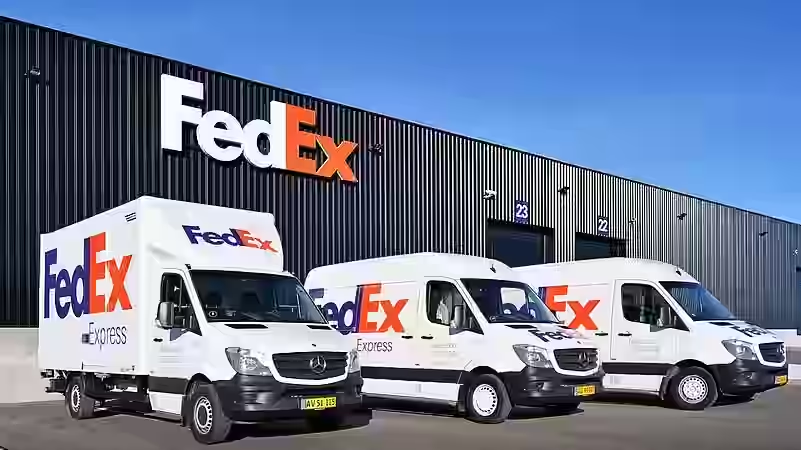
5. FedEx – Global Shipping Solutions
FedEx is often best suited to businesses that ship beyond Europe as well as within it. Its strength lies in global logistics, which makes it useful for brands serving customers in Europe, North America, and other international markets.
For Europe-focused sellers, FedEx can still be valuable when speed and global flexibility matter. It is a good choice for merchants that want to scale into more markets without constantly changing logistics partners.
6. Local Postal Services (La Poste, Royal Mail, Deutsche Post)
Local postal networks can be a smart option for businesses looking for budget-friendly shipping, especially for lightweight parcels and non-urgent deliveries. They are often more affordable than premium courier services and may work well for lower-margin products.
These services are useful when cost control matters most, but delivery times and tracking quality can vary. For many sellers, they work best as part of a mixed shipping strategy rather than as the only option.
Shipping Costs Across Europe Explained
Shipping costs across Europe are not fixed. They vary by destination, parcel size, delivery speed, and carrier network. For ecommerce businesses, understanding these cost drivers is important because shipping can quickly eat into margins or increase cart abandonment if rates feel too high at checkout.
The smartest approach is to look beyond the base courier quote. A shipment that looks cheap at first can become expensive once surcharges, VAT handling, or return costs are added. That is why businesses selling across Europe need to calculate total shipping cost, not just label cost.
Average Shipping Costs by Region
Shipping prices across Europe usually rise with distance, delivery complexity, and service level. Western Europe often has the most mature logistics networks, while extended and remote regions can cost more due to lower shipment density and longer routes.
Western Europe
Shipping within Western Europe is usually the most efficient and competitively priced. Countries like Germany, France, the Netherlands, Belgium, and Spain have strong courier coverage and dense transport networks, which often helps reduce per-parcel costs.
Eastern Europe
Shipping to Eastern Europe can still be affordable, but transit routes may be longer and carrier options may be narrower depending on the destination. Costs are often reasonable for standard delivery, though service consistency can vary more by location.
Nordic countries
The Nordics tend to be more expensive to ship to because of geography, lower population density, and longer last-mile routes. Deliveries to Sweden, Denmark, Finland, and especially remote northern areas can come with higher base rates and surcharges.
Factors That Affect Shipping Costs
The final shipping price is shaped by several variables. Even small changes in packaging or destination can change what you pay.
Package weight and dimensions
Carriers usually price parcels based on actual weight or volumetric weight, whichever is higher. Large but lightweight packages can cost more than expected, so compact packaging helps control spend.
Delivery speed
Standard shipping costs less than express. Faster shipping services use priority handling and tighter delivery windows, so they come at a premium. If the order is not urgent, slower delivery can protect your margins.
Distance between countries
A parcel moving between nearby EU countries often costs less than one crossing a wider region. Longer routes, more handoffs, and harder-to-reach destinations all increase the shipping rate.
Fuel surcharges
Many carriers apply fuel surcharges on top of base shipping rates. These fluctuate and can quietly increase total logistics costs, especially for businesses shipping at volume.
Hidden Costs to Watch Out For
Many sellers focus only on the shipping label price and miss the extra charges that reduce profit later. These hidden costs matter just as much as the advertised rate.
VAT handling fees
Even when VAT itself is expected, carriers may charge an additional admin or clearance fee for processing tax-related paperwork. This can make cross-border orders more expensive than planned.
Remote area surcharges
Some destinations fall outside standard service zones. Islands, rural regions, and low-density areas may trigger extra fees, even within Europe.
Returns processing
Returns are one of the most overlooked shipping costs. Reverse logistics includes return labels, warehouse handling, restocking, and possible product loss. For ecommerce businesses, these costs should be factored into pricing from the start.
Delivery Times Across Europe (What to Expect)
Delivery times across Europe depend on the shipping method, carrier, origin point, and destination country. For most buyers, speed matters almost as much as price. A realistic delivery promise builds trust, while vague or overly optimistic estimates can lead to complaints and refund requests.
For sellers, the key is not just shipping fast but shipping predictably. Customers are usually more satisfied with an accurate 4-day promise than an unrealistic 2-day one that turns into 6.
Standard Delivery Timeframes
Standard shipping is the most common option for ecommerce orders across Europe. It balances cost and transit time well, which makes it suitable for most non-urgent deliveries.
2–5 days within EU
For many intra-EU routes, standard delivery takes around two to five business days. This usually applies when the parcel moves between well-connected countries with strong road and parcel networks.
5–10 days for extended regions
Longer timelines are common for remote areas, island destinations, or shipments moving through less direct routes. Extended delivery windows can also apply when the parcel is leaving or entering non-EU European markets.
Express Shipping Options
Express delivery is used when speed is a priority. It is more expensive, but it can improve conversion rates for buyers who need fast delivery or are ordering high-value products.
Next-day and 1–2 day delivery
Some routes within Europe support next-day delivery, while many express services offer one- to two-day transit between major business hubs and metropolitan areas. This works best when inventory is stored close to the customer and picked up quickly after purchase.
Delays and Common Causes
Even strong shipping networks face disruption. Knowing the usual causes helps businesses set better expectations and communicate clearly with customers.
Customs clearance
Customs checks can slow shipments moving between the EU and non-EU countries. Missing paperwork, unclear product descriptions, or incorrect declared values often add delays.
Peak season demand
Holiday periods, major sales events, and end-of-year shopping spikes can overwhelm sorting hubs and delivery routes. During these periods, even standard lanes may take longer than usual.
Weather disruptions
Bad weather can delay road, air, and ferry transport. This is especially relevant in winter and in regions where weather conditions affect last-mile delivery more heavily.
Customs, Duties, and VAT in Europe
Customs, duties, and VAT are some of the most important parts of shipping across Europe because they affect both cost and customer experience. If these rules are handled badly, orders can get delayed, rejected, or delivered with surprise charges that frustrate buyers.
For ecommerce businesses, the goal is simple: know when customs apply, understand where VAT fits in, and make charges clear before the customer pays.
Shipping Within EU (No Customs)
In most cases, shipping goods between EU member states does not involve customs duties at the border. That makes intra-EU shipping simpler and usually faster than shipping into Europe from outside the bloc.
That said, “no customs” does not mean “no compliance.” Businesses still need to handle VAT correctly, maintain accurate invoices, and ensure product data is properly recorded for tax and reporting purposes.
Shipping Outside EU (UK, Switzerland, Norway)
Shipping to countries like the UK, Switzerland, and Norway is different because these are outside the EU customs union. Parcels moving to these destinations may require customs declarations, duty assessment, and additional tax handling.
This creates more friction than standard intra-EU shipping. Buyers may also face import charges if the seller has not prepaid or clearly communicated them. For stores selling to these markets, transparent checkout messaging is essential.
IOSS (Import One-Stop Shop) Explained
IOSS stands for Import One-Stop Shop. It is a system designed to simplify VAT collection for low-value goods imported into the EU. Instead of charging the customer unexpectedly at delivery, eligible sellers can collect VAT at checkout and report it through the IOSS system.
For ecommerce businesses, this improves the buying experience because the total cost is clearer upfront. It can also reduce delivery friction by making customs processing smoother for qualifying shipments.
How to Avoid Unexpected Charges
Unexpected charges are one of the fastest ways to lose customer trust. The best way to prevent them is to make landed costs more predictable before the order is placed.
Use accurate product values, correct tax settings, and clear shipping policies. Make sure customs documents are complete and product descriptions are specific. If you sell across multiple European markets, working with suppliers or fulfillment partners that already understand EU shipping requirements, such as Spocket, can also help reduce errors, delays, and avoidable cross-border costs.
Best Practices to Optimize Shipping Across Europe
Shipping across Europe gets easier and more profitable when your setup is built for speed, flexibility, and cost control. The goal is not just to ship orders out. It is to deliver reliably, keep costs manageable, and meet customer expectations in different European markets without adding unnecessary complexity.
Choose the Right Fulfillment Location
Fulfillment location has a direct impact on delivery speed and shipping cost. If your inventory is stored closer to your customers, parcels usually arrive faster and travel through fewer handling points. That often means lower shipping rates and fewer delays.
For ecommerce brands, this is one of the most effective ways to improve cross-border delivery performance. Using suppliers or fulfillment partners with inventory in Europe can make shipping across Europe more efficient from day one.
Use Multiple Carriers for Flexibility
Relying on one carrier can create risk. If that carrier raises prices, faces delays, or has weaker coverage in certain countries, your customer experience suffers. Using more than one shipping partner gives you room to choose based on route, speed, parcel type, and cost.
This also helps you adapt to different markets. One carrier may be stronger in Western Europe, while another may perform better in Eastern Europe or remote regions. A multi-carrier setup gives you more control.
Offer Transparent Delivery Times
Customers do not just want fast shipping. They want clear expectations. If delivery estimates are vague or unrealistic, trust drops quickly. Clear delivery windows help reduce support tickets, refund requests, and buyer frustration.
The best approach is to show realistic shipping timelines based on destination and service level. It is better to promise slightly less and deliver early than to overpromise and miss the window.
Optimize Packaging to Reduce Costs
Packaging affects more than product protection. It also affects shipping rates. Many carriers price shipments based on parcel dimensions as well as weight, so oversized packaging can increase costs even when the product itself is light.
Use packaging that fits the item properly, protects it well, and avoids wasted space. Standardized packaging sizes can also simplify fulfillment and improve cost predictability over time.
Use Automation Tools for Shipping
Shipping becomes harder to manage as order volume grows. Manual label creation, tracking updates, and order routing can slow operations and increase mistakes. Automation helps by reducing repetitive tasks and making fulfillment more consistent.
For dropshipping and ecommerce businesses, this also means choosing a platform that supports faster sourcing and fulfillment. Spocket can help here by giving merchants access to EU and US suppliers, which supports faster delivery, shorter shipping routes, and a more reliable customer experience across Europe.
Shipping Across Europe for Ecommerce & Dropshipping
For ecommerce and dropshipping businesses, shipping across Europe is not just a logistics task. It is part of the customer experience and a major factor in whether a visitor completes a purchase. Faster, more predictable delivery often leads to better conversion rates because buyers feel more confident placing the order.
Supplier location plays a big role here. Local or regional suppliers usually offer faster shipping and fewer customs complications than distant international suppliers. That can make the difference between a smooth buying experience and a delayed order that creates complaints.
Shipping speed also affects cart abandonment. When buyers see long delivery windows or high shipping fees, many leave without buying. This is why many merchants prefer working with European suppliers when selling into EU markets. Platforms like Spocket make this easier by connecting sellers with EU-based suppliers, helping reduce delays and improve delivery expectations without making the process harder to manage.
Common Challenges in European Shipping (and How to Solve Them)
Shipping across Europe offers huge opportunities, but it also comes with operational challenges. The businesses that handle these well are usually the ones that keep customers happier and margins healthier.
Cross-Border Regulations
Every market may have different compliance requirements, tax expectations, or documentation needs, especially when shipping between the EU and non-EU countries. A small paperwork error can delay the shipment or add extra charges.
The solution is to standardize documentation and stay clear on destination rules. Accurate product descriptions, invoices, and tax handling reduce avoidable problems.
Delivery Failures
Failed deliveries happen when addresses are incomplete, customers are unavailable, or the local handoff does not go smoothly. These issues increase costs and damage trust.
The best way to reduce delivery failures is to improve address accuracy, share tracking early, and offer delivery options such as pickup points where available. Good communication matters as much as courier performance.
High Shipping Costs
Shipping costs can rise quickly when businesses use the wrong carrier, oversized packaging, or distant suppliers. Many stores discover too late that shipping is hurting margins more than expected.
To solve this, compare carrier options regularly, optimize parcel size, and source products closer to the end customer. Even small improvements in packaging and fulfillment location can make a noticeable difference.
Returns Management
Returns are one of the hardest parts of European shipping because they create extra transport, handling, and restocking costs. They can also be complicated when the product crosses borders on the way back.
A clear return policy, local return options where possible, and better product information on the storefront can reduce return volume. Preventing avoidable returns is usually more cost-effective than simply processing them faster.
Conclusion
Shipping across Europe works best when businesses treat it as a growth strategy, not just a delivery task. The right mix of fulfillment location, carrier choice, packaging, and delivery transparency can improve margins while creating a better customer experience.
For ecommerce brands and dropshippers, faster and more reliable European shipping can directly support higher conversions and fewer order issues. Using a platform like Spocket can help by giving access to EU suppliers that make delivery faster, smoother, and easier to manage as you scale.
Start your dropshipping business today
Shipping Across Europe FAQs
What is the cheapest way to ship across Europe?
The cheapest way to ship across Europe is using local postal services or budget carriers like DPD and GLS, especially for standard, non-urgent deliveries with lower weight and volume.
How long does shipping across Europe take?
Shipping across Europe typically takes 2–5 business days within the EU using standard delivery, while express shipping options can deliver parcels in 1–2 business days.
Do I need to pay customs for shipping within Europe?
No, shipping within the EU does not involve customs duties. However, VAT rules still apply, and businesses must ensure proper tax compliance for cross-border European shipments.
Which carrier is best for shipping across Europe?
DHL and UPS are ideal for fast, reliable shipping across Europe, while DPD and GLS are better suited for cost-effective, standard deliveries across multiple European countries.
How can I reduce shipping costs in Europe?
To reduce shipping costs across Europe, use local EU suppliers, optimize packaging size, compare multiple carriers, and choose standard delivery options whenever possible.
What is IOSS in European shipping?
IOSS (Import One-Stop Shop) is a system that allows ecommerce businesses to collect VAT at checkout for goods under €150, simplifying shipping across Europe and avoiding surprise charges.
Is dropshipping profitable in Europe?
Yes, dropshipping in Europe is profitable when using EU-based suppliers, as it ensures faster delivery, lower shipping costs, and better customer satisfaction across European markets.


Launch your dropshipping business now!
Start free trial


Related blogs

Top WordPress eCommerce Themes for 2026
Explore the best WordPress eCommerce themes for 2026. Compare WooCommerce themes by speed, design, features, and dropshipping potential.


Saba Mohebpour Didn't Stop at Spocket: His New $50M Fund, ILA Capital, Is Buying Up Shopify and Amazon Apps
After building Spocket into a major ecommerce platform, Saba Mohebpour is launching ILA Capital with a $50M strategy to acquire Shopify and Amazon apps powering modern ecommerce.


Top Trendsi Alternatives for Fashion Dropshipping
Explore the best Trendsi alternatives for fashion dropshipping, fast shipping, branding, Shopify integration, and reliable suppliers.