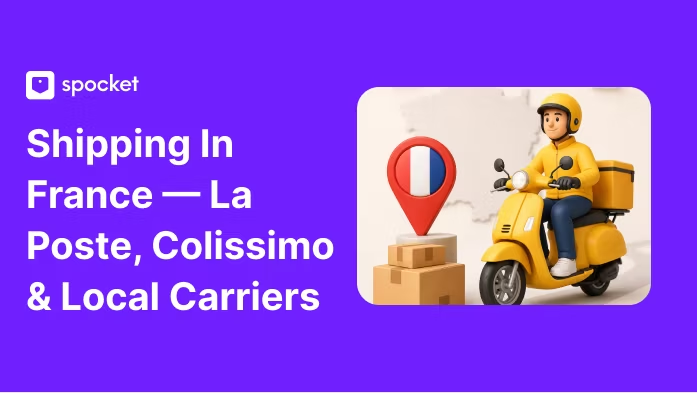
Shipping in France — La Poste, Colissimo & Local Carriers
Learn how shipping works in France for dropshipping stores, including La Poste, Colissimo, Chronopost, Mondial Relay, local carriers, tracking, returns, and delivery tips.
.avif)

Shipping is one of the biggest trust factors for any dropshipping store in France. A customer may like your product and price, but if delivery looks unclear, slow, expensive, or unreliable, they may hesitate before placing an order.
For French customers, shipping expectations are shaped by familiar carriers such as La Poste, Colissimo, Chronopost, Mondial Relay, DPD, DHL, UPS, and other local delivery networks. Many shoppers are used to home delivery, pickup points, parcel lockers, tracking updates, and clear delivery timelines.
That means your dropshipping store needs more than a basic “shipping takes 7–15 days” message. You need to explain delivery options clearly, choose reliable suppliers, track orders properly, and prepare customers for what happens after they buy.
Why Shipping Matters for Dropshipping Stores in France
Shipping is not just a backend operation. It directly affects conversion rates, customer satisfaction, reviews, repeat purchases, and refund requests. In dropshipping, your supplier may handle fulfillment, but your store is still responsible for the customer experience.
French customers expect clear information before checkout. They want to know when the parcel will arrive, how it will be delivered, whether tracking is available, and what to do if the order is delayed.
If your shipping information is vague, customers may lose trust. If the parcel arrives late without updates, they may contact support, request a refund, or leave a negative review.
A strong shipping setup helps your store:
- Build trust before purchase
- Reduce abandoned carts
- Lower support requests
- Improve customer satisfaction
- Manage expectations clearly
- Reduce refund and chargeback risk
- Create a more professional brand experience
For dropshipping stores, shipping clarity is especially important because customers may not know where the product is shipped from. If you are transparent from the beginning, customers are more likely to feel comfortable waiting.
Understanding La Poste in France
La Poste is France’s national postal operator and one of the most recognized delivery names in the country. It handles mail, parcels, financial services, and logistics through different services and subsidiaries.

For ecommerce sellers, La Poste matters because French customers already recognize and trust it. Even if your dropshipping supplier does not directly use La Poste, understanding how it works helps you explain delivery expectations and compare carrier options.
La Poste provides parcel services in France and internationally, including Colissimo and Chronopost options. Its tracking tool allows customers to track letters, Colissimo parcels, and Chronopost shipments using a tracking number or missed-delivery notice.
Why La Poste Is Important for Ecommerce
La Poste is familiar to French buyers. This familiarity can help reduce uncertainty when customers see La Poste or Colissimo mentioned as part of the delivery process.
For ecommerce, La Poste-related services can support:
- Domestic parcel delivery
- International parcel shipping
- Tracking
- Pickup and drop-off options
- Delivery to home or pickup points
- Returns, depending on the merchant setup
If your store sells to customers in France, understanding La Poste helps you create clearer shipping pages, FAQs, and customer support replies.
What Is Colissimo?
Colissimo is La Poste’s parcel delivery service and one of the most widely recognized shipping options in France. It is commonly used for ecommerce parcels and supports both domestic and international delivery.

Colissimo is often associated with standard parcel shipping rather than ultra-fast express delivery. For many ecommerce stores, it is useful because customers recognize the name and can track their parcel through La Poste’s tracking tools.
La Poste’s 2026 Colissimo tariff page shows domestic Colissimo options for France, Monaco, and Andorra, including home delivery and pickup-point delivery, with prices varying by parcel weight.
Why Colissimo Works Well for Ecommerce
Colissimo is useful for ecommerce because it balances familiarity, coverage, and tracking. It is not always the cheapest option, and it is not always the fastest, but it is widely known.
For dropshipping stores, Colissimo-style delivery can be useful when customers want:
- Recognizable carrier name
- Parcel tracking
- Home delivery
- Pickup-point options
- Standard delivery timelines
- Domestic and international coverage
Colissimo’s professional international delivery information also explains that merchants can deliver worldwide, with delivery methods adapted to local practices, including home delivery, parcel shops, or lockers depending on the destination country.
Colissimo Tracking
Tracking is a major part of customer trust. Customers want to know where their parcel is and when it may arrive.
La Poste allows users to track letters, Colissimo parcels, and Chronopost shipments using a tracking number. For ecommerce sellers, this means tracking numbers should be shared with customers as soon as they are available.
Your dropshipping store should send tracking details through:
- Order confirmation emails
- Shipping confirmation emails
- Customer account pages
- SMS updates, if used
- Support replies
- Tracking pages
A clear tracking experience reduces “Where is my order?” messages.
What Is Chronopost?
Chronopost is another delivery service connected to La Poste Group and is usually associated with express parcel delivery. It is often used when speed matters more than cost.
For ecommerce sellers, Chronopost can be useful for urgent shipments, premium delivery options, or higher-value orders where faster delivery improves the customer experience.
Compared with standard delivery, express delivery can cost more. That means it may not be ideal for every dropshipping product. But it can be useful for:
- Premium products
- Time-sensitive orders
- Gift purchases
- Business customers
- Urgent replacements
- High-margin items
If you offer express delivery, make sure your supplier can actually fulfill the order quickly. Do not advertise express shipping unless the full fulfillment process supports it.
Local Carriers and Delivery Options in France
France has several carrier options beyond La Poste and Colissimo. Dropshipping stores selling to French customers may encounter or work with carriers such as Mondial Relay, Chronopost, DPD, DHL, UPS, GLS, Colis Privé, and other logistics providers.
Each carrier has different strengths. Some are better for pickup points. Some are better for express delivery. Some are better for international shipments. Some are more affordable for standard parcels.
A logistics guide for French ecommerce identifies Colissimo, Chronopost, Mondial Relay, Colis Privé, and DHL Express as key ecommerce carriers in France, with carrier choice depending on price, speed, delivery format, and shipping destination.
Mondial Relay
Mondial Relay is popular for pickup-point delivery. Many customers in France are comfortable collecting parcels from nearby shops or relay points.
This option can be attractive because it may be more affordable than home delivery and gives customers flexibility. It is especially useful for shoppers who are not always home during delivery hours.
Mondial Relay can be useful for:
- Budget-conscious delivery
- Pickup-point shipping
- Non-urgent orders
- Small and medium parcels
- Customers who prefer collection points
For dropshipping stores, pickup-point delivery can reduce failed delivery attempts, but only if your supplier or logistics partner supports it.
DPD France
DPD is often used for domestic and European parcel delivery. It can be useful for ecommerce sellers needing reliable parcel shipping across France and nearby European markets.
DPD may be suitable for:
- European deliveries
- Business and residential deliveries
- Trackable parcels
- Mid-speed shipping
- Stores with cross-border customers
If you sell beyond France, DPD-style services may be worth considering through your fulfillment partner.
DHL, UPS and International Carriers
DHL and UPS are widely recognized international carriers. They are often used for cross-border, express, or higher-value shipments.
These carriers may be more expensive, but they can provide strong tracking, global coverage, and faster delivery options.
They may be useful for:
- International orders
- High-value products
- Express shipping
- Premium delivery options
- Cross-border ecommerce
For dropshipping, the key is margin. If shipping costs are too high, they can reduce profit quickly.
Colis Privé and Other Local Options
Colis Privé and similar local carriers can be used for domestic ecommerce delivery. They may offer competitive pricing for certain parcel types and regions.
However, customer experience can vary by carrier, delivery location, and service type. Always review delivery performance, tracking quality, and customer feedback before relying heavily on a carrier.
How Dropshipping Shipping Works in France
Dropshipping shipping works differently from traditional ecommerce. In a traditional store, the merchant usually controls inventory and fulfillment. In dropshipping, the supplier ships the product directly to the customer.
This creates both benefits and risks.
The benefit is that you do not need to hold inventory. The risk is that you have less direct control over packaging, dispatch speed, carrier choice, and delivery updates.
A typical dropshipping order flow looks like this:
- Customer places an order on your store.
- You receive payment.
- The order is sent to your supplier.
- The supplier processes and ships the order.
- A carrier transports the parcel.
- Tracking information is shared.
- Customer receives the order.
- You handle customer service if there is an issue.
Even if the supplier handles shipping, your store should still manage expectations clearly.
Domestic vs International Shipping for French Customers
If your supplier ships from France or Europe, delivery may feel more familiar and predictable for French customers. If the supplier ships from outside Europe, delivery may take longer and may involve customs or import issues.
Domestic Shipping
Domestic shipping means the parcel is shipped from within France to a customer in France. This is usually easier to explain and often faster.
Domestic shipping can support:
- Shorter delivery windows
- Easier tracking
- Fewer customs issues
- Higher customer confidence
- Better return handling
EU Shipping
EU shipping means the parcel ships from another European country to France. This can still be attractive if the delivery time is reasonable and tracking is clear.
EU-based fulfillment may help reduce some uncertainty compared with shipping from far-away locations.
International Shipping Outside the EU
International shipping from outside the EU can be slower and more complex. Customs, import VAT, carrier handoffs, and longer transit times can affect the customer experience.
La Poste’s international parcel guidance highlights that international shipping requires attention to delivery times, prices, and customs formalities.
If you ship from outside the EU, your product pages should explain:
- Estimated delivery time
- Tracking availability
- Possible customs delays
- Who handles import fees
- Return process
- Support contact details
Customers should not discover these details only after purchase.
Shipping Expectations French Customers Usually Have
French customers generally expect delivery information to be clear before checkout. Even if delivery is not instant, customers want honesty.
Your store should clearly explain:
- Estimated processing time
- Estimated delivery time
- Carrier or shipping method, if known
- Tracking availability
- Delivery areas
- Return process
- What happens if a parcel is delayed
- Whether customs fees may apply
A good shipping page helps reduce uncertainty and support tickets.
Processing Time vs Delivery Time
Many dropshipping stores confuse processing time and delivery time. Customers may think “delivery in 7 days” means the parcel arrives 7 days after purchase. But if your supplier takes 3 days to process the order, the full timeline is longer.
Use clear wording:
“Orders are usually processed within 1–3 business days. After dispatch, delivery usually takes 3–7 business days, depending on the carrier and destination.”
This is more transparent than giving one vague estimate.
Tracking Updates
Tracking may not update immediately after a label is created. Customers should know this.
You can say:
“Tracking details may take 24–48 hours to update after dispatch.” This simple message can reduce unnecessary support requests.
How to Choose the Best Shipping Carrier for a Dropshipping Store in France
The best carrier depends on your products, suppliers, delivery promise, customer expectations, and margins.
Choose Based on Product Type
Small lightweight products may work well with standard shipping. Higher-value products may need tracked or signature delivery. Fragile products may require better packaging and more reliable carriers.
Consider:
- Product weight
- Product value
- Fragility
- Delivery urgency
- Return risk
- Customer expectations
Compare Cost and Speed
The cheapest carrier is not always the best. If low-cost shipping leads to delays and complaints, it can cost more in refunds and lost trust.
Compare:
- Shipping cost
- Delivery time
- Tracking quality
- Lost parcel rate
- Customer support
- Pickup-point options
- Return handling
Consider Pickup Points
Pickup points are common in France and can be convenient for customers. They can also reduce failed home deliveries.
If your supplier or fulfillment partner supports pickup-point delivery, consider offering it as an option.
Check Tracking Quality
Tracking is essential for dropshipping. A carrier with poor tracking can create frustration, even if the parcel eventually arrives.
Before choosing a shipping setup, check whether tracking is clear, updated regularly, and easy for customers to access.
Shipping Policies Your France Dropshipping Store Should Include
A clear shipping policy helps customers decide whether to buy. It also protects your support team from answering the same questions repeatedly.
Your shipping policy should include the following sections.
Processing Time
Explain how long it takes to prepare and dispatch an order.
Example: “Orders are usually processed within 1–3 business days before shipment.”
Delivery Time
Give realistic delivery estimates. Avoid overpromising.
Example: “Delivery within France usually takes 3–7 business days after dispatch, depending on the product, supplier location, and carrier.”
Adjust this based on your actual supplier data.
Tracking Information
Explain when customers receive tracking.
Example: “You will receive a tracking link by email once your order has been dispatched. Tracking may take 24–48 hours to update.”
Shipping Fees
Be clear about whether shipping is free, flat-rate, or calculated at checkout. If you offer free shipping, make sure the cost is included in your pricing strategy.
Customs and Import Fees
If products may ship from outside the EU, explain whether customs or import fees may apply. This is very important for trust. Unexpected charges can lead to complaints.
Lost or Delayed Parcels
Explain what customers should do if their order is delayed.
Example: “If your parcel has not arrived within the estimated delivery window, contact our support team with your order number so we can check the tracking status.”
Returns
Link your shipping policy to your return policy. Customers should understand where and how returns are handled.
Common Shipping Mistakes to Avoid in France
Shipping mistakes can damage your store quickly. Avoid these common issues.
- Overpromising Delivery Times: Do not promise fast delivery unless your supplier and carrier can support it. Overpromising may increase conversions at first, but it can create refunds and complaints later.
- Hiding Supplier Location: You do not need to make supplier location the main selling point, but you should not mislead customers. If delivery takes longer because products ship internationally, explain the timeline clearly.
- Not Providing Tracking: Tracking is essential. Customers want visibility. If tracking is unavailable, support requests will increase.
- Ignoring Returns: Returns are part of ecommerce. Make sure your return process is clear before you start selling.
- Using the Same Shipping Message for Every Product: Different products may have different supplier locations or shipping times. If your catalog has mixed fulfillment sources, avoid giving one inaccurate estimate for everything.
Final Checklist for Shipping in France
Before launching or scaling your dropshipping store in France, review this checklist:
- Choose reliable suppliers
- Confirm supplier processing times
- Check available carriers
- Confirm tracking availability
- Compare delivery timelines
- Review shipping costs
- Decide whether to offer free shipping
- Write a clear shipping policy
- Explain customs fees if relevant
- Create a return policy
- Set up tracking emails
- Prepare support replies for delays
- Test the customer delivery experience
- Monitor complaints and delivery performance
Conclusion
Shipping in France is a key part of building trust for a dropshipping store. Customers want clear delivery timelines, recognizable carriers, reliable tracking, and honest communication before they place an order. La Poste and Colissimo are among the most familiar names in French parcel delivery, while Chronopost, Mondial Relay, DPD, DHL, UPS, GLS, Colis Privé, and other local carriers also play important roles depending on speed, price, destination, and delivery format.
For dropshipping sellers, the most important thing is not choosing the most famous carrier. It is choosing a shipping setup that matches your products, supplier locations, margins, and customer expectations.
With Spocket, sellers can source quality products from reliable suppliers and create clearer shipping expectations for customers in France. When reliable sourcing, accurate delivery information, tracking, and strong customer communication work together, shipping becomes more than a logistics detail. It becomes a trust-building part of your ecommerce brand.
Start your dropshipping business today
FAQs About Shipping in France for Dropshipping Stores
What are the main shipping carriers in France for dropshipping?
The main shipping carriers in France include La Poste, Colissimo, Chronopost, Mondial Relay, DPD, DHL, UPS, GLS, and Colis Privé. For dropshipping stores, the best carrier depends on product type, supplier location, delivery speed, tracking quality, and shipping cost.
Is Colissimo good for ecommerce shipping in France?
Yes, Colissimo is a popular option for ecommerce shipping in France because it is widely recognized, offers parcel tracking, and supports home delivery and pickup-point delivery. It is often used for standard parcel delivery rather than urgent express shipping.
What is the difference between La Poste and Colissimo?
La Poste is France’s national postal operator, while Colissimo is one of La Poste’s parcel delivery services. La Poste handles different postal and logistics services, while Colissimo is specifically used for parcel shipping within France and internationally.
How can dropshipping stores reduce shipping problems in France?
Dropshipping stores can reduce shipping problems by choosing reliable suppliers, offering clear delivery timelines, sharing tracking details, explaining customs fees when relevant, and creating a transparent shipping policy. Using trusted suppliers through Spocket can also help improve fulfillment expectations.
How does Spocket help with shipping for France-based dropshipping stores?
Spocket helps dropshipping sellers source quality products from reliable suppliers, including suppliers from regions like the US and Europe. This can support clearer delivery expectations, better product quality, fewer customer complaints, and a more trustworthy shipping experience for French customers.


Launch your dropshipping business now!
Start free trial


Related blogs
How to Set Up Automated Order Fulfillment With Spocket and Shopify
Set up a smoother Shopify dropshipping workflow with Spocket by connecting your store, importing products, processing orders, syncing tracking, and reducing manual fulfillment tasks.

How to Open a Business Bank Account for Your Dropshipping Store
Set up your dropshipping finances the right way with a dedicated business bank account built for payouts, supplier payments, taxes, and long-term store growth.
Spocket vs Dropified: Which Tool Is Better for Multi-Store Scaling?
Compare Spocket and Dropified for multi-store dropshipping, supplier quality, automation, fulfillment, product sourcing, and scaling across ecommerce platforms.