


Spocket vs AppScenic: Which Dropshipping Platform Is Better for Shopify?
Compare Spocket vs AppScenic to find the best dropshipping platform for Shopify. Explore features, pricing, suppliers, and automation.
.avif)

If you’re building a Shopify dropshipping store, choosing the right supplier platform is one of the most important decisions you’ll make.
It directly affects your shipping speed, product quality, customer satisfaction, and ultimately your profit margins. Two platforms that frequently come up in this conversation are Spocket and AppScenic.
At first glance, they may seem similar. Both offer automation, supplier access, and Shopify integrations. But once you look deeper, the differences become clear.
One focuses more on quality, faster shipping, and brand-building, while the other leans heavily into automation and operational simplicity. In this detailed comparison, we’ll break down Spocket vs AppScenic across key areas like suppliers, automation, pricing, branding, and long-term scalability—so you can choose the platform that actually fits your business model.
Understanding the Core Philosophy Behind Each Platform
Before comparing features, it helps to understand what each platform is built for. This gives you context for why certain features exist.
What Spocket is designed for
.avif)
Spocket is built around the idea of quality-first dropshipping.
Instead of overwhelming you with thousands of suppliers, it focuses on curated vendors—primarily from the US and Europe. The goal is to help store owners create a better customer experience with:
- Faster delivery times
- More reliable suppliers
- Higher-quality products
- Fewer returns and disputes
This makes Spocket particularly appealing if you want to build a brand rather than just run a quick test store.
What AppScenic is designed for
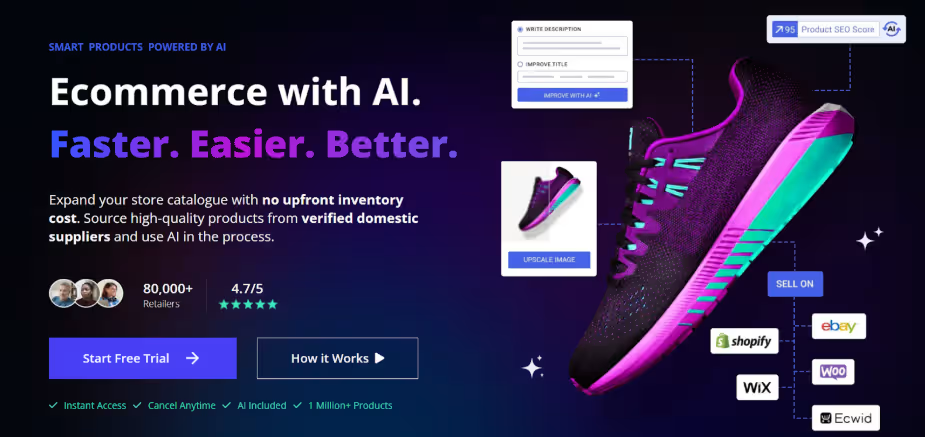
AppScenic takes a slightly different approach. Its focus is on automation and scalability. It aims to reduce manual work as much as possible by offering:
- Real-time inventory syncing
- Automated order processing
- Minimal hands-on management
This makes it attractive for beginners or those who want a more hands-off experience.
Why this difference matters
Choosing between these platforms is not just about features.
It’s about deciding:
- Do you want control and quality?
- Or do you want maximum automation and speed of setup?
Understanding this early helps avoid switching platforms later.
Key Comparison Areas Between Spocket and AppScenic
Choosing between Spocket and AppScenic isn’t just about features—it’s about understanding how each platform performs across the areas that actually impact your dropshipping success.
From supplier quality and automation to shipping speed, branding, and scalability, each factor plays a role in how smoothly your business runs and how customers perceive your store. In the sections below, we’ll break down these core areas in detail to help you make a confident, informed decision.
1. Supplier Quality and Product Sourcing
Your suppliers define your business. No amount of marketing can fix poor product quality or slow shipping.
Spocket’s supplier network
Spocket focuses heavily on supplier curation. Instead of allowing anyone to list products, it carefully selects suppliers—most of whom are based in the US and Europe.
This results in:
- Better product consistency
- Higher manufacturing standards
- Faster delivery timelines
- Reduced refund rates
For store owners targeting premium customers, this makes a noticeable difference.
Another advantage is that many products come with discounted wholesale pricing, allowing you to maintain healthy profit margins.
AppScenic’s supplier network
AppScenic offers a wider and more flexible supplier network.
You get access to:
- Domestic suppliers (US, UK, EU)
- International suppliers
- A growing catalog across multiple niches
This variety is useful if you want to test different products quickly or explore multiple categories.
However, since the network is broader, the quality and shipping experience can vary depending on the supplier.
Key takeaway on suppliers
If your priority is consistency, quality, and fast shipping, Spocket has a clear advantage. If your priority is variety and experimentation, AppScenic gives you more flexibility.
2. Automation and Workflow Efficiency
Automation is often the biggest selling point for dropshipping tools. But not all automation is equal.
AppScenic’s automation strength
AppScenic is built with automation at its core. It minimizes manual work by handling:
- Order placement automatically
- Inventory updates in real time
- Tracking updates without intervention
- Price changes based on supplier data
This is ideal for beginners who want to launch quickly and manage their store with minimal effort. You can essentially run your store with very little day-to-day involvement.
Spocket’s approach to automation
Spocket also offers automation, but with more balance. It provides:
- One-click product imports
- Automated order fulfillment
- Inventory syncing
- Pricing rules
However, it still gives you more control over how your store operates. This is useful if you want to:
- Curate products manually
- Maintain brand consistency
- Optimize pricing strategies
Which one is better for automation?
AppScenic is stronger if your goal is maximum automation with minimal involvement. Spocket is better if you want automation combined with strategic control.
3. Shipping Speed and Customer Experience
Shipping is where many dropshipping businesses struggle. Long delivery times often lead to:
- Customer complaints
- Refund requests
- Negative reviews
Spocket’s shipping advantage
Spocket’s focus on US and EU suppliers gives it a major edge. You benefit from:
- Faster domestic shipping
- More predictable delivery timelines
- Better customer satisfaction
In many cases, products arrive within a few days instead of weeks.
This makes your store feel more like a traditional ecommerce brand rather than a typical dropshipping store.
AppScenic’s shipping experience
AppScenic also offers domestic suppliers, but its global network means shipping times are less consistent. Some products ship quickly, while others may take longer depending on location. This variability can impact customer experience if not managed carefully.
Why shipping matters more than you think
Shipping is not just logistics—it’s part of your brand. Faster delivery leads to:
- Higher customer trust
- More repeat purchases
- Better reviews
This is one area where investing in the right platform pays off long term.
4. Branding and Customization Capabilities
Branding is what separates serious stores from generic ones.
Spocket’s branding features
Spocket supports branding through features like:
- Branded invoicing
- Custom packaging options (depending on supplier)
- More control over product presentation
These features help you create a consistent brand identity. Instead of looking like a random dropshipping store, your business feels more professional and trustworthy.
AppScenic’s branding capabilities
AppScenic focuses more on automation than branding.
While you can customize product listings and store design through Shopify, branding features within the platform itself are more limited. This means you may need to rely on external tools to build a stronger brand presence.
Branding takeaway
If your goal is to build a recognizable brand, Spocket offers more support. If branding is not your priority yet, AppScenic still works fine.
5. Pricing and Overall Value
Cost is always a factor, especially when starting out.
AppScenic pricing structure
AppScenic is designed to be accessible. It offers:
- A free plan for beginners
- Lower entry-level pricing
- Scalable plans as your store grows
This makes it a good starting point if you are testing the waters.
Spocket pricing structure
Spocket is positioned as a more premium solution. Its pricing reflects:
- Higher-quality suppliers
- Better shipping reliability
- Stronger product margins
While it may cost more upfront, the value often comes from fewer issues and better customer retention.
Which offers better value?
- AppScenic → better for low-budget beginners
- Spocket → better for long-term growth and stability
6. Ease of Use and Setup Experience
Both platforms aim to simplify dropshipping, but the experience differs slightly.
Getting started with AppScenic
AppScenic is very beginner-friendly. You can:
- Connect your store quickly
- Import products easily
- Start selling with minimal setup
The interface is designed to reduce friction and help you launch fast.
Getting started with Spocket
Spocket is also easy to use, but it encourages more thoughtful setup. You spend time:
- Selecting better products
- Reviewing suppliers
- Customizing listings
This extra effort often results in a stronger store foundation.
Ease of use verdict
AppScenic is slightly easier for quick launches. Spocket is better for intentional, quality-focused setups.
7. Long-Term Scalability and Growth Potential
Your choice of platform should support where you want your business to go—not just where it is today.
Scaling with AppScenic
AppScenic helps you scale through automation. You can:
- Add more products quickly
- Manage larger inventories
- Reduce operational workload
However, scaling may come with challenges if supplier consistency varies.
Scaling with Spocket
Spocket supports growth through:
- Reliable supplier relationships
- Better product quality
- Stronger customer experience
This leads to:
- Higher repeat purchase rates
- Better brand reputation
- More sustainable growth
Scalability takeaway
If you want to build a high-volume automated store, AppScenic works well. If you want to build a long-term brand with loyal customers, Spocket is the stronger option.
Common Mistakes When Choosing Between Spocket and AppScenic
Choosing between Spocket and AppScenic can feel straightforward at first, but many store owners make quick decisions without fully understanding how each platform aligns with their business goals. The mistake isn’t picking one over the other—it’s choosing based on short-term convenience instead of long-term impact.
Factors like supplier reliability, customer experience, branding potential, and scalability often get overlooked in favor of pricing or automation features. In this section, we’ll break down the most common mistakes so you can avoid costly switches and build your store on the right foundation from the start.
- Choosing based only on price: Lower cost can be attractive, but it often comes with trade-offs in quality and reliability. It’s important to look beyond pricing and consider long-term impact.
- Ignoring customer experience: Shipping speed and product quality directly affect customer satisfaction. Choosing a platform without considering these factors can hurt your store’s reputation.
- Overvaluing automation: Automation is helpful, but it should not come at the cost of control and brand consistency. A balanced approach usually works better.
Final Verdict: Spocket vs AppScenic
Both platforms are strong—but they serve different types of businesses.
AppSenic is ideal if you want:
- A quick start
- Strong automation
- Lower upfront costs
Spocket, on the other hand, is ideal if you want:
- Better product quality
- Faster shipping
- Stronger branding
- Long-term scalability
Conclusion
When comparing Spocket vs AppScenic, the right choice ultimately depends on how you want to build your business. If your goal is to launch quickly and automate as much as possible, AppScenic offers a smooth and beginner-friendly path.
But if you are thinking beyond short-term wins—if you want to create a store that customers trust, products that arrive faster, and a brand that grows over time—then Spocket provides a stronger foundation. It helps you move away from the typical dropshipping model and toward a more reliable ecommerce business.
If you’re serious about building a store that stands out, it’s worth exploring what Spocket can offer and how better suppliers can improve your results from day one.
Start your dropshipping business today
FAQs About Spocket vs AppScenic
Which is better, Spocket or AppScenic for Shopify dropshipping?
The better choice depends on your business goals. Spocket is ideal if you want faster shipping, high-quality suppliers, and a strong brand experience. AppScenic is better suited for beginners who prioritize automation and a hands-off setup.
Does Spocket offer better suppliers than AppScenic?
Yes, Spocket focuses on curated suppliers, mainly from the US and Europe, which often results in better product quality and faster shipping. AppScenic offers a wider range of suppliers, but the experience can vary depending on the vendor.
Is AppScenic more automated than Spocket?
AppScenic is generally more automation-focused. It handles order processing, inventory updates, and tracking with minimal manual input. Spocket also offers automation but gives you more control over product selection and store management.
Which platform is more beginner-friendly?
AppScenic is slightly more beginner-friendly due to its automation and simple setup process. However, Spocket is also easy to use and better suited if you want to build a more structured and scalable dropshipping business from the start.
Can I build a long-term dropshipping brand with Spocket or AppScenic?
You can use both platforms, but Spocket is better suited for long-term brand building. Its focus on faster shipping, reliable suppliers, and branding features helps create a better customer experience and encourages repeat purchases.


Launch your dropshipping business now!
Start free trial


Related blogs
Dripshipper Reviews: Is This Coffee Dropshipping Platform Worth It?
Read this detailed Dripshipper review covering features, pros, cons, pricing, customer feedback, profitability, and better dropshipping alternatives.

Is BigBuy Legit? Honest Review for Dropshipping Businesses
Find out if BigBuy is a reliable dropshipping supplier, including its features, pros, cons, pricing concerns, reviews, and alternatives for ecommerce sellers.
What is Micromarketing and How to Use it Effectively
Learn what micromarketing is, how it works, its benefits, examples, and how ecommerce businesses can use it to target niche customers effectively.
