Spocket vs Gelato : Combining Dropshipping and POD
Compare Spocket vs Gelato for combining dropshipping and print on demand. Learn key differences, best use cases, and how to run both models together.
.avif)

If you’ve been building an ecommerce store lately, you’ve probably noticed something. The stores that scale smoothly rarely rely on just one fulfillment model. They mix what works. That’s why the conversation around Spocket vs Gelato keeps coming up, especially for founders who want to combine classic dropshipping with print on demand (POD).
Here’s the practical reason this combo is attractive:
Dropshipping lets you sell proven products without holding inventory, while POD lets you build a brand through custom designs, personalization, and higher perceived value. When you combine both, you can diversify your catalog, test faster, and reduce the risk of depending on a single product type.
This guide compares Spocket and Gelato with a clear goal: help you choose the right platform (or the right mix) for your store, your audience, and your margins.
What combining dropshipping and POD actually looks like
Most stores don’t combine models “just because.” They do it to solve specific business problems like low repeat purchases, lack of differentiation, or unstable ad performance.
A blended store usually looks like this:
- Dropshipping products for breadth, trending categories, and fast testing
- POD products for brand-building, personalization, and higher-margin hero items
- A single storefront where customers can buy both without feeling like it’s two different brands
The most common winning setup is using dropshipping to fill out the catalog and POD to create “signature items” that make the store feel unique.
Quick positioning overview of Spocket vs Gelato
Before we dive into details, it helps to understand what each platform is best known for.
Spocket
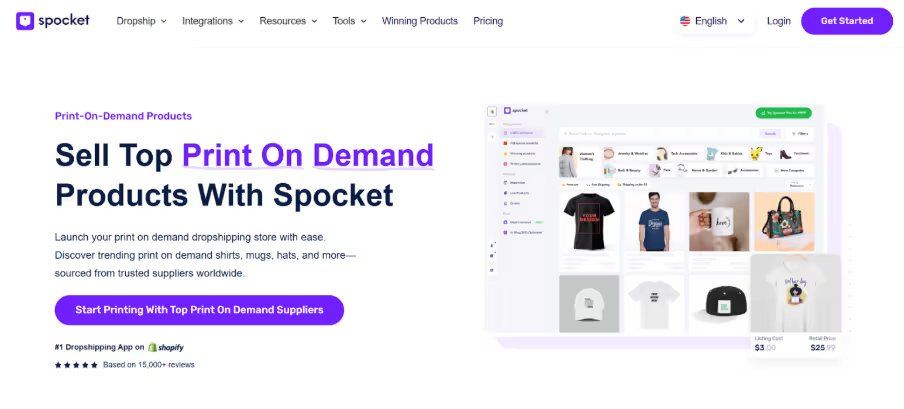
Spocket is primarily a dropshipping platform focused on sourcing products from suppliers, with a strong emphasis on US/EU supplier access and fast shipping, and it also supports POD so sellers can offer custom products.
Gelato
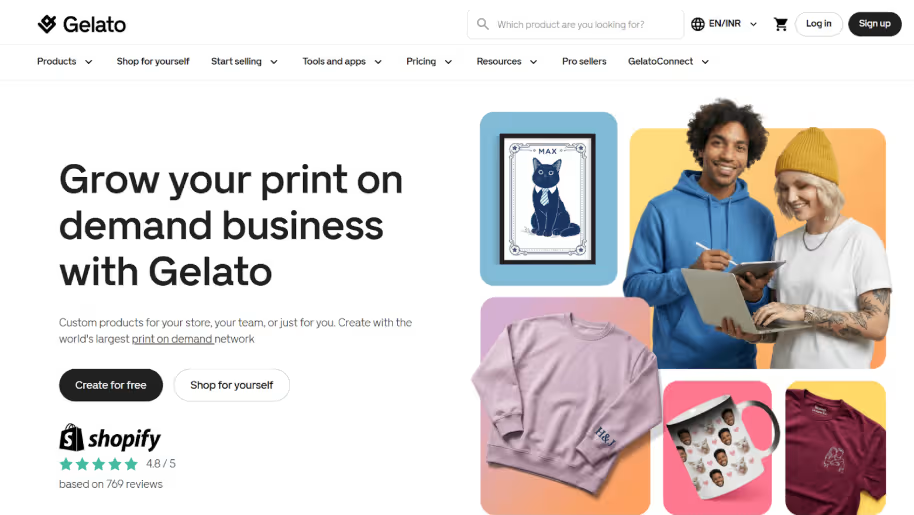
Gelato is a print on demand platform built around a global network model that enables local production in multiple countries, designed to help creators sell custom products worldwide.
Why people compare them
Because many store owners are deciding whether to:
- Run POD inside a broader dropshipping strategy
- Add POD to an existing dropshipping store
- Choose one platform that can cover most needs
And that’s why the keyword Spocket vs Gelato matters: it’s less about “which is better overall,” and more about “which is better for my store model.”
Spocket vs Gelato: Let’s compare
At the heart of this comparison is one simple distinction:
- Spocket is built to help you source and sell dropshipping products (and supports POD as an expansion path).
- Gelato is built to help you create and sell print on demand products (and integrates with major selling channels).
So the decision becomes clearer when you ask: Are you primarily building a dropshipping store that wants POD as a layer, or a POD store that wants a broader catalog?
1. Products and catalog strategy
This section matters because the “right” platform depends heavily on what you want to sell.
Spocket product strategy
With Spocket, the value is breadth and sourcing options. You can build a general store, a niche store, or a curated catalog with suppliers that support faster delivery (especially in US/EU-focused markets).
If you’re combining dropshipping and POD, Spocket helps you do the “classic ecommerce thing” well:
- add complementary products
- build bundles
- test new categories quickly
- expand into POD categories without redesigning your entire store approach
Gelato product strategy
Gelato is about custom product creation and fulfillment at scale. The platform is positioned around local production across multiple countries and broad delivery reach, which can be useful for brands selling globally.
If your store is design-led (apparel, wall art, stationery, gifting), Gelato is naturally aligned because everything starts with the design workflow.
2. Shipping and fulfillment expectations
Shipping is where blended stores win or lose customer trust. This is also where Spocket vs Gelato becomes a practical decision, not a features debate.
Spocket fulfillment
Spocket emphasizes fast shipping through its supplier network and highlights that a large portion of suppliers are located in the US and EU, which supports shorter delivery windows for many customers. It also describes typical POD production time and notes that delivery varies by destination, with faster turnaround supported by US/EU supplier concentration.
This can be a strong advantage if your audience is concentrated in North America or Europe and shipping speed is a conversion lever.
Gelato fulfillment
Gelato’s model centers on local production in many countries, supported by a network of print partners, and it states it can deliver to a very large number of countries and regions.
If you’re selling internationally and you care about reducing cross-border friction, local production can help, especially for POD items where shipping costs and delivery times can otherwise spike.
3. Integrations and store setup
This section is important because your operational workload goes up quickly when you’re running two fulfillment models.
Spocket integrations
Spocket positions itself around ecommerce integrations and centralized management so you can source products and manage orders without juggling multiple dashboards.
If your main store is dropshipping-driven, Spocket typically feels like the hub.
Gelato integrations
Gelato emphasizes integrations with ecommerce platforms and marketplaces, and it also documents alternative options when a native integration isn’t available.
If you’re running a POD-first operation, the Gelato workflow can be your starting point.
4. Branding and customer experience
This is where POD can dramatically improve a dropshipping store. Dropshipping stores often struggle with differentiation. POD solves that by letting you create:
- brand-specific designs
- personalized products
- giftable items with emotional appeal
So the smarter question isn’t “Spocket or Gelato?” It’s: “How do I use POD to make my dropshipping store feel like a brand?”
A strong blended brand approach
- Use dropshipping items as functional complements
- Use POD items as your signature products
- Build a collection around a theme instead of random SKUs
This helps your store feel curated, which improves conversion rates and repeat purchase behavior.
5. Pricing model mindset for both platforms
Even without diving into exact plan pricing, the way you should think about costs is different.
Dropshipping cost structure
With dropshipping, your main cost pressures are:
- supplier base cost
- shipping cost
- refunds/returns
- ad spend
Your advantage is fast product testing without holding inventory.
POD cost structure
With POD, your main cost pressures are:
- base cost of printing
- shipping cost (varies by region)
- design workload and iteration
- customer expectations around “made to order”
Your advantage is higher perceived value and better differentiation.
Blending both lets you balance:
- dropshipping breadth + POD uniqueness
- faster testing + stronger brand identity
- multiple price points across the store
When to Choose Spocket vs Gelato for Your Store Model
Choosing between Spocket vs Gelato isn’t about which platform is “better” overall—it’s about which one aligns with your primary business model. Your decision should reflect how your store is structured, where your customers are located, and whether your revenue is driven mainly by curated dropshipping products or custom print-on-demand items. The right platform is the one that supports your core strategy without forcing you to rebuild your workflow as you scale.
When Spocket is the better choice
Use Spocket if your store is dropshipping-led and you want POD as a strategic add-on.
Spocket tends to be the better fit when:
- You want a broader product catalog beyond POD
- You’re focused on US/EU customers and shipping speed matters
- You want to test products quickly and expand into POD without rebuilding your workflow
If your store already runs on dropshipping, Spocket is often the simplest way to add POD while keeping your operations cohesive.
When Gelato is the better choice
Choose Gelato if your store is POD-first and you want strong international reach through a local production model.
Gelato tends to be the better fit when:
- Your catalog is primarily custom products
- You expect international orders and want local production advantages
- Your brand is design-led, personalization-led, or creator-led
If POD is your main revenue engine, Gelato may feel like the more natural foundation.
The best approach for combining dropshipping and POD
If your goal is explicitly combining both models, here’s the cleanest strategy most stores can execute without chaos.
Step 1 - Choose your hero category
Pick one main category that defines your store. Examples:
- Home decor
- Pet accessories
- Fitness lifestyle
- Office essentials
- Gifting
Step 2 - Assign roles to each fulfillment model
- Use POD for hero products and brand identity pieces
- Use dropshipping for complementary items, bundles, and upsells
This avoids the common mistake of mixing products randomly.
Step 3 - Build a cohesive merchandising flow
Your product pages should make the mix feel intentional:
- “Complete the set” sections
- Bundles that pair POD + dropship items
- A consistent visual style and brand voice
Step 4 - Set expectations clearly
For POD items, customers need clarity on production time and personalization rules. For dropshipping items, customers need clarity on delivery windows and return conditions.
This reduces refund risk and increases trust.
Decision checklist for Spocket vs Gelato
If you’re still deciding, use this logic:
Choose Spocket if:
- You’re dropshipping-first and want POD as an add-on
- You care more about product sourcing breadth and fast delivery lanes
Choose Gelato if:
- You’re POD-first and want global production advantages
- Your store is design-led and international fulfillment matters
Use both intentionally if:
- You want a broader catalog plus unique signature products
- You want to reduce dependency on a single business model
- You’re building a brand that needs both variety and differentiation
Conclusion
The real takeaway from Spocket vs Gelato is that they’re built for slightly different starting points. Spocket is the stronger foundation for dropshipping-led stores that want to add POD, while Gelato is built for POD-led stores that want global fulfillment efficiency through local production.
If your goal is combining dropshipping and POD, you don’t need to choose a side blindly. Choose a primary model, assign clear roles to each product type, and build a catalog that feels like one brand. That’s how you get variety without chaos, and differentiation without operational overload.
Start your dropshipping business today
FAQs about Spocket vs Gelato
Is Spocket or Gelato better for beginners?
If you want to start with a broader store and test products quickly, Spocket can be easier because it’s dropshipping-led and built for sourcing. If you want to build a design-first brand from day one, Gelato can be better because everything revolves around print on demand workflows.
Can you combine dropshipping and print on demand in one store?
Yes, and it’s often a smart strategy. Dropshipping helps you expand your catalog and test demand, while POD helps you differentiate with custom products. The key is to assign clear roles so the catalog feels curated, not random.
What’s the main difference in fulfillment approach?
Spocket focuses on supplier sourcing and fast shipping lanes, especially with strong US/EU supplier concentration. Gelato focuses on local production through a global network and broad international delivery reach.
Does Gelato work with ecommerce platforms and marketplaces?
Yes, Gelato highlights integrations across multiple platforms and also provides alternative methods when a direct integration isn’t available.
If I want both dropshipping and POD, which should be my “main” platform?
Make your “main” platform the one that matches your primary revenue model. If most sales will come from product sourcing and a broad catalog, lead with Spocket. If most sales will come from custom designs and made-to-order products, lead with Gelato.


Launch your dropshipping business now!
Start free trial


Related blogs
Top WordPress eCommerce Themes for 2026
Explore the best WordPress eCommerce themes for 2026. Compare WooCommerce themes by speed, design, features, and dropshipping potential.


Saba Mohebpour Didn't Stop at Spocket: His New $50M Fund, ILA Capital, Is Buying Up Shopify and Amazon Apps
After building Spocket into a major ecommerce platform, Saba Mohebpour is launching ILA Capital with a $50M strategy to acquire Shopify and Amazon apps powering modern ecommerce.

Top Trendsi Alternatives for Fashion Dropshipping
Explore the best Trendsi alternatives for fashion dropshipping, fast shipping, branding, Shopify integration, and reliable suppliers.