Transitioning from AliExpress to Premium Sourcing: A Complete Guide for Dropshippers
Discover why transitioning from AliExpress to premium sourcing can boost store credibility, shipping speed, and profits — with practical steps, pros/cons, strategies, and alternatives.
.avif)

Dropshipping has evolved significantly since the early days when AliExpress reigned supreme as the default supplier source. Today’s ecommerce environment demands higher quality products, faster shipping, better branding, and stronger customer experiences — areas where AliExpress often falls short. This comprehensive guide will explain:
- Why dropshippers are moving away from AliExpress
- What premium sourcing means
- Benefits of premium suppliers
- Challenges and how to navigate them
- Step-by-step transition strategies
- Top premium alternatives and how to pick one
Whether you’re a seasoned seller scaling your business or a beginner building a sustainable brand, this guide helps you make the shift thoughtfully and profitably.

Why Sellers Are Moving Away from AliExpress
For over a decade, AliExpress has been the go-to sourcing ecosystem for dropshippers worldwide due to low product cost and vast product variety. However, several limitations are driving sellers toward more premium sourcing alternatives.
1. Speed and Consistency of Shipping
AliExpress suppliers typically ship via standard postal options that can take 15–30+ days to reach customers worldwide. In a market where consumers expect faster delivery — sometimes within a week — this lag can hurt conversions and customer satisfaction.
2. Variable Product Quality
Because AliExpress is a marketplace with thousands of independent sellers, product quality can be inconsistent — even for the same SKU. This leads to higher return rates and dissatisfied customers.
3. Limited Branding Opportunities
With AliExpress, you often can’t control packaging, inserts, or brand experience — critical elements for building customer loyalty and repeat purchases.
4. Increasing Competition and Saturation
Because AliExpress products are easy to import, they are also easy for competitors to copy — often leading to saturated niches and price wars. As one experienced Shopify seller community thread notes, these challenges make long-term brand building much harder.
5. Customer Experience Expectations Have Changed
Today’s online buyers are less tolerant of slow shipping, unclear tracking, and inconsistent product descriptions — all areas where AliExpress frequently falls short compared to premium fulfillment networks.
What Does “Premium Sourcing” Mean?
“Premium sourcing” doesn’t just mean products that cost more — it’s about reliable supply chains, faster delivery, consistent quality, branding control, and better supplier relationships.
Premium sourcing typically involves:
- Established suppliers with guaranteed quality controls
- Warehouses in major selling regions (e.g., US/EU)
- Branded packaging and custom inserts
- Better communication and support
- Faster, trackable shipping options
Transitioning to premium sourcing is a strategic move: you invest a bit more upfront to deliver greater customer satisfaction, higher conversion rates, and stronger brand credibility.
Benefits of Transitioning to Premium Sourcing
Let’s break down the core benefits that make premium sourcing worth considering.
1. Faster Shipping Means Faster Repeat Purchases
Many premium sourcing providers offer regional fulfillment warehouses or express shipping solutions that cut delivery time to 3–7 days, compared to 15–30+ days on AliExpress. Faster delivery reduces refund requests and boosts customer trust.
2. Product Quality Is More Predictable
Premium suppliers typically vet their products and enforce quality standards. This reduces variation in quality — a key driver of negative reviews, returns, and customer disputes.
3. Better Brand Perception
Premium sourcing often allows custom packaging and brand inserts, helping you move away from the “generic dropshipped product” look. This can significantly improve customer loyalty and lifetime value.
4. Reduced Support Load
When quality and delivery time improve, you spend less time handling disputes and support tickets. That’s time you can reinvest in marketing, creative optimization, and scaling your business.
5. Competitive Differentiation
Because premium sourced products are less accessible to average sellers than AliExpress imports, you can build more defensible niches — and avoid direct price competition.
Premium Sourcing: What It Looks Like in Practice
Premium sourcing isn’t a single strategy — it’s an ecosystem of choices. There are supplier networks, wholesale platforms, regional fulfillment hubs, and apps that automate integration with stores.
Here are general models used by ecommerce sellers:
1. Fulfillment Networks with Warehouses in Major Markets
These suppliers hold stock in warehouses located in the US, EU, or other target markets. When orders arrive, they ship domestically — dramatically reducing transit times.
2. Vetted Supplier Marketplaces
Unlike AliExpress, which is an open marketplace, vetted marketplaces curate product selections and enforce quality standards.
3. White-Label and Private Label Sourcing
For established sellers looking to own their products, white-label sourcing enables private label products with customized branding — often at a higher cost but better margin potential.
4. Hybrid Approaches
Some sellers combine premium sourced products with AliExpress imports — using premium products in core collections and AliExpress for testing new SKUs.
Challenges You May Face in Transitioning
Switching from cheap AliExpress sourcing to premium sourcing can be rewarding — but it’s not without practical challenges.
1. Higher Product Costs
Premium suppliers often charge more upfront, which can tighten margins if you haven’t adjusted pricing or positioned your brand for value.
2. Supplier Relationships Take Time
Building trust and communication with premium suppliers can require negotiation and time — unlike AliExpress, where orders are often automatic and anonymous.
3. Inventory Management Complexity
Premium sourcing often involves regional warehouses and multiple stock points — which can complicate inventory syncing if your systems aren’t robust.
4. Legal and Compliance Considerations
Depending on the product category (e.g., cosmetics, electronics), you may face additional regulatory requirements — something AliExpress sellers often overlook.
Step-by-Step Guide: Transitioning from AliExpress to Premium Sourcing
Here’s a practical roadmap to make the switch with minimal disruption.
Step 1: Analyze Your Best-Selling Products
Before switching suppliers, identify which products are:
- Selling consistently
- Driving the majority of profits
- Causing customer complaints (especially on shipping or quality)
Focus your premium sourcing efforts on SKUs with:
- Proven demand
- Enough profit margin to absorb a higher supplier cost
This ensures you invest wisely.
Step 2: Evaluate Your Current Margins
AliExpress often allows razor-thin margins because of low product cost. If you move to premium sourcing:
- You need to adjust your pricing strategy
- Recalculate cost of goods sold (COGS)
- Factor in shipping, packaging, and supplier fees
A good rule: Don’t cut margins — reshape offerings so customers feel the value for the price they pay.
Step 3: Research Premium Supplier Options
Here are common sourcing categories:
Regional Warehouse Networks
These offer faster delivery because stock is already close to your customers:
- US fulfillment
- EU fulfillment
Vetted Supplier Marketplaces
Unlike AliExpress, these marketplaces curate suppliers using quality checks and reliability standards.
Private Label and White-Label Partners
Great for long-term brand building, but requires higher operational coordination.
For dropshippers willing to scale, premium marketplaces are a practical next step after AliExpress — because they help bridge supply quality and speed without heavy upfront inventory.
Step 4: Order Product Samples
Don’t rely on supplier photos or claims. Order your own samples to test:
- Product quality
- Packaging
- Shipping time
- Return process
This step can’t be skipped — it’s the foundation for your store’s reputation.
Step 5: Update Product Pages for Premium Positioning
Merely offering premium products isn’t enough — your product pages must reflect it. Focus on:
- Professional photos and mockups
- Clear shipping expectations (faster delivery confirmed)
- Branding elements
- Feature benefit copywriting
- Social proof and reviews
Treat this as a brand upgrade, not a simple supplier switch.
Step 6: Communicate Shipping and Returns Clearly
Because premium sourcing often means domestic or express shipping:
- Set clear delivery time expectations
- Add exact or estimated timelines to product pages
- Clarify your returns policy
Transparency reduces support tickets and chargebacks — especially during the transition.
Step 7: Monitor Key Metrics After Switching
For 4–6 weeks after transitioning SKU by SKU, monitor:
- Bounce rate
- Conversion rate
- Refund rate
- Shipping complaints
- Support volume
This helps you evaluate whether premium sourcing is improving performance or simply increasing costs.
Top Premium Sourcing Alternatives to AliExpress
Below are some premium sourcing options that dropshippers use today:
1. Spocket
Spocket connects sellers with vetted suppliers — many with US and EU dock stock, fast shipping, and brand-friendly packaging. This reduces delivery times and improves quality control.
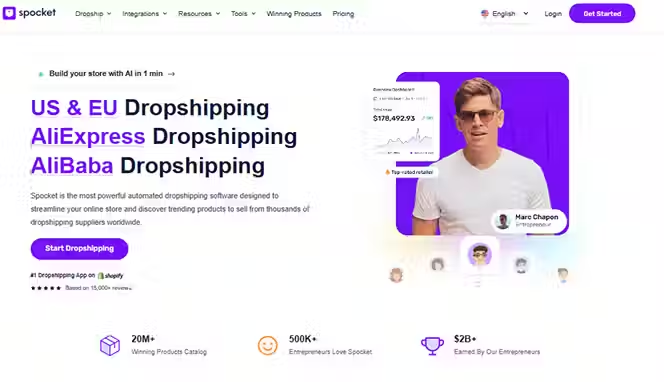
Why sellers pick Spocket:
- Speed and reliability
- Supplier accountability
- Custom branding options
- Good margins with US/EU stock
This positions Spocket as a practical next step for sellers who want to evolve beyond AliExpress without owning inventory.
2. Wholesale Marketplaces
Platforms that specialize in vetted suppliers with diverse catalogs and often better inventory quality than open marketplaces.
These can serve as premium alternatives when used correctly for dropshipping or reorder stock if you’re transitioning to wholesale fulfillment.
3. Domestic Fulfillment Providers
This includes 3PLs or regional fulfillment hubs that hold stock closer to customers.
Benefits include:
- Faster delivery
- Better tracking accuracy
- Higher predictability
Challenges include:
- More effort in syncing inventory systems
- Often higher per-unit costs
4. Established Supplier Networks (Curated)
Some supplier networks enforce quality and reliability standards — ensuring products aren’t cheap defects.
These platforms often involve vetting and quality checks that AliExpress does not mandate.
Branding and Customer Experience: The New Competitive Frontier
Premium sourcing impacts more than cost and shipping — it transforms your brand perception. Today’s consumers expect:
- On-brand unboxing experiences
- Clear shipping timelines
- Quality packaging
- Tracking updates and reliable customer support
AliExpress rarely delivers these consistently — premium sourcing often does. Through premium sourcing, you can:
- Design branded inserts
- Include loyalty codes
- Create memorable packaging
- Build repeat purchase incentives
These elements drive higher lifetime customer value (LCV) — which is core to sustainable ecommerce.
Pricing Strategy After Transition
One common mistake is not updating pricing strategy after upgrading suppliers.
Here’s how to approach pricing:
1. Cost + Value Positioning
Rather than simply adding a markup, price your product based on perceived value. If premium sourcing delivers faster shipping and a better experience, your customers may be willing to pay more.
2. Tiered Products
Offer basic, premium, and express versions of your products — giving customers choice while maximizing margins.
3. Bundles for Higher Cart Value
Package related products to increase average order value (AOV) — especially if premium sourcing brings higher per-unit costs.
This disciplined pricing strategy protects your margins and strengthens your brand.
Managing Customer Expectations During the Shift
When customers see “Premium” in your store, they expect a corresponding experience. Here’s how to align expectations:
- Be transparent about shipping windows
- Enhance post-purchase communication
- Provide tracking updates proactively
- Offer clear refund/exchange policies
Aligning expectations upfront reduces negative reviews and increases customer satisfaction.
Is Premium Sourcing Worth It? A Reality Check
Premium sourcing isn’t just “better products” — it’s a strategic investment in your store’s reputation, retention rates, and long-term viability.
You will pay more per unit — that’s expected.
But if customers buy faster, come back more often, leave fewer complaints, and refer others through word of mouth, the lifetime value (LCV) increases — offsetting the higher unit cost.
Many seasoned sellers view this transition as moving from “quick profit” to sustainable profit — a shift essential for growth.
Conclusion: Why Premium Sourcing Is the Smarter Next Step
Transitioning from AliExpress to premium sourcing isn’t about abandoning dropshipping — it’s about evolving it. As customer expectations rise, stores that continue relying solely on slow shipping, inconsistent quality, and generic packaging struggle to retain trust and scale sustainably.
Premium sourcing allows you to shift from short-term wins to long-term brand value. Faster delivery, consistent product quality, and better supplier accountability don’t just improve customer satisfaction — they reduce refunds, lower support burden, and increase repeat purchases. That’s where real profitability starts to compound.
AliExpress can still serve as a testing ground, but when you’ve identified winning products and want to grow with confidence, your supply chain needs to level up alongside your brand.
This is where Spocket becomes a natural next move. With access to vetted suppliers, US and EU-based inventory, faster shipping times, and brand-friendly fulfillment options, Spocket helps bridge the gap between basic dropshipping and premium ecommerce.
Start your dropshipping business today
FAQs about Transitioning from AliExpress to Premium Sourcing
When is the right time to move from AliExpress to premium sourcing?
The right time to transition is when you have identified winning products and want to scale your store sustainably. If you’re facing frequent complaints about shipping delays, inconsistent quality, or high refund rates, premium sourcing becomes essential.
Will premium sourcing reduce my profit margins?
Premium sourcing usually comes with higher product costs, but it doesn’t automatically reduce profitability. Faster shipping, better quality, and improved trust often lead to higher conversion rates, fewer refunds, and more repeat customers.
Is AliExpress still useful after switching to premium suppliers?
Yes. AliExpress can still be useful for early-stage product testing and trend validation. However, once demand is proven, relying on premium suppliers through Spocket allows you to deliver a more consistent and brand-friendly experience, which is critical for scaling beyond short-term sales.
How does premium sourcing improve customer trust and brand value?
Premium sourcing improves trust by offering faster delivery, reliable tracking, and consistent product quality. When customers receive products quickly and exactly as described, they’re more likely to leave positive reviews and return for future purchases.
Can I transition to premium sourcing without managing inventory?
Absolutely. You don’t need to hold inventory to benefit from premium sourcing. Platforms like Spocket allow you to dropship from reliable suppliers with local warehouses and branding options, giving you the benefits of premium fulfillment without upfront stock costs or warehouse management.


Launch your dropshipping business now!
Start free trial


Related blogs
Top WordPress eCommerce Themes for 2026
Explore the best WordPress eCommerce themes for 2026. Compare WooCommerce themes by speed, design, features, and dropshipping potential.


Saba Mohebpour Didn't Stop at Spocket: His New $50M Fund, ILA Capital, Is Buying Up Shopify and Amazon Apps
After building Spocket into a major ecommerce platform, Saba Mohebpour is launching ILA Capital with a $50M strategy to acquire Shopify and Amazon apps powering modern ecommerce.

Top Trendsi Alternatives for Fashion Dropshipping
Explore the best Trendsi alternatives for fashion dropshipping, fast shipping, branding, Shopify integration, and reliable suppliers.