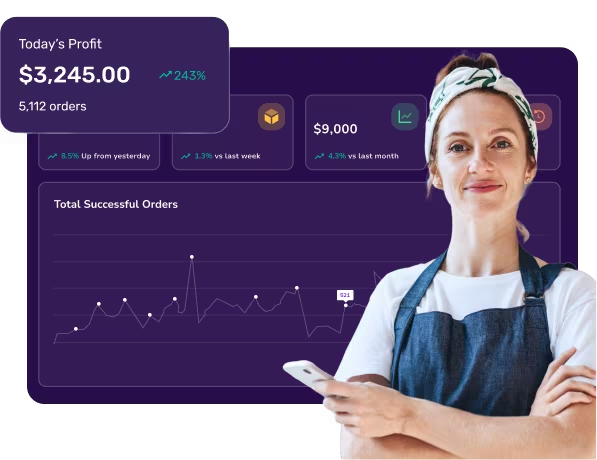
How US Tariffs & Trade Policy Are Reshaping Dropshipping in 2026
Discover how US tariffs are reshaping dropshipping in 2026 and what strategies ecommerce sellers need to stay profitable and competitive.

.avif)

The dropshipping model is going through one of its biggest shifts in years—and it’s not because of ads, platforms, or competition.
It’s because of tariffs.
US trade policies introduced in 2025 and evolving through 2026 are fundamentally changing how ecommerce businesses source, price, and deliver products. What used to be a low-cost, frictionless model is now becoming more complex, more expensive, and more strategic.
For dropshippers, this isn’t just a temporary disruption—it’s a structural change.
In this article, we’ll break down what’s happening, how it impacts your business, and what you need to do to stay competitive in the new era of dropshipping.
.avif)
Why Are US Tariffs a Big Deal for Dropshipping?
Before understanding the impact, it’s important to know what actually changed.
For years, dropshipping thrived because of a rule called the de minimis exemption. This allowed packages under $800 to enter the US without import duties.
That rule is now effectively gone for key regions like China and Hong Kong.
This means:
- Every package can now be taxed
- Costs increase instantly
- Margins shrink overnight
In some cases, tariffs on small shipments have reached extremely high levels, fundamentally changing the economics of the model.
This shift alone has forced thousands of ecommerce businesses to rethink how they operate.
The End of “Cheap and Easy” Dropshipping
Dropshipping used to rely on three core advantages:
- Low product costs
- No upfront inventory
- Direct shipping from overseas
Tariffs are attacking all three.
1. Rising Product Costs
Tariffs act like a direct tax on your product.
For example:
- A $10 product with a 30% tariff becomes $13 instantly
- That increase comes before ads, shipping, or platform fees
In 2026, many common ecommerce categories—like electronics, textiles, and accessories—face tariffs ranging from 20% to 50% depending on origin.
2. Margin Compression
As costs rise, sellers face a tough choice:
- Increase prices and risk losing customers
- Absorb costs and reduce profit
Most businesses end up doing a mix of both.
3. Slower and More Complicated Shipping
More customs checks mean:
- Longer delivery times
- More delays
- Less predictable logistics
This directly impacts customer experience.
How Tariffs Are Changing Ecommerce Pricing
Tariffs are no longer just a backend issue—they are now shaping how products are priced online. Recent shifts in US trade policy have already started pushing ecommerce prices higher, affecting both businesses and consumers.
What This Means for Sellers
- Pricing strategies must become more dynamic
- Profit margins are tighter
- Discounts and offers need better planning
What This Means for Customers
- Higher prices on imported goods
- Less tolerance for long shipping times
- Increased expectations for quality and speed
In short, customers are paying more—but expecting better.
The Hidden Risk: Customer Experience Breakdown
Even when tariffs seem like a backend cost issue, their biggest impact is often felt by the customer. Higher landed costs, delivery delays, and unexpected charges can quickly damage trust and make the buying experience feel unreliable.
For dropshipping businesses, this means trade policy is no longer just a sourcing concern—it directly affects satisfaction, reviews, repeat purchases, and overall brand reputation.
Unexpected Fees at Delivery
In some cases, customers may be asked to pay duties before receiving their package.
This leads to:
- Confusion
- Frustration
- Order cancellations
Longer Delivery Times
More inspections and customs processes slow everything down.
In a world where 2–5 day delivery is becoming standard, delays can destroy your brand reputation.
Increased Returns and Disputes
When expectations are not met:
- Refund requests increase
- Chargebacks rise
- Negative reviews follow
Tariffs don’t just affect your costs—they affect your customer experience.
Why the Old Dropshipping Model No Longer Works
With rising tariffs, stricter trade policies, and higher customer expectations, relying on outdated strategies is becoming less sustainable. To stay competitive, businesses now need to rethink how they source, price, and deliver products in a more efficient and customer-focused way.
The traditional model was built on:
- Cheap sourcing
- Long shipping times
- Minimal branding
In 2026, that model is breaking.
Tariffs expose its weaknesses:
- No control over logistics
- No pricing flexibility
- No brand differentiation
Businesses that continue using outdated strategies will struggle to survive.
The New Dropshipping Playbook for 2026
The good news is that dropshipping is not dead—it’s evolving. Businesses that adapt can still grow, and often more sustainably.
Move Closer to the Customer
One of the biggest shifts is toward local fulfillment. Using US-based warehouses allows you to:
- Avoid surprise tariffs for each order
- Offer faster shipping
- Improve customer experience
Build a Real Brand
When you can’t compete on price, you compete on value. This means:
- Better branding
- Unique positioning
- Stronger customer loyalty
Diversify Your Supply Chain
Relying on a single country is now risky. Smart sellers are:
- Exploring US and EU suppliers
- Working with multiple sourcing regions
- Reducing dependency on high-tariff imports
The Rise of Domestic and Premium Dropshipping
As tariffs increase costs and customers demand faster delivery, dropshipping is shifting toward higher-quality products and local fulfillment.This transition is driving the rise of domestic and premium dropshipping as a more sustainable and profitable model.
Tariffs are pushing the industry toward a new model:
Fewer cheap products, more premium positioning.
Instead of selling:
- Generic low-cost items
Sellers are shifting toward:
- Higher-quality products
- Faster shipping
- Better packaging
This transition is not a disadvantage—it’s an opportunity.
How Smart Sellers Are Adapting
The most successful dropshippers in 2026 are doing things differently.
They Focus on Margins, Not Just Sales
Instead of chasing revenue, they:
- Track true profit
- Adjust pricing strategically
- Optimize cost structures
They Invest in Customer Experience
They prioritize:
- Faster delivery
- Better communication
- Reliable fulfillment
They Treat Dropshipping Like a Real Business
This includes:
- Branding
- Retention strategies
- Long-term thinking
As tariffs reshape the industry, sourcing becomes more important than ever. Instead of relying on long-distance shipping and unpredictable import costs, many sellers are moving toward:
- US and EU suppliers
- Faster delivery networks
- More reliable fulfillment
With Spocket, sellers can:
- Access suppliers closer to their customers
- Reduce dependency on high-tariff regions
- Improve delivery times and customer satisfaction
This shift aligns perfectly with the new direction of dropshipping in 2026.
Is Dropshipping Still Profitable in 2026
Despite all the changes, the answer is yes—but with conditions. Dropshipping is still profitable if you:
- Adapt your sourcing strategy
- Focus on branding
- Improve customer experience
However, the “easy money” phase is over.
External pressures like tariffs and rising costs are forcing businesses to become more efficient and customer-focused.
Key Trends Defining the Future of Dropshipping
The future of dropshipping is being shaped by more than just changing supplier costs. Trade policy, shipping expectations, customer behavior, and margin pressure are all pushing the model toward a more mature and operationally disciplined direction.
Sellers who understand these shifts early will be in a much stronger position to build a business that can grow sustainably in 2026 and beyond.
Shift Toward Local Fulfillment
Local fulfillment is becoming one of the biggest competitive advantages in modern dropshipping. As international shipping becomes more expensive and less predictable, businesses are moving inventory closer to customers to reduce delays and improve reliability. This is especially important in markets where shoppers now expect fast delivery as a standard part of the buying experience.
Using suppliers or warehouses that are closer to the end customer can help businesses create a more stable foundation for growth.
- Shorter shipping times improve customer satisfaction.
- Local fulfillment reduces the risk of customs-related delays.
- Faster delivery can also improve conversion rates and reduce refund requests.
Higher Product Quality Standards
Customers are becoming less willing to tolerate poor product quality, especially when they are paying more due to inflation, tariffs, and higher shipping costs. This means low-grade, generic items are becoming harder to sell unless they offer very clear value. In 2026, quality is no longer just a bonus. It is part of what makes a store feel trustworthy and worth buying from.
For dropshippers, this means product selection has to become more intentional. Winning products are not just cheap or trendy. They also need to meet customer expectations once they arrive.
- Better quality can lead to fewer returns and disputes.
- Stronger products often create better reviews and repeat purchases.
- Higher quality also supports stronger brand positioning and pricing power.
Increased Importance of Branding
Generic stores built around random products are losing momentum because customers are becoming more selective about where they buy. When multiple sellers offer similar items, branding becomes the factor that helps a store stand out. A clear identity, stronger messaging, and a more polished shopping experience can make the difference between a one-time order and a brand customers remember.
Branding also gives you more room to compete on value instead of racing to the bottom on price. That matters even more in a market where external costs are rising.
A stronger brand usually includes:
- Clear positioning and a defined target audience
- Consistent product presentation and visuals
- Trust-building elements across the website and customer journey
Data-Driven Pricing
Pricing products based on guesswork is becoming increasingly risky. With tariffs, changing shipping costs, and tighter profit margins, sellers need a much clearer view of what each sale actually earns. A product may look profitable on the surface, but once duties, fulfillment, ad spend, and payment fees are factored in, the margin can shrink quickly.
This is why more dropshippers are relying on data to guide pricing decisions instead of copying competitors or using static markups.
Key areas to monitor include:
- Landed product cost
- Shipping and fulfillment expenses
- Advertising cost per purchase
- Net profit after refunds, fees, and discounts
Supply Chain Flexibility
One of the biggest lessons for dropshipping businesses is that relying too heavily on a single sourcing route creates risk. Changes in tariffs, supplier delays, shipping disruptions, or stock shortages can affect performance very quickly. A more flexible supply chain helps reduce this dependence and gives the business more options when conditions change.
Flexibility does not mean making the operation complicated for no reason. It means building backup options and avoiding over-reliance on one region, one supplier, or one fulfillment path.
This can include:
- Working with suppliers in different regions
- Keeping backup product options for winning categories
- Reviewing supplier performance regularly instead of assuming consistency
What You Should Do Next
Understanding these trends is important, but the real advantage comes from acting on them early. If your dropshipping business is still operating with old assumptions around pricing, sourcing, or delivery, now is the right time to reassess. Small operational changes made today can protect margins, improve customer experience, and make the business much more resilient over time.
Audit Your Costs
The first step is to understand exactly how tariffs and trade-related costs affect your current business. Many sellers underestimate how much margin they are losing because they only look at product cost and selling price. A proper cost audit gives you a clearer view of what each order actually contributes to profit.
Go beyond surface-level math and review the full economics of each product you sell.
Look closely at:
- Product cost from supplier
- Shipping and fulfillment charges
- Payment processing fees
- Ad spend and customer acquisition cost
- Refund, dispute, and return impact
Rethink Your Suppliers
Your supplier network has a direct impact on pricing, delivery speed, and customer experience. If your current setup depends too much on one region or one type of supplier, it may be time to diversify. In 2026, supplier choice is no longer just a sourcing decision. It is a strategic decision that affects how well your business can adapt.
When evaluating new supplier options, focus less on the lowest base cost and more on total business value.
Prioritize suppliers that offer:
- Local or regional fulfillment where possible
- Faster and more predictable shipping
- Stable pricing and lower disruption risk
- Better product consistency and communication
Upgrade Your Store Experience
As the market becomes more competitive, a weak storefront can quickly limit growth even if the product itself is strong. Customers want reassurance that the store is reliable, the delivery is clear, and the product is worth the price. A better store experience helps reduce hesitation and makes it easier to justify premium pricing when needed.
This is especially important when external costs are rising, because shoppers will expect a smoother experience in return.
Focus on improvements such as:
- Faster shipping messaging and transparent delivery timelines
- Better product pages with clearer descriptions and stronger visuals
- Strong trust signals like reviews, FAQs, guarantees, and support information
Test New Pricing Strategies
If your costs have changed, your pricing strategy needs to change too. Simply increasing prices across the board may hurt conversion rates, while absorbing every extra cost can weaken profitability. The smarter move is to test pricing in a structured way and look for a balance between competitiveness and margin protection.
Pricing should be treated as an ongoing optimization area, not a one-time decision.
You can test strategies like:
- Slight price increases on products with stronger demand
- Bundles that raise average order value
- Offers that protect perceived value without deep discounting
- Tiered pricing based on product quality or shipping speed
By combining better sourcing, tighter cost control, improved store experience, and smarter pricing, dropshipping businesses can respond to 2026’s challenges with a much stronger operating model.
Conclusion
US tariffs and trade policies are not just temporary disruptions—they are reshaping the foundation of dropshipping. The era of ultra-cheap, slow, and generic ecommerce is fading. In its place, a new model is emerging—one that prioritizes quality, speed, and customer experience.
For sellers willing to adapt, this shift creates opportunity.
By choosing better suppliers, improving fulfillment, and focusing on long-term value, you can build a more resilient and profitable business. If you’re ready to future-proof your dropshipping business, start by rethinking your supply chain. With Spocket, you can connect with reliable US and EU suppliers, reduce tariff exposure, and offer faster shipping—helping you stay competitive in the new ecommerce landscape.
Start your dropshipping business today
US Tariffs and Dropshipping FAQs for 2026 Sellers
What changed in US tariffs for dropshipping in 2026?
The biggest change is the removal of the de minimis exemption for certain regions, meaning even low-value packages are now subject to import duties. This has increased costs and reduced profit margins for many dropshipping businesses.
How do tariffs affect dropshipping profits?
Tariffs increase the cost of goods, which either reduces your profit margins or forces you to raise prices. Both scenarios impact overall business performance, making cost management more important than ever.
Can dropshipping still work with higher tariffs?
Yes, but the strategy needs to evolve. Sellers must focus on better sourcing, faster shipping, and stronger branding instead of relying purely on low-cost products.
Why are US-based suppliers becoming more important?
US-based suppliers help avoid import duties on individual orders and offer faster shipping, which improves customer experience and reduces operational risks.
What is the best strategy for dropshipping in 2026?
The best approach is to build a more resilient business by diversifying suppliers, improving product quality, optimizing pricing, and focusing on customer satisfaction rather than just low-cost selling.


Launch your dropshipping business now!
Start free trial


Related blogs
Dropshipping Supplier Directory: Where to Find Vetted Suppliers
Browse our directory of vetted dropshipping suppliers across the US and EU, complete with niches, shipping speed, and pricing. Start your free trial today.

How to Negotiate With Dropshipping Suppliers: 9 Tactics That Actually Work
Learn how to negotiate with dropshipping suppliers on price, MOQs, and payment terms. Proven tactics and email scripts to boost your margins. Try Spocket free.

Best Clothing Dropshipping Suppliers: The 2026 Guide
Compare the best clothing dropshipping suppliers for 2026 — US/EU shipping speeds, pricing, and product quality — and find the right fit to launch your store.