Guide to Build a Private Label Brand Using Print on Demand and Dropshipping
Learn how to start private label dropshipping using print on demand and trusted suppliers. Step-by-step guide to build a profitable brand.
.avif)

Private label dropshipping is the fastest way I’ve found to sell “your own brand” without buying inventory upfront — especially when you combine print on demand for custom designs and dropshipping for scalable fulfillment. Instead of competing on the same generic listings, you build a product customers recognize: consistent packaging, a clear niche, and repeatable quality. In this guide, I’ll break down exactly what private label dropshipping is, how dropshipping with private label actually works behind the scenes, and how to choose private label dropshipping suppliers (including POD partners) that can handle branding, fast shipping, and reliable tracking. You’ll also see where white label dropshipping fits, when it’s a smarter starting point, and the practical steps to launch a brand you can grow — not just a store you copy.
What is Private Label Dropshipping?
Private label dropshipping is a model where you sell products made by a third-party manufacturer under your own brand name (logo, packaging, inserts, or product labeling), while the supplier stores, packs, and ships each order to your customers. You earn profit through brand positioning, not just product availability.
If you want to build a real ecommerce brand instead of reselling generic products, private label dropshipping is the model to understand first. It’s the quickest way to sell products under your name while keeping operations lean, because the supplier handles production and shipping.
How it works in ecommerce
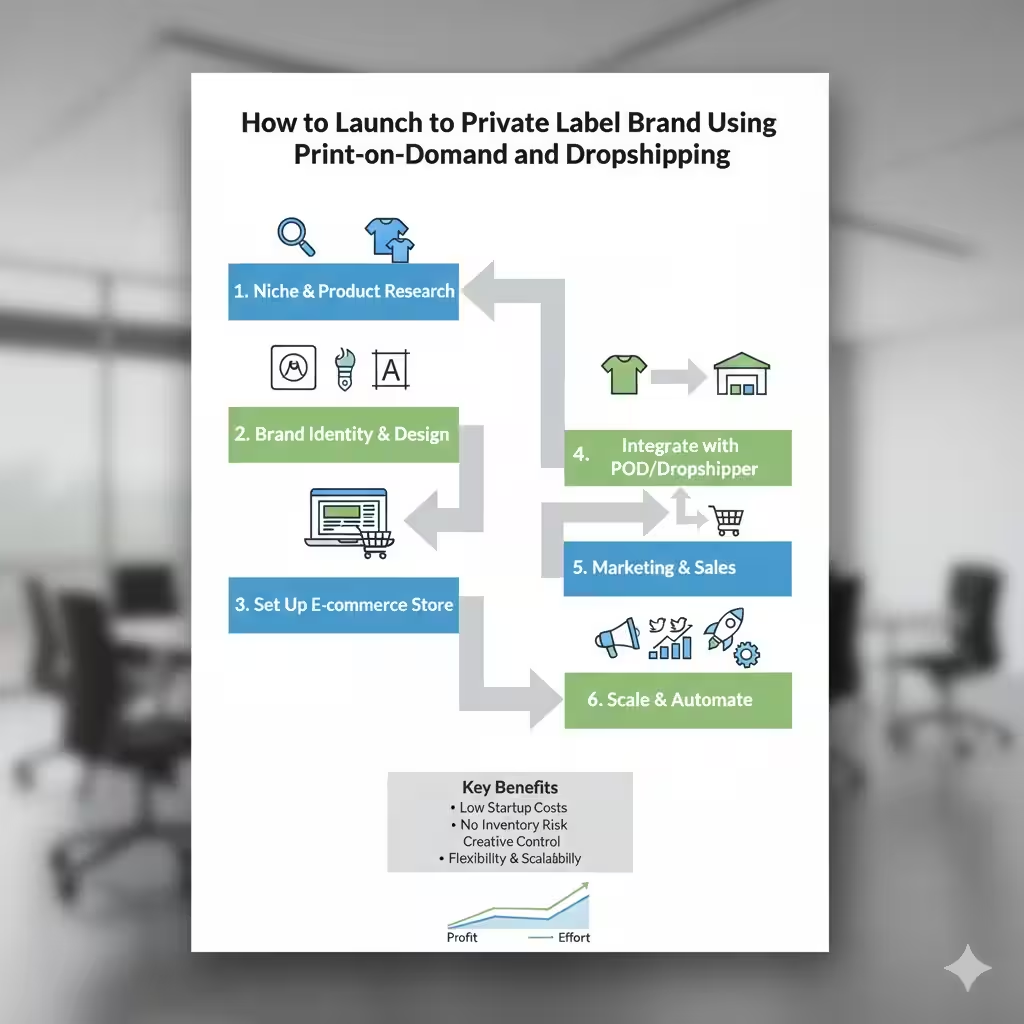
In a typical store, you buy inventory, warehouse it, then ship orders yourself. With private label dropshipping, you focus on the brand front-end (offer, positioning, store, customer experience), while the backend (production + fulfillment) is handled by a supplier that supports branding.
The practical outcome: customers experience a “real brand” (your name, your packaging, your message), but you still operate like a dropshipper (no bulk stock, no warehouse, flexible testing).
Role of third-party manufacturers
Third-party manufacturers are the engine of private label dropshipping. They:
- produce an existing product (or lightly customize it)
- apply your branding (label, logo print, packaging, inserts)
- store inventory (or produce on demand, depending on the model)
- fulfill orders and provide tracking
Your job is to ensure the manufacturer can consistently deliver quality, branding accuracy, and shipping speed—because that’s what protects your brand reputation and reviews.
How Private Label Dropshipping Works (Step-by-Step Model)
If you are wondering how private label dropshipping works then here is detailed step by step explanation
Choose product
Start with a product that can be branded and differentiated—ideally something with repeat purchase potential or bundle value. Think “brandable utility,” not random trending items.
Add branding
Decide what “private label” means for you at launch:
- logo on product (print/engrave/label)
- branded packaging (box, mailer, tissue)
- inserts (thank-you card, QR code, care guide)
- branded invoice/packing slip
Even one of these done well can separate you from generic sellers.
Connect supplier
Pick a supplier that can reliably match your brand requirements: quality consistency, branding options, and predictable delivery times. This is where private label dropshipping suppliers matter more than product price.
Market product
You’re not selling a “thing,” you’re selling a branded outcome. Build the offer around:
- a clear audience and use case
- product proof (UGC, reviews, demos)
- a simple value prop customers can repeat
Supplier fulfills
When an order comes in, the supplier picks, packs (with your branding), ships, and shares tracking. Your store updates the customer automatically, while you focus on customer experience and growth.
Private Label vs White Label Dropshipping
Private label dropshipping and white label dropshipping are often mixed up, but the difference matters when you’re aiming for higher margins and long-term brand value.
Branding control
- Private label dropshipping: Higher control—branding can extend to packaging, inserts, and sometimes product labeling.
- White label dropshipping: Basic branding—often just your logo on a standard product or packaging.
Customization level
- Private label: More flexible (product variations, packaging, inserts, sometimes materials depending on supplier).
- White label: Limited—usually the same product sold by multiple brands.
Margin differences
- Private label: Typically better margins because you can justify premium pricing through differentiation and trust.
- White label: Margins can be decent, but competition is closer because products are less unique.
Long-term brand value
- Private label: Stronger brand equity—customers remember the brand, not just the product. Better repeat purchase potential.
- White label: Easier to start, but harder to build defensibility unless your marketing is exceptionally strong.
Why Private Label Dropshipping Is the Smartest Way to Build a Brand
Generic dropshipping can create short-term revenue, but it rarely creates a brand customers remember. Private label dropshipping is different: you’re selling a product with a point of view—your packaging, your promise, your customer experience—so you’re not stuck fighting on price alone.
Higher Profit Margins
With dropshipping with a private label supplier, you can price based on perceived value, not just the supplier’s catalog price. The biggest margin lift usually comes from branding + bundles + trust signals (reviews, guarantees, UGC).
Margin example (generic vs branded):
- Generic dropshipping product: Buy $14 → sell $24.99 → gross margin ~$10.99 (44%)
- Private label version: Buy $16 (branding + insert) → sell $39.99 → gross margin ~$23.99 (60%)
That extra margin isn’t “magic”—it’s what people pay for a product that feels intentional, giftable, and reliable.
Stronger Customer Trust
Private label makes you look like a real ecommerce brand from day one. A simple branded unboxing (custom packaging, thank-you card, clear support email) reduces refunds and boosts repeat purchases. Customers trust consistency—especially when your product page and packaging match what arrives.
Reduced Price Competition
When you’re selling the same product photo as 50 other stores, you’re competing on discounts. With private label dropshipping, even small differences (packaging, warranty, bundle, positioning) make you harder to compare. That’s how you escape the “race to the bottom” that hurts most white label dropshipping sellers.
Long-Term Business Asset
A private label store compounds over time: reviews, returning customers, email list, brand search volume, and UGC become assets you can reuse across launches. That’s the difference between “a product that sells” and “a brand that grows.”
How to Build Your Brand with Private Label Dropshipping
Here’s the exact framework to launch your private label dropshipping brand using print on demand and trusted suppliers—without gambling on bulk inventory. This setup works whether you’re starting with one hero product or testing a small collection.
Step 1 – Choose a Profitable Niche With Branding Potential
Evergreen vs trending niches
Evergreen dropshipping niches (fitness, pet care, home organization, skincare tools, coffee accessories) are easier to scale because demand doesn’t disappear. Trending niches can work, but only if you can build a brand angle fast and avoid relying on one viral product.
Product differentiation strategy
Pick products where your brand can add a “reason to buy” beyond price:
- a clear audience (e.g., “desk setup essentials for remote workers”)
- a bundle that solves one problem (starter kit, refill kit, travel kit)
- a design identity (POD patterns, colorways, typography)
- a promise (warranty, fast shipping, better instructions)
Margin validation
Before you fall in love with a niche, do basic math:
- target gross margin 50%+ after product cost and shipping
- leave room for ads (often 15–30% of revenue for scaling)
- avoid products where returns kill you (fragile, sizing-heavy, complex electronics)
Step 2 – Find Reliable Private Label Dropshipping Suppliers
What to look for
The best private label dropshipping suppliers aren’t just “cheap.” They’re consistent. Your checklist:
- stable product quality (request samples)
- predictable shipping times + tracking accuracy
- branding support (packaging, inserts, invoice customization)
- responsive communication
- clear policies for defects/returns
Custom packaging
Even basic packaging upgrades can increase perceived value. Ask suppliers what’s possible:
- branded mailers/boxes
- tissue paper / stickers
- printed inserts (care card, QR code, thank you)
Branded invoicing
This matters more than people think. A branded packing slip helps your store feel legit and reduces “what did I order?” refund requests.
Fast US/EU shipping
For conversion and reviews, speed is a feature. Prioritize suppliers with US/EU warehouses or fast local fulfillment options—especially if your customers are mostly in North America or Europe.
Low MOQs
MOQs vary. Some suppliers allow branding with low order volume; others require minimum runs. If you’re early-stage, choose suppliers that let you start lean and upgrade branding deeper once you’re selling.
If you’re sourcing for US/EU customers, Spocket is useful because it focuses on vetted suppliers and faster shipping routes, which makes private label dropshipping easier to execute without the “30-day delivery” problem that kills trust.
Step 3 – Use Print on Demand for Custom Products
Why POD works perfectly for private label
Print on demand is essentially “private label on training wheels.” You can sell branded designs without holding inventory, and every order is produced only when someone buys.
Best categories for POD + private label dropshipping
- apparel (tees, hoodies, leggings)
- accessories (tote bags, hats, phone cases)
- home decor (posters, mugs, pillows)
Zero inventory model
This is what makes POD ideal for validating demand. You can test designs and angles without buying stock.
Testing products without risk
A practical approach that works:
- launch 5–10 designs in one theme (same niche, consistent style)
- run UGC-style ads or organic content for 7–14 days
- double down on winners and retire losers fast
Step 4 – Create Your Brand Identity
Logo
You don’t need a complex logo—just one that looks good on product images, packaging, and social profiles.
Packaging
Packaging is part of the product. A minimal but consistent unboxing experience beats flashy design with inconsistent fulfillment.
Brand positioning
Write one sentence that a customer would repeat:
- “Minimal desk essentials that make remote work feel premium.”
- “Giftable wellness accessories designed for daily routines.”
Storytelling
People buy brands that feel human. Use a founder angle, niche passion, or customer problem you’re solving. Keep it believable, not “startup mythology.”
Product differentiation
Add one “signature” element across products:
- a bundle format
- a consistent design theme
- a warranty / guarantee
- a branded insert that improves usage (care guide, routine guide)
Step 5 – Build a High-Converting Ecommerce Store
Shopify setup
Use a clean Shopify theme and keep navigation simple: Shop, Best Sellers, About, FAQs, Track Order.
Product page optimization
Your product page should answer buyer questions instantly:
- 3–5 benefit bullets above the fold
- shipping time + returns policy clearly shown
- real photos/UGC
- size guide or usage guide where relevant
Bundles & upsells
Private label wins when you sell sets, not singles:
- “Starter kit” bundle
- “Buy 2 save 10%”
- post-purchase add-on (refill, accessory)
Conversion-focused design
Remove friction:
- sticky add-to-cart
- trust badges (secure checkout, easy returns)
- short FAQ under the product description
Step 6 – Automate Order Fulfillment
Supplier integrations
Connect your supplier so orders flow without manual copy-paste. Dropshipping Automation reduces errors and speeds up fulfillment.
Tracking automation
Tracking issues create support tickets. Make sure tracking syncs properly and customers get updates automatically.
Customer notifications
Set up:
- order confirmation
- shipped notification
- delivery confirmation + review request
Scaling logistics
Once you have a winner, plan for scale:
- backup supplier option
- reorder triggers (if inventory-based)
- standardized support templates for delays/returns
Step 7 – Launch and Market Your Private Label Brand
Influencer seeding
Send products to micro-influencers in your niche. Prioritize creators who can show the product in real use, not just pose with it.
UGC strategy
UGC is the fastest trust builder for private label dropshipping. A simple formula:
- problem → product in action → result → call to action
Paid ads
Start small:
- 2–3 angles (use case, transformation, giftability)
- test creatives before scaling budgets
- use retargeting once you have traffic
Email marketing
Most stores ignore this early and regret it later. Set up:
- welcome series
- abandoned cart
- post-purchase (usage tips + cross-sell)
Retention strategy
Private label becomes profitable when people come back. Encourage repeat purchase with:
- bundles
- subscriptions (where relevant)
- loyalty perks
- seasonal drops / limited collections
Best Private Label Dropshipping Suppliers in 2026
Your supplier directly impacts product quality, shipping speed, and customer reviews. In private label dropshipping, you’re not just choosing a product — you’re choosing a backend partner that represents your brand.
US & EU Private Label Suppliers
If your target market is the US or Europe, prioritize suppliers with local warehouses. Faster delivery increases conversions and reduces refunds. Look for suppliers offering:
- custom packaging
- branded invoicing
- product labeling
- consistent tracking
Platforms like Spocket make this easier by connecting you to vetted US/EU suppliers that support branding and faster shipping — which is critical when building a long-term private label brand.
Print on Demand Suppliers
Print on demand (POD) is ideal for launching private label without holding inventory. You can customize apparel like Tshirt, accessories, or home decor, and products are made only after an order is placed. POD works especially well for testing designs and validating demand before scaling.
White Label Dropshipping Suppliers
White label dropshipping is simpler but offers limited customization. You can brand existing products but may not control packaging deeply. It’s a good starting point, but private label offers stronger long-term differentiation and higher margin potential.
How to Evaluate a Private Label Supplier
Before committing, check:
- product sample quality
- branding capabilities
- average delivery time
- defect/replacement policy
- ability to scale volume
A reliable supplier protects your reviews and retention — which ultimately drives profit.
Cost Breakdown of Starting a Brand Private Label Dropshipping Business
One reason private label dropshipping is attractive is the relatively low startup cost compared to traditional retail.
Store Setup Costs
- Domain + Shopify: $50–$250 to launch
- Optional apps/themes: varies
Product Samples
Expect $50–$200 to test 2–5 products. Sampling is essential for quality control and content creation.
Branding & Packaging Costs
Basic branding (logo, inserts, simple packaging): $50–$400 depending on customization level.
Marketing Budget
To test your first product:
- Ads + UGC testing: $200–$1,500
Start small, scale winners.
Expected Profit Margins
Healthy private label dropshipping stores aim for:
- 50%–65% gross margin
Example:
- Cost: $16
- Selling price: $39.99
- Gross profit: ~$24 (60%)
Brand positioning allows higher pricing compared to generic dropshipping.
Common Mistakes to Avoid in Private Label Dropshipping
Here are some of the common mistakes that you must avoid if you're trying to build your brand with private label dropshipping
1. Choosing Saturated Products: If the same product appears everywhere with identical images, margins will shrink. Focus on products that allow differentiation.
2. Ignoring Brand Positioning: A logo alone isn’t a brand. Define your niche, promise, and target customer clearly.
3. Working With Slow Suppliers: Long shipping times damage trust. Prioritize reliable US/EU suppliers when possible.
4. Competing Only on Price: Private label wins through branding and perceived value — not discounts.
5. Poor Customer Experience: Clear shipping times, responsive support, and consistent packaging build repeat customers — which is where real profit happens.
Is Private Label Dropshipping Worth It in 2026?
Yes — private label dropshipping is still worth it in 2026 if your goal is to build a brand, not just flip products. Generic dropshipping is getting harder because customers compare prices instantly and platforms reward fast shipping, strong reviews, and consistent experiences. Private label solves that by giving you control over how your product is perceived (branding, packaging, positioning), while keeping fulfillment lean through trusted suppliers and print on demand.
Scalability potential
Private label scales better than generic dropshipping because you’re not dependent on one “viral” item. Once you validate a winning dropshipping product, you can expand into bundles, variants, and complementary SKUs under the same brand. Suppliers can handle higher volume as long as you choose partners with reliable stock, tracking, and US/EU shipping options.
Brand equity
Brand equity is the real advantage. With dropshipping with private label, you build assets that compound: repeat customers, reviews, email list, UGC content, and direct brand searches. That makes every new product launch easier and cheaper than starting from scratch each time.
Exit opportunities
A branded store is easier to sell than a generic dropshipping store because the buyer isn’t just purchasing a Shopify site — they’re buying customer trust and repeatable demand. If you can prove consistent revenue, stable margins, and clean supplier operations, you’re building something with resale value.
Sustainable growth model
Private label is more sustainable because you can stop competing on price and instead compete on experience. Faster shipping, branded packaging, clear guarantees, and better product storytelling are defensible advantages that copycat stores can’t replicate overnight.
Conclusion
Private label dropshipping gives you the best of both worlds: brand control without the burden of inventory. By combining smart product selection, reliable suppliers, and print on demand, you can build a store that feels like a real brand—not just another reseller site. The key is choosing partners that support fast shipping, consistent quality, and branding flexibility from day one. If you’re serious about launching a scalable private label brand, explore vetted US and EU suppliers through Spocket and start building a business customers trust—and come back to buy from again.
Start your dropshipping business today
Build a Private Label Brand Using POD and Dropshipping FAQs
What is private label dropshipping?
Private label dropshipping is a model where you sell products made by a third-party manufacturer under your own brand name. The supplier handles production, storage, packing, and shipping, while you control branding, positioning, and customer experience.
Is private label dropshipping profitable?
Yes, private label dropshipping can be profitable because branding lets you charge premium prices and avoid pure price competition. Many stores target 50%–65% gross margins by bundling products, improving packaging, and building customer trust.
What’s the difference between private label and white label dropshipping?
Private label dropshipping offers stronger customization—branding on packaging, inserts, and sometimes the product itself. White label dropshipping uses pre-made products with light rebranding, so differentiation is weaker and competition is usually higher.
Where can I find private label dropshipping suppliers?
You can find private label dropshipping suppliers through sourcing platforms and directories that connect merchants with vetted manufacturers, often in the US and EU. Look for suppliers offering custom packaging, branded invoicing, fast shipping, and consistent tracking.
Can I use print on demand for private label dropshipping?
Yes. Print on demand works perfectly for private label dropshipping because items are customized (design, text, branding) only after an order is placed. It’s ideal for apparel, accessories, and home decor with zero inventory risk.
Do I need inventory for private label dropshipping?
No. With private label dropshipping, the supplier stores inventory (or produces on demand), then packs and ships orders directly to customers. You focus on marketing, branding, and customer support instead of warehousing or fulfillment.
How much does it cost to start private label dropshipping?
Most beginners can start private label dropshipping with $300–$1,000. Typical costs include a domain, Shopify plan, product samples, basic branding assets, and a small marketing test budget to validate demand before scaling.


Launch your dropshipping business now!
Start free trial


Related blogs
Dropshipping Supplier Directory: Where to Find Vetted Suppliers
Browse our directory of vetted dropshipping suppliers across the US and EU, complete with niches, shipping speed, and pricing. Start your free trial today.

How to Negotiate With Dropshipping Suppliers: 9 Tactics That Actually Work
Learn how to negotiate with dropshipping suppliers on price, MOQs, and payment terms. Proven tactics and email scripts to boost your margins. Try Spocket free.

Best Clothing Dropshipping Suppliers: The 2026 Guide
Compare the best clothing dropshipping suppliers for 2026 — US/EU shipping speeds, pricing, and product quality — and find the right fit to launch your store.