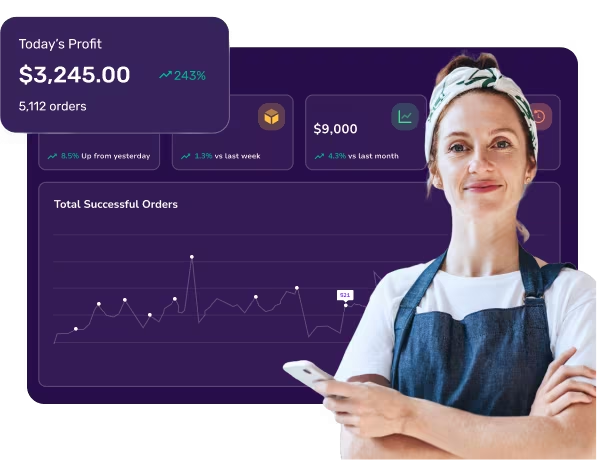
How to Validate a Dropshipping Product Idea Before You Spend a Dollar on Ads
Learn how to validate a dropshipping product idea before ads using demand checks, competitor research, supplier data, and a simple validation checklist.

.avif)

Many dropshippers lose money on ads not because their campaigns are terrible, but because the product was never checked properly in the first place. A product may look trendy on TikTok, appear popular on AliExpress, or show up in a competitor’s store, but that does not always mean people are ready to buy it. Real demand, healthy profit margins, supplier reliability, shipping speed, and customer appeal all matter before you spend even a dollar.
That is why learning how to validate a dropshipping product idea is one of the smartest steps you can take before launching paid ads. This guide gives you a beginner-friendly framework to research demand, assess risk, and avoid obvious product mistakes.
Before you test anything, you need to understand what product validation actually means.
What Does It Mean to Validate a Dropshipping Product Idea?
To validate a dropshipping product idea means checking whether a product has enough real-world potential before you invest money into ads, store design, influencer campaigns, or bulk content creation. It is the process of confirming that people want the product, understand its value, can afford it, and are likely to trust the store selling it.
This is different from guessing. It is also different from copying a trending product just because you saw it on TikTok, AliExpress, Amazon, or another Shopify store. A product can be viral and still fail if the demand is short-lived, the shipping time is poor, the margins are too thin, or the market is already flooded with identical offers.
A validated product usually has proof of interest from multiple places. People may be searching for it on Google, engaging with it on social media, reviewing similar products on marketplaces, asking questions in communities, or buying from competitors. These signals help you understand whether the product solves a problem, creates desire, or fits a specific audience.
Validation helps you decide whether to test, improve, reposition, or reject a product idea. It does not guarantee that your store will generate sales, but it gives you a stronger reason to move forward. More importantly, it lowers the chances of wasting money on products that looked exciting at first but had no real buying intent behind them.
Why You Should Validate a Product Before Spending on Ads?
Paid ads do not magically turn a weak product into a winning one. They simply put your product in front of more people faster. If the product has no clear demand, poor profit margins, weak differentiation, unreliable suppliers, or long shipping times, ads will expose those problems quickly. You may get clicks, but clicks do not always turn into sales.
Many beginners assume their Facebook, TikTok, or Google ads are the problem when a campaign fails. Sometimes the creative needs improvement. Sometimes the targeting is off. But very often, the product itself was not strong enough to deserve the ad budget. If customers do not understand the value, trust the offer, or feel urgency to buy, even a well-designed campaign can struggle.
Validation helps you understand the buyer before you test. You can identify who the product is for, what problem it solves, what price feels reasonable, which angle might work, and whether reliable suppliers can actually fulfill the order. This makes your first ad test more informed instead of random.
It also gives you a clearer reason to launch or skip the product. If the signals are strong, you can move forward with more confidence. If the signals are weak, you can adjust the offer, choose a better supplier, or avoid spending money on a product that was unlikely to work from the start.
Quick Dropshipping Product Validation Checklist
Before you move into deeper research, use this quick checklist to decide whether a product deserves more attention. You do not need every answer to be perfect, but the stronger the signals, the safer the product is to test.
- Does the product solve a clear problem, satisfy a desire, or make life easier for a specific audience?
- Are people actively searching for the product, the problem it solves, or similar alternatives?
- Is there visible social proof on TikTok, Instagram, YouTube, Pinterest, Reddit, or niche communities?
- Are similar products getting sales, reviews, or recent engagement on Amazon, Etsy, eBay, AliExpress, or competitor stores?
- Can you price the product with enough margin after product cost, shipping, transaction fees, returns, discounts, and future ad spend?
- Is the product easy to explain in a few seconds through a headline, image, or short video?
- Can it be shipped reliably within a timeframe customers will accept?
- Are there quality suppliers available through trusted sourcing platforms like Spocket?
- Is the product not purely a one-time viral fad or already oversaturated with identical ads and offers?
- Can you create a unique angle, bundle, audience, story, or offer around it?
If a product checks most of these boxes, it may be worth deeper validation before you spend on ads.
How to Validate a Dropshipping Product Idea Before Ads?
Once a product passes the quick checklist, the next step is deeper validation. This is where you move beyond “this looks trendy” and start checking whether the product has real demand, a clear buyer, reliable sourcing, and enough profit potential to justify future ad spend.
Start With the Problem, Not the Product
Strong dropshipping products usually do one of three things: solve a clear problem, trigger an emotional desire, or make everyday life easier. Instead of asking, “Is this product trending?” ask, “Who needs this, and why would they buy it now?”
For example, a portable neck fan solves heat and comfort issues for commuters, travelers, outdoor workers, and people who spend time in hot weather. A pet grooming tool solves shedding and cleanup problems for pet owners. A posture corrector appeals to pain relief, confidence, and better daily habits.
This problem-first approach helps you avoid chasing random products with no real purpose. If you can clearly explain the pain point, the audience, and the reason someone would care, the product becomes easier to position. Products with a strong problem-solution fit are also easier to market through organic content, influencer videos, product pages, and paid ads later.
Check Search Demand With Google Trends and Search Suggestions
Search demand shows whether people are already looking for the product or the problem it solves. Start with Google Trends to see interest over the last 12 to 24 months. Look for steady growth, repeat seasonal demand, or consistent interest instead of one sudden spike that disappeared quickly.
Then use Google autocomplete, People Also Ask, and related searches. These reveal how buyers describe the product, what questions they have, and what problems they are trying to solve. Do not only search the product name. Search problem-based phrases too.
For example, instead of only checking “neck fan,” also check terms like “how to stay cool while walking,” “portable fan for summer,” “cooling gadget,” or “best fan for travel.” This helps you find buyer intent beyond one keyword.
Also check regional interests. A product may perform better in the United States, Canada, Australia, or warmer regions. This matters because demand, shipping expectations, pricing, and seasonality can change depending on the target market.
Validate Social Demand on TikTok, Instagram, YouTube, and Pinterest
Social platforms help you understand visual demand, emotional hooks, and buyer curiosity. A product that solves a visible problem or creates a satisfying transformation often performs well in short-form content. But do not judge demand by views alone. Viral views can come from entertainment, not purchase intent.
Look for comments that show buying curiosity, such as “Where can I buy this?” “Does this actually work?” or “I need this.” Check whether multiple creators are posting similar products, whether the engagement is recent, and whether the product has clear use cases.
Before-and-after demonstrations, UGC-style videos, tutorials, and real customer reactions are useful signals. You can also explore hashtags like #TikTokMadeMeBuyIt, #AmazonFinds, #HomeGadgets, #PetProducts, #BeautyTools, and #KitchenHacks.
The goal is to understand whether people are simply watching the content or showing signs that they may buy the product.
Study Marketplace Demand on Amazon, Etsy, eBay, and AliExpress
Marketplaces show whether similar products are already being bought, reviewed, and compared. Check Amazon, Etsy, eBay, and AliExpress to understand demand, pricing, variations, and customer expectations.
Look at the number of reviews, review recency, ratings, bestseller badges, recent purchases, customer photos, and common complaints. A product with thousands of old reviews but little recent activity may be declining. A product with steady new reviews may show ongoing demand.
Reviews are also useful for positioning. If customers complain about poor packaging, confusing instructions, weak materials, or slow shipping, your store can stand out with better product information, clearer FAQs, stronger images, or higher-quality suppliers.
Also check product bundles and “frequently bought together” sections. These can reveal upsell ideas, cross-sells, and bundle opportunities that may increase average order value later.
Analyze Competitor Stores and Ads
Competitor research helps you understand whether the product is being tested, scaled, or ignored. The goal is not to copy another store, but to learn what offers, angles, and objections already exist in the market.
Review competitor Shopify stores, Google Shopping listings, Meta Ad Library, TikTok Creative Center, and product research tools. Check product page quality, pricing, bundles, discounts, shipping promises, reviews, trust badges, ad angles, landing page messaging, upsells, and cross-sells.
If many stores are selling the same product with the same images, same headlines, and same discounts, the product may be saturated. You will need a stronger angle, better supplier, improved bundle, or more specific audience. On the other hand, if there are no competitors at all, that can also be a warning sign. It may mean demand is too weak or the product is difficult to sell.
Healthy competition is usually a good sign when you can still find a way to differentiate.
Calculate Profit Margin Before You Get Excited
A product can have demand and still be a bad dropshipping product if the numbers do not work. Before you test it, calculate whether there is enough room for profit after all costs.
Use this simple formula:
Selling price - product cost - shipping - transaction fees - app costs - returns - estimated ad cost = real profit
Do not only compare product cost and selling price. Include payment processing fees, refund risk, discount strategy, expected customer acquisition cost, and your minimum target margin.
For example, if a product costs $12 and you sell it for $24, it may look profitable at first. But after shipping, fees, discounts, returns, and ads, the margin may disappear. A stronger product gives you enough room to bundle, offer discounts, handle refunds, and still stay profitable.
Check Supplier Quality and Shipping Reliability
Supplier validation is part of product validation. A product with strong demand can still fail if the supplier is unreliable, inventory changes often, delivery is slow, or the product quality does not match the photos.
Check supplier location, processing time, shipping time, return policy, inventory consistency, product images, variants, packaging, sample order quality, and customer support responsiveness. When possible, order a sample before committing to the product.
This is where Spocket can help reduce risk. Spocket lets dropshippers explore products from vetted suppliers, including US and EU suppliers, so you can compare product options, shipping expectations, and supplier quality before building your store around one idea. Faster and more reliable sourcing can make the validation stage safer, especially if you want to avoid long shipping times and poor customer experiences.
Test Organic Interest Before Paid Ads
You can validate early interest without running ads. Post short-form videos on TikTok, Instagram Reels, and YouTube Shorts. Share product use cases in niche communities where allowed. Build a simple waitlist, run Instagram polls, ask micro-influencers for feedback, or add the product to a coming-soon collection.
The goal is to watch how people respond. Are they clicking, commenting, saving, asking questions, or joining a waitlist? These actions are stronger than passive views.
You can also test different angles. For example, one video may focus on convenience, another on pain relief, and another on gifting. The winning angle can later guide your product page, ad creative, and offer.
Build a Simple Product Page Before Running Ads
A basic product page helps you validate whether the offer is clear. Even before ads, it forces you to define the audience, benefit, price, objections, shipping information, FAQs, trust signals, and call to action.
Your page should include a clear headline, benefit-focused product description, high-quality images, use-case explanation, shipping details, reviews or trust signals, return policy, FAQs, and a strong CTA.
If you struggle to explain why someone should buy the product, the idea may need more work. A good product page should make the value obvious within a few seconds.
Score the Product With a Validation Matrix
To make the final decision easier, score the product from 1 to 5 across seven areas: demand, problem-solution fit, competition level, profit margin, supplier reliability, content potential, and differentiation.
A score of 28 to 35 means the product is strong enough to test. A score of 20 to 27 means the idea may need better positioning, sourcing, pricing, or content angles. Anything below 20 is usually a sign to skip the product or revisit it later.
This matrix helps you avoid emotional decisions. Instead of launching because a product “feels” exciting, you move forward based on actual validation signals.
Start your dropshipping business today
Launch Your Store with Spocket
Free and Low-Cost Tools to Validate Dropshipping Product Demand
You do not need expensive software to validate a product idea. Start with free tools that show search interest, buyer intent, social demand, competitor activity, and supplier availability.
Google Trends is useful for checking whether demand is growing, seasonal, stable, or declining. Google autocomplete, People Also Ask, and related searches help you find buyer questions and problem-based keywords. TikTok Creative Center can reveal trending product videos, content formats, and ad inspiration. Meta Ad Library shows whether competitors are actively running ads for similar products.
Amazon Best Sellers, Etsy, eBay, and AliExpress help you study reviews, pricing, product variations, customer complaints, and marketplace demand. Reddit and Quora are useful for finding real pain points, objections, and product questions from niche communities. Pinterest Trends can help with visual categories like home decor, beauty, fashion, gifts, and lifestyle products.
You can also use Spocket for product and supplier discovery. It helps you explore dropshipping products from vetted suppliers, compare shipping options, and shortlist products with better sourcing potential. Competitor Shopify product pages are another helpful source for studying pricing, messaging, trust signals, bundles, and product positioning before you launch.
Red Flags That a Product Idea Is Not Worth Testing Yet
Not every product with views, reviews, or competitor listings deserves your time. Some products look exciting at first but show warning signs when you study demand, margins, suppliers, and buyer intent more closely.
Watch out for these red flags before you spend time or money testing:
- The product went viral once but has no sustained demand.
- There are no problem-based searches around the product or the solution it offers.
- Margins are too low after product cost, shipping, payment fees, discounts, and expected returns.
- Competitors are selling the same product at prices you cannot realistically beat.
- Similar products have poor reviews across marketplaces like Amazon, Etsy, eBay, or AliExpress.
- Shipping times are too long for your target market.
- The product is fragile, restricted, risky, or likely to be returned often.
- The product is hard to explain quickly through a headline, image, video, or product page.
- The niche requires high trust, but your store is new and has no authority yet.
- You cannot find reliable suppliers with stable inventory and acceptable delivery times.
A single red flag does not always mean you should reject the product immediately. For example, weak product pages from competitors may create an opportunity for better positioning. But if you see multiple issues together, such as poor reviews, low margins, long shipping times, and weak demand, the product is probably not worth testing yet.
The safest approach is to pause, improve the offer, find better suppliers, or move on to a stronger product idea.
How Spocket Helps You Validate Dropshipping Products Faster?
Spocket can support product validation by helping you move beyond random viral products and focus on products with better sourcing potential. Instead of choosing an item only because it looks popular on TikTok or AliExpress, you can use Spocket to explore products from vetted suppliers, compare options, and check whether the product can realistically fit your store.
.webp)
Here is how Spocket helps during validation:
- It helps reduce supplier uncertainty by giving you access to vetted supplier options.
- It makes it easier to compare products in one place instead of jumping between random marketplaces.
- It helps you review shipping expectations before building your store around one product.
- It supports faster-shipping product selection, especially through US and EU supplier options.
- It helps you avoid relying only on viral product trends with weak sourcing.
- It makes it easier to build a shortlist of products that fit your niche, margin goals, and customer expectations.
- It helps validate product quality, sourcing fit, and fulfillment potential before scaling.
Product validation is not only about demand. A product can have strong buyer interest and still fail if the supplier cannot deliver consistently. That is why checking sourcing quality, delivery timelines, product details, and supplier reliability matters before running ads.
Before spending on ads, browse product categories on Spocket, shortlist products with reliable suppliers, and validate demand using the checklist above.
Conclusion
Product validation is not about finding a perfect product. It is about collecting enough signals to make a smarter decision before spending money on ads. The best dropshipping products usually show real demand, clear value, healthy margins, strong content potential, and reliable sourcing.
Before launching campaigns, check search demand, social interest, marketplace proof, competitors, profit margins, and supplier quality. If the signals are weak, improve the offer or move on.
If you are ready to validate your next product idea, start by exploring quality dropshipping products and suppliers on Spocket before building your ad strategy.
How to Validate a Dropshipping Product Idea FAQs
How do I validate a dropshipping product idea?
Validate a dropshipping product idea by checking search demand, social media interest, marketplace reviews, competitor ads, profit margins, and supplier reliability. A product should show real buyer interest, clear use cases, healthy margins, and reliable shipping before you spend money on ads.
Can I test a dropshipping product without running ads?
Yes. You can test a dropshipping product without ads by using Google Trends, TikTok search, Meta Ad Library, Amazon reviews, Reddit discussions, organic social posts, waitlists, and simple landing pages. These methods help you understand demand before paying for traffic.
What makes a dropshipping product worth testing?
A dropshipping product is worth testing when it solves a clear problem, has visible demand, offers enough profit margin, is easy to explain, has strong content potential, and can be sourced from a reliable supplier with reasonable shipping times.
How do I know if a dropshipping product is oversaturated?
A product may be oversaturated if many stores use the same images, same ad angles, same pricing, and same supplier listings. However, competition is not always bad. If you can improve the offer, branding, shipping, bundle, or target audience, the product may still be worth testing.
What is the best free tool for validating dropshipping products?
Google Trends is one of the best free tools for checking product demand over time. TikTok search, Meta Ad Library, Amazon reviews, Google autocomplete, Reddit, and Pinterest Trends are also useful for validating buyer interest and content potential.
Should I order a sample before selling a dropshipping product?
Yes, ordering a sample is highly recommended. It helps you check product quality, packaging, delivery time, and whether the product matches supplier images. This step is especially important before spending money on ads or promoting the product heavily.
How much profit margin should a dropshipping product have?
There is no fixed number, but the product should leave enough room for product cost, shipping, payment fees, discounts, refunds, and marketing. Many dropshippers look for products that can be marked up enough to support paid acquisition while still feeling affordable to customers.
How can Spocket help with product validation?
Spocket helps dropshippers validate product ideas by making it easier to discover products from vetted suppliers, compare shipping options, and find products with stronger fulfillment potential. This helps reduce sourcing risk before investing in ads.


Launch your dropshipping business now!
Start free trial


Related blogs
Dropshipping Supplier Directory: Where to Find Vetted Suppliers
Browse our directory of vetted dropshipping suppliers across the US and EU, complete with niches, shipping speed, and pricing. Start your free trial today.

How to Negotiate With Dropshipping Suppliers: 9 Tactics That Actually Work
Learn how to negotiate with dropshipping suppliers on price, MOQs, and payment terms. Proven tactics and email scripts to boost your margins. Try Spocket free.

Best Clothing Dropshipping Suppliers: The 2026 Guide
Compare the best clothing dropshipping suppliers for 2026 — US/EU shipping speeds, pricing, and product quality — and find the right fit to launch your store.