How to Reduce Cart Abandonment
Learn how to reduce cart abandonment with proven strategies, UX fixes, faster checkout, and recovery tactics that increase conversions and revenue.
.avif)

Cart abandonment is one of the fastest ways ecommerce stores lose revenue—often right at the finish line. If you’re trying to reduce cart abandonment, the good news is you don’t need “magic” discounts or a full redesign. Most abandoned carts happen because of avoidable friction: surprise shipping costs, slow checkout pages, limited payment options, forced account creation, or a lack of trust at the payment step. In this guide, you’ll learn how to reduce cart abandonment rate with practical, proven fixes that improve the checkout experience on desktop and mobile. We’ll cover high-impact tactics to decrease cart abandonment, reduce checkout abandonment, and recover more lost sales with email, retargeting, and smart on-site optimization—so more shoppers complete their purchase instead of leaving.
.avif)
Why Cart Abandonment Happens in Ecommerce
Cart abandonment isn’t just a “lost order”—it’s a direct hit to profitability. Every checkout drop-off increases your cost per acquisition, wastes ad spend, and lowers your store’s conversion rate. The goal isn’t to eliminate abandonment completely (some shoppers browse), but to reduce cart abandonment by removing friction, improving trust, and making checkout fast and predictable.
Latest Cart Abandonment Statistics
- Average global cart abandonment rate: ~70.22% (aggregated across 50 studies).
- Mobile vs desktop abandonment: mobile abandonment is consistently higher; one widely cited benchmark shows ~80.2% on mobile vs ~70–73% on desktop.
- Industry breakdown: cart abandonment varies a lot by vertical—for example, luxury/jewelry tends to be higher than essentials like pet care.
- Why this matters for revenue: Baymard estimates $260B in US+EU ecommerce sales is recoverable through better checkout UX, with an average 35.26% conversion-rate uplift possible for large sites when fixing solvable usability issues.
Top Reasons Customers Abandon Their Carts
If you want to reduce cart abandonment rate, fix the biggest drivers first:
- 39%: Extra costs too high (shipping, tax, fees)
- 21%: Delivery was too slow
- 19%: Didn’t trust the site with credit card info
- 19%: Site required account creation
- 18%: Checkout was too long/complicated
- 15%: Returns policy wasn’t satisfactory
- 15%: Website errors/crashes
- 14%: Couldn’t calculate total cost upfront
- 10%: Not enough payment methods
- 8%: Credit card was declined
How to Reduce Cart Abandonment (Actionable Strategies That Work)
To decrease cart abandonment, focus on removing uncertainty (costs + delivery), reducing effort (forms + speed), and increasing trust (security + policies). The tactics below are the highest-impact improvements most stores can implement without rebuilding their entire checkout.
Be Transparent About Shipping and Fees Upfront
- Show shipping costs early (product page + cart), not just at payment.
- Add a shipping estimator in-cart (ZIP/postcode-based).
- Offer free shipping thresholds (e.g., “Free shipping over $50”) and show progress (“$12 away”).
- Display a clear tax breakdown before the final step (no surprises).
- If you’re dropshipping, reduce delivery anxiety by sourcing fast-shipping inventory—Spocket’s US/EU supplier network can help you offer shorter delivery windows and more predictable fulfillment.
Simplify and Optimize the Checkout Process (Checklist for Snippets)
Use this checkout checklist to reduce checkout abandonment fast:
- Remove non-essential fields (ask only what you truly need)
- Enable autofill + smart input formatting (phone, address, card)
- Use one-page checkout or the fewest possible steps
- Add a progress indicator (Step 1 of 3)
- Offer guest checkout (no forced login)
- Save cart automatically (so users can resume later)
Offer Multiple Payment Options
Payment friction is an instant drop-off point. Add the options your buyers expect:
- Apple Pay
- Google Pay
- PayPal
- Buy Now, Pay Later (BNPL)
- Local payment methods (depending on your top countries)
Tip: Prioritize express pay buttons on mobile—they reduce typing and speed up completion.
Improve Page Speed and Mobile Experience
Slow pages don’t just hurt SEO—they directly increase checkout abandonment.
- Design mobile-first checkout (thumb-friendly buttons, big inputs)
- Use image compression (especially product pages + cart thumbnails)
- Implement lazy loading for non-critical content
- Choose fast hosting + optimize scripts (fewer apps firing at checkout)
- Aim for instant feedback (loading states, no lag after “Continue”)
Build Trust with Security and Social Proof
At checkout, shoppers are asking: “Is this safe—and what if something goes wrong?”
- Display SSL / secure checkout badges
- Add payment security icons near the card field
- Place reviews/ratings close to cart and checkout (not hidden on product pages only)
- Make your refund + returns policy visible before payment
- Use real customer photos / UGC when possible (boosts credibility)
Use Exit-Intent Popups Strategically
Exit popups work when they remove hesitation—not when they feel spammy.
- Offer small discounts only when needed (avoid training customers to wait)
- Trigger free shipping offers when shipping is the objection
- Use limited-time urgency carefully (“Reserved for 10 minutes”)—don’t overdo fake countdowns
Send High-Converting Abandoned Cart Emails (Step-Based)
A simple 3-touch sequence can recover a meaningful share of lost carts.
Step 1: 1 hour later — “You left something behind”
- Include product image, price, and 1-click return to cart.
Step 2: 24 hours later — Handle objections
- Add shipping/returns clarity, FAQs, trust badges, and support contact.
Step 3: 48 hours later — Incentive + urgency
- Light incentive (free shipping or small discount) + “items may sell out.”
Add-ons that improve abandoned carts recovery:
- Personalization (name + items + category-based copy)
- Dynamic product blocks (image, variant, price)
- Optional SMS reminders for high-intent carts (keep it short + link directly to checkout)
Retarget Abandoned Visitors with Ads
Ads Retargeting brings back shoppers who didn’t open email (or weren’t captured).
- Facebook/Instagram retargeting (dynamic product ads)
- Google Display + YouTube remarketing
- Dynamic product ads showing exact items left behind
- Use email + ad sequencing: email first, ads for non-openers, stronger offer later
Improve Product Pages to Reduce Pre-Checkout Drop-Off
Many “cart abandonments” start earlier—on product pages that don’t answer basic questions.
- Use clear images (multiple angles + zoom)
- Show fast shipping indicators (estimated delivery window)
- Make returns easy to find (summary + link)
- Add FAQs on the product page (sizing, materials, shipping, returns)
- Provide real delivery transparency (“Delivered in 3–7 business days”) instead of vague “fast shipping”
This reduces uncertainty before shoppers ever reach checkout—so fewer carts get abandoned later.
How to Reduce Checkout Abandonment Specifically
Checkout abandonment happens when shoppers start checkout (e.g., “begin checkout”) but drop off before paying. Reducing it is usually about UX clarity, fewer steps, and stronger trust cues—especially on mobile.
Optimize Checkout UX Design
- Keep checkout distraction-free: remove heavy navigation, excessive banners, and unrelated upsells (save them for cart or post-purchase).
- Show progress clearly: “Shipping → Payment → Review” reduces uncertainty and improves completion.
- Make errors effortless to fix: inline validation (e.g., “card number invalid”) beats error pages.
- Pre-fill what you can: returning customers should see saved addresses/payment options where possible.
- Baymard’s checkout UX benchmarking shows most leading sites still perform “mediocre” or worse, meaning usability gaps are common—and fixable.
Reduce Form Friction
- Cut form fields to the essentials (name, email, shipping, payment). Every extra field is a chance to quit.
- Use address autocomplete + autofill-friendly inputs (correct field labels, input types).
- Allow billing = shipping by default.
- Use smart defaults (country, state dropdowns, delivery options).
- Baymard’s ongoing checkout usability research highlights how form complexity and preventable UX issues directly contribute to abandonment.
Use Trust Signals at the Payment Step
This is the highest-anxiety moment. Add confidence exactly where the card details are entered:
- SSL / “Secure Checkout” microcopy near payment fields
- Payment method icons (Visa, Mastercard, PayPal, Apple Pay, etc.)
- Clear returns/refund link visible before purchase
- Customer support access (chat/email) at checkout
Baymard’s cart/checkout research consistently identifies “lack of trust” and unclear policies as major abandonment drivers.
Offer Guest Checkout
Forced account creation is a classic conversion killer.
- Offer Guest checkout first, then ask to “Create an account after purchase.”
- If you want accounts, use passwordless login (magic link/OTP) after the order is placed.
This approach reduces checkout abandonment without sacrificing long-term retention.
How to Reduce Cart Abandonment Rate with Data
To reduce cart abandonment rate, you need to measure where the drop-offs happen (cart → checkout → payment → purchase), then fix the biggest leak first. Data prevents guesswork and helps you prioritize the highest-impact changes.
How to Calculate Cart Abandonment Rate
You shared this formula:
Cart Completion Rate = (Completed Purchases / Created Carts) × 100
That formula calculates completion, not abandonment. The abandonment version is:
Cart Abandonment Rate = 100 − Cart Completion Rate (or) ((Created Carts − Completed Purchases) / Created Carts) × 100
For context, Baymard’s aggregated research puts the average documented cart abandonment rate at ~70.22%.
Benchmarks by Industry
Industry benchmarks vary widely—use them as a directional target, not a verdict.
- Some categories (like pet care) can be lower, while others (like luxury or high-consideration products) can be much higher.
Best practice: benchmark against your own last 30–90 days, segmented by device and channel (paid social, paid search, email, direct).
Tools to Track Abandonment
- Google Analytics 4 (GA4): Use Funnel Exploration to map steps like add_to_cart → begin_checkout → add_payment_info → purchase and identify the biggest drop-off.
- Heatmaps: See where users hesitate (shipping section, discount field, payment area).
- Session recordings: Watch real abandonment moments (rage clicks, errors, scroll confusion).
- Funnel tracking (CRO tooling): Layer segmentation (mobile vs desktop, new vs returning, geo) to find who is abandoning and where.
Advanced Cart Abandonment Solutions for Scaling Stores
When you’ve already fixed the basics (shipping transparency, checkout simplification, speed, trust), advanced solutions help you scale recovery and personalization without eroding margin.
AI Personalization
Use AI-driven personalization to reduce hesitation before checkout:
- Personalized product recommendations based on cart contents
- “Complete the look” bundles that increase AOV (without disrupting checkout)
- Personalized delivery estimates and messaging by location/device
Predictive Exit Offers
Instead of discounting everyone, offer incentives only when the shopper is likely to abandon:
- Trigger based on scroll depth, time idle, exit intent, or repeat visits
- Start with non-discount offers (free shipping, faster shipping option, extended returns) before price cuts
Dynamic Pricing Strategies
Use cautiously—pricing changes can damage trust if they feel inconsistent.
- Prefer structured incentives (free shipping thresholds, bundles, loyalty perks)
- If you do dynamic pricing, keep it rules-based and transparent (e.g., “Buy 2, save 10%”)
Smart Inventory and Faster Shipping
Shipping uncertainty is one of the biggest abandonment drivers—especially for dropshipping stores. Reducing delivery risk can lift conversions without discounts:
- Show realistic delivery windows per region
- Offer faster-shipping SKUs and highlight them on product/cart
- Source from reliable suppliers closer to customers—Spocket’s US/EU supplier network can help you reduce long shipping delays and improve delivery predictability, which lowers cart and checkout abandonment.
A Complete Cart Abandonment Strategy for Ecommerce Brands
Here’s a clean framework that works for most stores (and reads well in AI summaries):
Step 1: Diagnose the Funnel
Map drop-offs with GA4 funnel exploration + recordings (cart → checkout → payment → purchase).
Step 2: Remove Friction
Fix the biggest blockers first: surprise fees, too many fields, slow mobile checkout, unclear delivery/returns.
Step 3: Add Incentives (Selective)
Use free shipping thresholds, bundles, or small incentives only when needed (avoid training customers to wait for discounts).
Step 4: Automate Recovery
Set up abandoned cart email/SMS, dynamic retargeting ads, and segmented follow-ups based on cart value and intent.
Step 5: Optimize Continuously
A/B test one change at a time (checkout layout, payment options, shipping messaging) and track lift by device + channel.
Common Mistakes That Increase Cart Abandonment (And How to Fix Them)
Even strong stores lose sales due to a few avoidable mistakes. If your goal is to reduce cart abandonment, start by correcting these high-impact issues that repeatedly show up in cart and checkout UX research.
1. Hiding Shipping Costs
Why it increases abandonment: Shoppers feel blindsided when shipping/taxes appear at the last step, and many leave immediately. Extra costs are consistently the #1 reported reason for abandonment.
Fix it:
- Show estimated shipping on product pages and in-cart (ZIP/postcode-based).
- Display free shipping thresholds with a progress bar (“$12 away from free shipping”).
- Show a clear total cost preview before payment (shipping + tax + fees).
2. Overusing Discount Popups
Why it increases abandonment: Too many popups interrupt checkout flow, slow the page, and train buyers to wait for discounts—hurting margins and trust.
Fix it:
- Use popups only when intent is high (exit-intent or long idle time).
- Prefer non-discount offers first (free shipping, faster shipping option, easy returns).
- Set frequency caps (e.g., once per session) and never show popups during payment entry.
3. Slow Mobile Checkout
Why it increases abandonment: Mobile shoppers abandon faster due to small screens, typing fatigue, and slower load times—especially if checkout lags or errors out.
Fix it:
- Offer express payments (Apple Pay, Google Pay, PayPal) to reduce typing.
- Reduce scripts/apps running at checkout and optimize images.
- Make checkout mobile-first: larger buttons, fewer fields, autofill-friendly inputs.
4. Complicated Returns
Why it increases abandonment: If shoppers can’t quickly confirm “what happens if it doesn’t fit,” they delay or abandon the purchase. Returning policy dissatisfaction is a meaningful abandonment factor.
Fix it:
- Add a short “Returns in 30 seconds” summary: return window, condition, who pays shipping.
- Link the full policy near checkout and on product pages.
- Include trust signals like “Hassle-free returns” only if it’s genuinely true.
5. Not Optimizing for International Buyers
Why it increases abandonment: International shoppers abandon when currency, duties, delivery times, or payment methods are unclear.
Fix it:
- Show prices in local currency (or provide a reliable converter).
- Clarify duties/taxes and estimated delivery times by region.
- Offer local payment methods where relevant, and make address fields region-friendly (postcode formats, province/state logic).
Final Thoughts on Reducing Cart Abandonment
Reducing cart abandonment isn’t about “tricking” shoppers into buying—it’s about earning the checkout. When your store is fast, your pricing is clear, and your policies are easy to find, customers feel confident completing the purchase. Focus on trust signals, mobile-friendly speed, and transparent totals (shipping, taxes, delivery dates) to remove the biggest reasons people leave.
Just as importantly, reliable fulfillment keeps buyers from hesitating at the last step. Sourcing fast-shipping, high-quality products—especially from US/EU suppliers—can make checkout decisions easier and reduce abandoned carts. Ready to improve conversions? Start exploring Spocket to find reliable suppliers and faster shipping options today.
Start your dropshipping business today
Reduce Cart Abandonment FAQs
What is a good cart abandonment rate?
A good cart abandonment rate is typically below 60% for ecommerce stores. Many businesses sit around 65%–75% depending on industry, traffic quality, and device type, so improving checkout UX can create a measurable conversion lift.
How can I reduce cart abandonment quickly?
To reduce cart abandonment quickly, remove friction fast: enable guest checkout, show shipping/taxes upfront, simplify checkout fields, add trust badges, and trigger abandoned cart emails within 1 hour to bring high-intent buyers back.
Why is my checkout abandonment rate high?
Checkout abandonment is usually high when shoppers see unexpected fees, face forced account creation, can’t use preferred payment methods, experience slow mobile checkout, or don’t trust the payment step. Fix speed, transparency, and trust signals to lower drop-offs.
How do I reduce shopping cart abandonment without discounts?
Reduce shopping cart abandonment without discounts by improving shipping transparency, offering clear delivery estimates, simplifying checkout, providing express payments, and building trust with reviews, security badges, and an easy-to-find returns policy—so buyers feel safe completing the purchase.
How do abandoned cart emails help reduce cart abandonment?
Abandoned cart emails reduce cart abandonment by reminding shoppers what they left behind, addressing objections (shipping, returns, trust), and nudging them back with urgency. When sent within 24 hours, they often recover 10%–20% of lost carts.
What tools help reduce cart abandonment?
The best cart abandonment solutions include Google Analytics funnels, heatmaps, session recordings, email/SMS automation, exit-intent popups, and retargeting ads. These tools reveal drop-off points and help you recover abandoned carts with targeted messaging.
How to prevent shopping cart abandonment?
Prevent shopping cart abandonment by making checkout fast and predictable: show total cost early, offer guest checkout and multiple payments, optimize mobile speed, display delivery dates, and highlight returns and support clearly—reducing hesitation before it turns into exit.
How to deal with abandoned carts?
Deal with abandoned carts using a recovery sequence: send an email at 1 hour, follow up at 24 hours with trust and policy clarity, and retarget with dynamic ads. If needed, add a small incentive at 48 hours for high-value carts.


Launch your dropshipping business now!
Start free trial


Related blogs
.avif)
How to Set Global Pricing Rules on Spocket to Protect Your Margins
Learn how to configure Spocket pricing rules to protect your profit margins. Set global pricing rules, automate markups, and maximize dropshipping profits.

How to Increase Average Order Value in Your Dropshipping Store with Spocket?
Learn how to increase AOV dropshipping Spocket way. We share practical product positioning strategies, pricing, fulfillment tips.

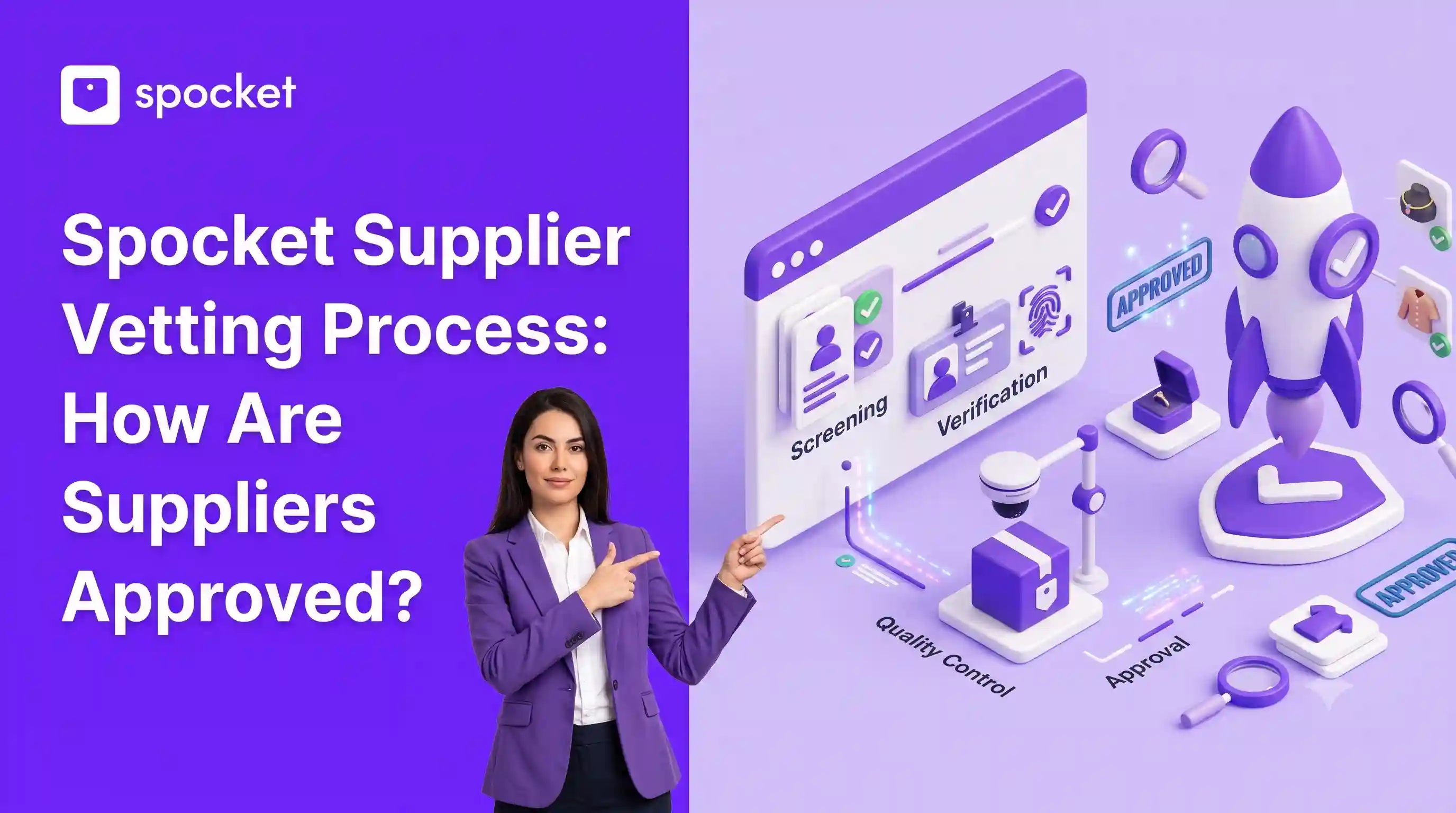
Spocket Supplier Vetting Process: How Are Suppliers Approved?
Learn how Spocket vets its suppliers. Find out how suppliers are approved and what is the Spocket supplier vetting process. Full details inside.