


Shipping in New Zealand — NZ Post, Courier Post & International
Learn how shipping in New Zealand works with NZ Post, Courier Post, courier services, international delivery, customs, tracking, and ecommerce shipping tips.
.avif)

Shipping in New Zealand is a key part of running a reliable ecommerce or dropshipping business. Whether you sell locally across Auckland, Wellington, Christchurch, rural regions, or ship products overseas, your delivery experience directly affects customer trust.
For online sellers, shipping is not just about moving parcels. It includes delivery speed, tracking, customs documents, packaging, rural surcharges, courier pickup, and clear customer communication. In New Zealand, NZ Post remains one of the most recognized names for parcel and mail delivery, while CourierPost is still commonly used by customers when referring to courier services, even though NZ Post has unified CourierPost, Pace, and NZ Post under one brand.
How Shipping Works in New Zealand
Shipping in New Zealand generally falls into three main categories: domestic delivery, courier delivery, and international shipping. Each option serves a different purpose depending on parcel size, delivery urgency, destination, and customer expectations.
Domestic shipping covers parcels sent within New Zealand. Courier delivery is usually preferred for faster, trackable parcels. International shipping is used when sending products from New Zealand to customers overseas or receiving goods from global suppliers.
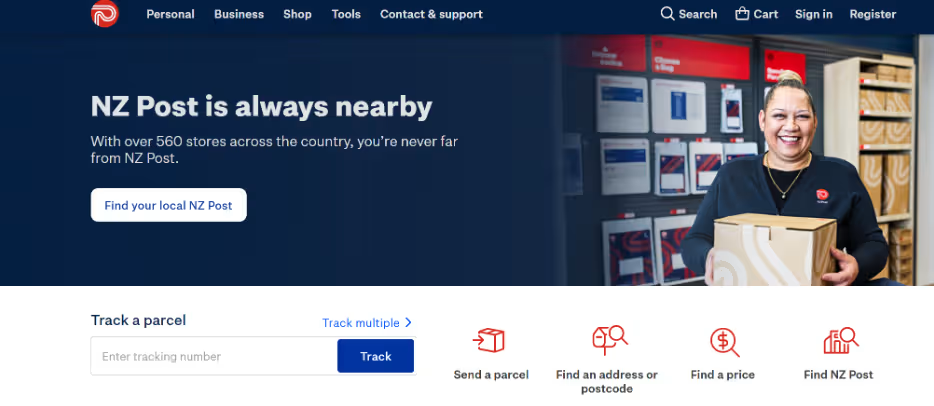
NZ Post offers tools for sending parcels, finding prices, booking pickups, tracking parcels, checking addresses, and viewing delivery updates. These tools are especially useful for ecommerce sellers who need predictable shipping workflows.
For online stores, the goal is simple: choose a shipping method that balances cost, speed, reliability, and customer satisfaction.
NZ Post Shipping in New Zealand
NZ Post is New Zealand’s national postal and parcel delivery provider. It supports personal and business shipping, including domestic parcels, international parcels, letters, courier options, tracking, pickup services, and packaging.
For ecommerce businesses, NZ Post is often used because it offers accessible nationwide coverage. Sellers can send parcels through NZ Post stores, online sending tools, prepaid packaging, and courier pickup options.
NZ Post also provides useful tools such as address and postcode finder, rate finder, parcel tracking, pickup booking, and delivery updates. These are helpful for sellers who want to reduce address errors and keep customers informed.
When selling online, NZ Post can be suitable for:
- Small parcels and documents
- Domestic New Zealand deliveries
- Rural and residential delivery
- International parcels
- Tracked courier shipments
- Returns and customer exchanges
For Spocket users selling to New Zealand customers, the most important thing is to show realistic delivery expectations on product pages and checkout pages. If a supplier ships from outside New Zealand, delivery timelines may depend on the supplier’s warehouse location, customs handling, and final-mile delivery.
Courier Post and NZ Post Courier Services
CourierPost was historically one of New Zealand’s best-known courier brands. Today, NZ Post has brought NZ Post, CourierPost, and Pace together under one brand to simplify services and reduce confusion for customers.
However, many New Zealand shoppers and business owners still use the term “Courier Post” when talking about courier parcel delivery. This makes it useful to include the keyword naturally in ecommerce shipping content.
Courier services are generally better than standard mail when customers expect faster delivery, tracking, and proof of delivery. NZ Post’s international courier option includes tracking, signature on delivery, and home pickup availability.
For ecommerce sellers, courier shipping is useful when sending:
- Higher-value products
- Time-sensitive orders
- Customer returns
- Replacement parcels
- International packages that require tracking
- Products where proof of delivery matters
If your store sells products with higher order values, tracked courier delivery can help reduce disputes because customers can follow the parcel journey.
What You Should Know About New Zealand Shipping
Shipping in New Zealand involves more than choosing between NZ Post, Courier Post, or international delivery. Sellers need to consider domestic delivery zones, rural address delays, tracking, courier speed, customs paperwork, parcel weight, and customer expectations.
1. Domestic Shipping Across New Zealand
Domestic shipping in New Zealand can vary depending on the destination. Deliveries to major cities are usually more straightforward, while rural addresses may take longer or include additional charges.
New Zealand has many rural and remote delivery areas, so ecommerce sellers should be careful when promising exact delivery dates. A parcel going to central Auckland may not follow the same timeline as one going to a rural South Island address.
To improve the customer experience, online sellers should:
- Use address validation where possible
- Clearly mention rural delivery delays if applicable
- Offer tracking for parcel orders
- Add delivery estimates instead of guaranteed dates
- Keep customers updated after dispatch
For Spocket sellers, this is especially important if products are shipped by different suppliers. Each supplier may have different processing times, shipping methods, and delivery coverage.
2. International Shipping from New Zealand
NZ Post offers international shipping options for parcels, documents, and letters. Its main international services include Economy, Courier, and Express. Each service differs by speed, tracking, destination coverage, weight limit, and cover for loss or damage.
NZ Post’s Economy service is the most cost-effective option, with estimated delivery of 3–13 working days, optional tracking, delivery to 220 destinations, and cover up to NZD $2,000.
Its Courier service is designed for faster tracked delivery, with estimated arrival in 2–6 working days to 57 destinations. It includes tracking, signature on delivery, home pickup availability, and cover up to NZD $5,000.
The Express option is the fastest international service listed by NZ Post, with estimated delivery of 1–5 working days, tracking, signature on delivery, home pickup availability, delivery to 220 destinations, and cover up to NZD $10,000.
For ecommerce stores, international shipping should always be explained clearly. Customers want to know whether tracking is included, how long delivery may take, whether customs fees may apply, and what happens if a parcel is delayed.
3. NZ Post International Courier
NZ Post’s international courier service is positioned as a fast and cost-effective option for sending parcels, letters, and documents overseas. It covers 57 countries and targets delivery within 2–6 working days, depending on the destination, size, and weight of the item.
The service includes door-to-door delivery with signature on delivery. NZ Post also says parcels can be sent up to 30 kg, while letters can be sent up to 1 kg, though limits may vary by destination.
This option is useful for businesses that need more reliability than basic economy shipping but do not always need the fastest express service.
For sellers, international courier shipping works well for:
- Premium customer orders
- Cross-border ecommerce parcels
- Documents that need proof of delivery
- Parcels where tracking is important
- Products with higher replacement costs
Before using international courier services, sellers should check destination restrictions, packaging rules, customs documents, and delivery updates.
4. Size, Weight, and Pricing Rules
Shipping prices are usually based on parcel size, destination, and weight. NZ Post states that international courier prices are calculated using actual weight or volumetric weight, whichever is greater. The final chargeable weight is rounded up to the nearest 50g.
For international courier parcels, NZ Post lists a minimum chargeable weight of 500g, a maximum parcel weight of 30 kg, a maximum length of 1.5m for any side, and a maximum length plus girth of 3m. These limits include packaging.
This matters for ecommerce sellers because a lightweight but bulky product can cost more to ship than expected. For example, pillows, home decor, plush toys, storage boxes, and large packaging can increase volumetric weight.
To reduce shipping costs, sellers should:
- Use compact packaging
- Avoid oversized boxes
- Compare actual and volumetric weight
- Check shipping prices before listing bulky products
- Add shipping costs into product margins
For Spocket sellers, this is especially important when choosing products. A product may look profitable at first, but high shipping costs can reduce margins quickly.
5. Customs Requirements for International Shipping
Customs documents are required when sending parcels or documents overseas. NZ Post states that international senders need to complete customs documentation.
For NZ Post international courier, items under NZD $1,000 require a consignment note, while items over NZD $1,000 require a consignment note and an export entry.
NZ Post also highlights the importance of accurate HS tariff codes. These codes help customs authorities classify goods correctly. Missing or incorrect HS codes can cause delays or returns, especially for parcels sent to Europe.
For ecommerce businesses, customs accuracy is essential. Incorrect descriptions such as “gift,” “sample,” or vague product names can lead to delays, extra charges, or customer complaints.
A good customs description should include:
- Product type
- Material
- Quantity
- Value
- Country of origin, if required
- HS tariff code, where applicable
6. Packaging and Addressing Best Practices
Good packaging protects products during transit and reduces the risk of damage. NZ Post recommends checking packaging guidelines before sending items overseas.
International parcels move through multiple handling points, so sellers should avoid weak boxes, loose packaging, and poorly sealed parcels. Fragile items should be cushioned properly, and liquid or delicate products should follow carrier rules.
Address formatting is also important. NZ Post says overseas addresses should include the country name in capital letters on the last line by itself. It also recommends keeping the address to no more than five lines and using pen instead of pencil when writing addresses manually.
For ecommerce sellers, address issues can be reduced by:
- Using checkout address validation
- Asking customers to include postal codes
- Avoiding abbreviations where possible
- Printing clear shipping labels
- Keeping customs labels visible
- Using clear pouches for non-adhesive documents
Small mistakes in address formatting can create big delivery delays, especially for international orders.
7. Tracking and Delivery Updates
Tracking is one of the most important parts of modern ecommerce shipping. Customers expect to know when their order has been dispatched, where it is, and when it may arrive.
NZ Post offers tracking tools and international delivery updates. It also recommends checking delivery targets and possible disruptions before sending parcels overseas.
For online sellers, tracking helps reduce customer support tickets. Instead of asking “Where is my order?”, customers can check their tracking link directly.
A strong shipping communication flow should include:
- Order confirmation
- Dispatch notification
- Tracking number
- Estimated delivery window
- Delay notice, if needed
- Delivery confirmation
Shipping Challenges for New Zealand Ecommerce Sellers
New Zealand ecommerce sellers face a few common shipping challenges. The country’s geography, rural delivery zones, customs rules, and international distance can all affect delivery performance.
Common challenges include:
- Higher shipping costs for bulky parcels
- Longer delivery times to rural areas
- Customs delays for international parcels
- Address formatting errors
- Seasonal delays during holidays
- Customer confusion around courier timelines
- Duties and taxes on cross-border orders
The best way to manage these issues is to communicate clearly before the customer places an order. Shipping policies should be visible, easy to understand, and updated regularly.
Choosing the Right Shipping Option
The right shipping method depends on your product, customer expectations, and profit margins. Low-cost products may work with economy shipping, while premium products often need tracking and signature delivery.
Use Economy when cost matters most and the customer is not in a rush. Use Courier when tracking, speed, and proof of delivery are important. Use Express when the parcel is urgent or high value.
For ecommerce sellers, the best approach is to offer simple shipping options instead of overwhelming customers. For example:
- Standard shipping for regular orders
- Tracked shipping for higher-value orders
- Express shipping for urgent orders
- Free shipping above a minimum order value
This keeps checkout simple while giving customers control over delivery speed and cost.
Shipping Policy Tips for New Zealand Stores
A clear shipping policy can prevent confusion and reduce customer complaints. It should explain your processing times, delivery estimates, tracking process, customs responsibility, and return shipping rules.
Your New Zealand shipping policy should include:
- Order processing time
- Domestic delivery estimates
- International delivery estimates
- Rural delivery notes
- Tracking availability
- Customs and import duty disclaimer
- Lost or damaged parcel policy
- Return shipping instructions
Final Thoughts
Shipping in New Zealand is easier to manage when you understand the difference between NZ Post, Courier Post, domestic courier services, and international shipping options. NZ Post offers economy, courier, and express options for overseas shipping, each with different speeds, tracking features, and cover limits.
For ecommerce and dropshipping sellers, the key is not just choosing a carrier. It is about giving customers accurate delivery information, using reliable suppliers, checking customs requirements, and keeping shipping policies transparent.
With Spocket, sellers can build a more flexible dropshipping business by sourcing products from reliable suppliers and showing clearer delivery expectations to customers. When your shipping process is simple, trackable, and honest, customers are more likely to trust your store and buy again.
Start your dropshipping business today
FAQs About Shipping in New Zealand
What is the best shipping option in New Zealand for ecommerce sellers?
The best shipping option depends on the product size, delivery destination, budget, and customer expectations. NZ Post works well for domestic and international parcels, while courier services are better for faster, tracked, and higher-value shipments.
Does NZ Post offer international shipping from New Zealand?
Yes, NZ Post offers international shipping for parcels, documents, and letters. Its main options include Economy, Courier, and Express, with different delivery speeds, tracking features, destination coverage, and cover limits. Ecommerce sellers should clearly mention delivery estimates, customs requirements, and tracking details before customers place an order.
Is Courier Post the same as NZ Post?
Courier Post was previously a well-known courier brand in New Zealand, but NZ Post has brought CourierPost, Pace, and NZ Post services under one unified brand. Many people still use “Courier Post” when referring to courier delivery, especially for tracked and faster parcel services.
How long does international shipping from New Zealand take?
International delivery times vary by service and destination. NZ Post Economy may take around 3–13 working days, Courier may take around 2–6 working days, and Express may take around 1–5 working days, depending on the country, parcel size, and customs processing.
What should online sellers know about shipping costs in New Zealand?
Shipping costs are usually based on parcel size, destination, and weight. For international courier parcels, NZ Post may calculate pricing using actual weight or volumetric weight, whichever is greater. Sellers should use compact packaging, avoid oversized boxes, and factor shipping costs into product margins.


Launch your dropshipping business now!
Start free trial


Related blogs
How to Set Up Automated Order Fulfillment With Spocket and Shopify
Set up a smoother Shopify dropshipping workflow with Spocket by connecting your store, importing products, processing orders, syncing tracking, and reducing manual fulfillment tasks.

How to Open a Business Bank Account for Your Dropshipping Store
Set up your dropshipping finances the right way with a dedicated business bank account built for payouts, supplier payments, taxes, and long-term store growth.
Spocket vs Dropified: Which Tool Is Better for Multi-Store Scaling?
Compare Spocket and Dropified for multi-store dropshipping, supplier quality, automation, fulfillment, product sourcing, and scaling across ecommerce platforms.
