Pinterest SEO: How to Rank Pins and Drive Traffic in 2026
Learn how to optimize Pinterest pins, boards, keywords, visuals, and landing pages to improve rankings and drive steady ecommerce traffic in 2026.
.avif)

Pinterest is more than a social platform. It works like a visual search engine where people look for ideas, products, inspiration, and solutions before making decisions. For ecommerce brands, blogs, and dropshipping stores, this makes Pinterest SEO a powerful way to attract traffic from users who are already searching with intent.
In 2026, Pinterest has become even more relevant for online sellers because it connects discovery with shopping behavior. Pinterest describes itself as a visual search and discovery platform where users find inspiration, curate ideas, and shop products.
A product is not just a product on Pinterest. It can become part of a gift guide, outfit idea, room setup, travel checklist, beauty routine, or seasonal shopping board.
What Is Pinterest SEO?
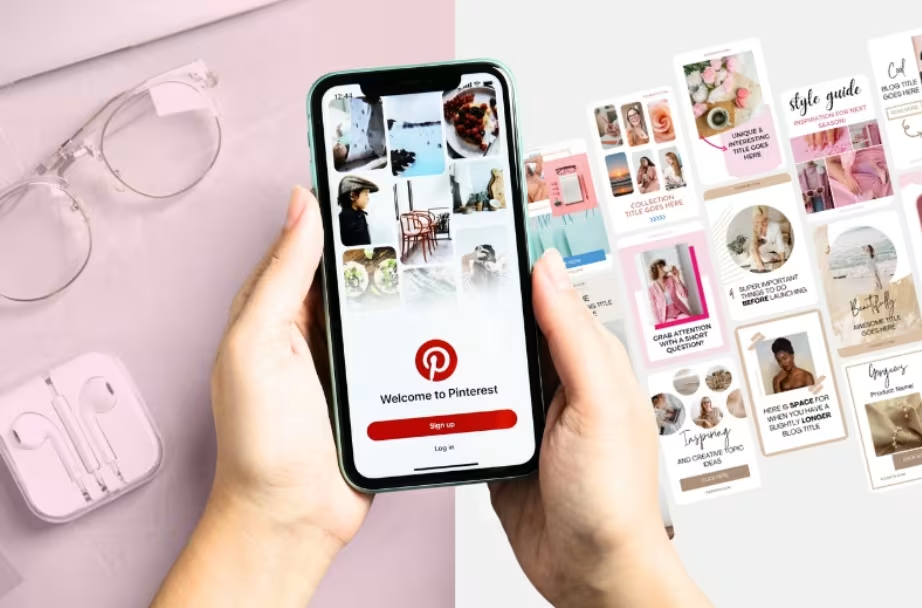
Pinterest SEO is the process of optimizing your profile, boards, pins, descriptions, visuals, and landing pages so Pinterest understands your content and shows it to the right audience. It is similar to Google SEO because keywords and relevance matter, but Pinterest is more visual.
Your pin design, image quality, text overlay, title, description, board topic, and linked page all help Pinterest understand what your content is about. If these elements work together, your pins have a better chance of appearing in search results, home feeds, related pins, and shopping-focused recommendations.
Pinterest SEO helps ecommerce sellers:
- Increase organic visibility
- Drive traffic to product pages and blogs
- Promote products without relying only on ads
- Reach users during the planning and discovery stage
- Build long-term traffic from evergreen pins
- Support seasonal campaigns and product collections
For example, instead of pinning a product with the title “Ceramic Mug,” a Spocket seller could create a pin titled “Cozy Coffee Bar Ideas for Small Kitchens.” This gives the product context and matches how Pinterest users search.
Why Pinterest SEO Matters in 2026
Pinterest users often search before they buy, plan, decorate, gift, travel, or organize. This makes Pinterest different from platforms where users mainly scroll for entertainment. On Pinterest, people often arrive with a goal.
Pinterest content can also keep working longer than typical social media posts. A well-optimized pin may continue earning impressions, saves, and clicks weeks or months after publishing. That makes Pinterest useful for sellers who want traffic that does not disappear after a few hours. Pinterest distributes content through search, home feeds, and related recommendations, using signals such as relevance, engagement, freshness, and user behavior to decide what appears.
For ecommerce sellers, this means Pinterest SEO is not only about getting views. It is about matching your products with what users are actively looking for.
How the Pinterest Algorithm Works
Pinterest ranks content by trying to understand two things: what your pin is about and who is most likely to engage with it. The algorithm uses both text-based signals and visual signals.
Your pin title, description, board name, image, text overlay, linked page, and engagement all contribute to how Pinterest categorizes and distributes your content. If users save, click, or engage with your pin, Pinterest receives a stronger signal that the content is useful.
Relevance Signals
Relevance tells Pinterest what your content means. If your pin is about “minimalist home office decor,” that phrase or close variations should appear naturally in the title, description, board, and landing page.
Strong relevance signals include:
- Keyword-rich pin titles
- Natural pin descriptions
- Clear board names
- Relevant image content
- Text overlays that match the topic
- Landing pages that match the pin promise
Avoid vague titles such as “You’ll Love This” or “Must-Have Find.” They may sound catchy, but they do not give Pinterest enough context.
Engagement Signals
Pinterest pays attention to how users interact with your pins. Saves, clicks, closeups, comments, and outbound clicks can all show that people find your content useful.
A pin with strong visuals but poor relevance may not perform well. A keyword-rich pin with a dull design may also struggle. The best results come from combining search-friendly copy with attractive, useful visuals.
Freshness Signals
Pinterest rewards fresh content. This does not mean every pin must link to a new page. A fresh pin can be a new image, new layout, new title, or new angle for an existing blog post, product page, or collection.
For example, one product collection could become multiple fresh pins:
- “Best Travel Accessories for Long Flights”
- “Carry-On Essentials for Women”
- “Smart Packing Ideas for Weekend Trips”
- “Travel Products That Make Flying Easier”
Each pin targets a slightly different search intent while sending users to a relevant page.
How to Do Pinterest Keyword Research
Pinterest keyword research helps you understand what users are searching for before you create pins. The goal is to find keywords that match your product, audience, and content angle.
Good keyword research makes your pins easier for Pinterest to classify and easier for users to discover.
Use Pinterest Search Suggestions
Start typing a broad keyword into Pinterest’s search bar and watch the suggested phrases. These suggestions can reveal how people naturally search.
For example, if your niche is home decor, you may see ideas like:
- small apartment decor
- cozy bedroom ideas
- modern wall art
- kitchen counter organization
- neutral living room decor
These phrases are often more useful than broad keywords because they show specific intent.
Focus on Long-Tail Keywords
Long-tail keywords are longer and more specific. They usually have clearer intent and may be easier to rank for than broad keywords.
Instead of targeting “pet products,” try:
- dog travel essentials
- cute pet accessories for small dogs
- products for new puppy owners
- pet organization ideas for apartments
Study Top-Ranking Pins
Search your target keyword and review the pins already ranking. Look at the wording, design style, image type, and content format.
Ask:
- Are top pins list-based?
- Do they use text overlays?
- Are they product-focused or idea-focused?
- What words appear in titles?
- What boards are ranking?
- What landing pages do they link to?
Do not copy other creators. Use the research to understand what Pinterest already sees as relevant.
How to Optimize Your Pinterest Profile
Your Pinterest profile should clearly communicate your niche. If your profile is too broad or unclear, Pinterest may struggle to understand what audience your content serves.
A focused profile can strengthen your account-level relevance and improve user trust.
Use a Keyword-Friendly Profile Name
Your profile name should include your brand name and a clear keyword when possible.
Examples:
- Brand Name | Home Decor Ideas
- Brand Name | Pet Accessories
- Brand Name | Beauty Finds
- Brand Name | Travel Essentials
This helps users and Pinterest understand your content quickly.
Write a Helpful Bio
Your bio should explain what users will find on your profile. Keep it natural, readable, and keyword-aware.
A good bio can include:
- Your niche
- Your audience
- The type of ideas you share
- A simple reason to follow or click
Example:
“Discover practical home organization ideas, space-saving products, and cozy decor inspiration for small apartments. Follow for simple ways to create a cleaner, calmer home.”
Connect Your Website
If you want Pinterest traffic, your website should be connected properly. This helps you track performance and strengthens the connection between your pins and your domain.
Your profile, boards, and website should all support the same niche. A clear topic focus helps both users and Pinterest understand your brand.
How to Optimize Pinterest Boards
Pinterest boards act like topic folders, but they are also SEO signals. A clear board strategy helps Pinterest categorize your content.
Avoid vague board names. Creative names may look fun, but searchable board names usually perform better.
Use Clear Board Names
Strong board names include specific keywords.
Examples:
- Small Apartment Decor Ideas
- Home Office Setup
- Travel Accessories
- Baby Shower Gift Ideas
- Wireless Tech Gadgets
- Pet Travel Essentials
Weak board names include:
- Cool Stuff
- Dream Finds
- Things I Love
- Random Ideas
Pinterest users are not searching for vague phrases. They are searching for specific ideas.
Add Board Descriptions
Board descriptions give Pinterest more context. Write a short description that includes your main keyword and related phrases naturally.
Example:
“Find small apartment decor ideas, space-saving storage products, cozy room inspiration, and simple styling tips for compact homes.”
Keep Boards Focused
Do not mix unrelated topics on the same board. A board about “pet travel essentials” should not include fashion, recipes, or office products unless they clearly connect to the topic.
Focused boards create stronger relevance signals and make your profile easier to browse.
How to Create Pins That Rank
A ranking pin needs both search clarity and visual appeal. Pinterest is a visual platform, so your pin must stop the scroll. But it also needs keywords so Pinterest understands where to place it.
Use Vertical Designs
Vertical pins usually take up more space in the feed and are easier to read on mobile. Use clean images, strong spacing, and clear text overlays.
For ecommerce pins, lifestyle images often work better than plain product photos because they show how the product fits into real life.
Add Text Overlays
Text overlays help users understand the pin quickly. They also reinforce the keyword topic.
Examples:
- “10 Cozy Bedroom Decor Ideas”
- “Best Travel Accessories for Long Flights”
- “Small Desk Setup Ideas”
- “Pet Products That Make Travel Easier”
- “Minimalist Jewelry Gifts”
Keep overlays short and readable. If users cannot read the text on mobile, the pin may lose clicks.
Write Keyword-Rich Pin Titles
Your title should include the main keyword while still sounding natural.
Examples:
- “Best Home Office Accessories for Small Desks”
- “Travel Essentials for Weekend Trips”
- “Small Bathroom Storage Ideas”
- “Cute Pet Accessories for Everyday Walks”
Avoid clickbait titles that do not explain the content.
Write Useful Pin Descriptions
A good description should include the keyword, explain the value, and give users a reason to click.
Example:
“Looking for small apartment decor ideas that make your space feel cozy and organized? Explore simple storage products, neutral decor inspiration, and space-saving home finds for compact rooms.”
Do not stuff keywords. Pinterest SEO works best when the description sounds natural.
Pinterest SEO for Ecommerce and Dropshipping
Pinterest is valuable for ecommerce because people often use it to plan purchases visually. They search for ideas first, then products. This gives dropshipping sellers a chance to promote items through inspiration-led content.
For Spocket sellers, Pinterest can support product discovery without making every pin feel like an ad.
Turn Products Into Ideas
A product pin that says “makeup organizer” is useful, but a pin that says “Small Vanity Organization Ideas” is more searchable and more inspiring.
The same product can be positioned in different ways:
- “Bathroom Counter Organization Ideas”
- “Beauty Storage Products for Small Spaces”
- “Minimalist Vanity Setup”
- “Gifts for Makeup Lovers”
This approach helps you reach users at different stages of the buying journey.
Use Product Roundups
Roundup pins are great for ecommerce because they give users multiple reasons to click.
Examples:
- “10 Travel Products for Long Flights”
- “Best Kitchen Gadgets for Small Apartments”
- “Cute Dog Accessories for New Puppy Owners”
- “Home Office Essentials for Remote Workers”
- “Self-Care Gift Ideas for Women”
These pins can link to blog posts, collection pages, or curated product pages.
Match Pins to Landing Pages
Your landing page must deliver what the pin promises. If your pin says “10 travel essentials,” the page should show travel essentials, not a generic homepage.
Good landing pages include:
- Product collections
- Blog posts
- Gift guides
- Category pages
- Specific product pages
- Seasonal landing pages
This improves user experience and can support stronger Pinterest performance over time.
How to Drive More Traffic From Pinterest
Ranking is useful, but traffic is the real goal. To get more clicks, your pins need to create curiosity while clearly showing value.
Use Clear Calls to Action
Your pin should make the next step obvious.
Simple CTAs include:
- “Shop the collection”
- “See the full guide”
- “Explore the ideas”
- “Save this for later”
- “Read the tips”
Avoid sounding too aggressive. Pinterest users often prefer helpful, idea-led language.
Publish Fresh Pins Consistently
You do not need to post dozens of pins every day. A realistic schedule is better than an intense plan you cannot maintain.
A simple starting routine:
- Create fresh pins several times per week
- Make multiple designs for important URLs
- Publish seasonal pins early
- Test different titles and overlays
- Review analytics monthly
Consistency helps Pinterest understand that your account is active and focused.
Use Pinterest Analytics
Pinterest Analytics shows what is working. Track impressions, saves, outbound clicks, engagement, and top-performing boards.
If a pin gets impressions but few clicks, improve the text overlay or title. If a pin gets clicks but no sales, review the landing page, product offer, pricing, or shipping details.
Common Pinterest SEO Mistakes to Avoid
Many Pinterest accounts struggle because they treat Pinterest like a regular social media feed. Pinterest needs search clarity, useful visuals, and consistent publishing.
Avoid these mistakes:
- Using vague board names
- Ignoring keyword research
- Sending every pin to your homepage
- Using unreadable text overlays
- Posting only plain product images
- Repeating the same pin too often
- Keyword stuffing descriptions
- Publishing seasonal content too late
- Linking to irrelevant landing pages
- Ignoring analytics
- Making the pin promise different from the page content
Pinterest SEO works best when your content is clear, honest, and matched to user intent.
Pinterest SEO Checklist for 2026
Before publishing a pin, review the basics. A simple checklist can help you stay consistent and avoid weak optimization.
Profile Checklist
- Use a clear profile name
- Include a niche keyword
- Write a helpful bio
- Connect your website
- Keep branding consistent
Board Checklist
- Use searchable board names
- Add keyword-rich descriptions
- Keep each board focused
- Save pins to relevant boards
- Avoid mixing unrelated topics
Pin Checklist
- Use vertical images
- Add readable text overlay
- Include the main keyword in the title
- Write a natural description
- Link to a relevant page
- Use high-quality visuals
- Create fresh designs
- Add a clear call to action
Landing Page Checklist
- Match the pin topic
- Load quickly on mobile
- Show relevant products or content
- Include clear product details
- Add trust signals
- Make the next action easy
Final Thoughts
Pinterest SEO in 2026 is about matching search intent with strong visuals and useful content. Pinterest needs to understand your pin, users need a reason to save or click, and your landing page needs to deliver what the pin promises.
For Spocket sellers, Pinterest can become a valuable traffic channel because it allows products to be promoted through inspiration. Instead of pushing products directly, you can create gift guides, product roundups, seasonal boards, room ideas, travel lists, and problem-solving content that naturally leads users to your store.
The best strategy is simple: research keywords, organize boards clearly, create fresh pins, write helpful descriptions, link to relevant pages, and track what drives outbound clicks. Over time, this can help your ecommerce store attract more qualified visitors without depending only on paid ads.
Start your dropshipping business today
Pinterest SEO FAQs for Ecommerce Traffic in 2026
What is Pinterest SEO?
Pinterest SEO is the process of optimizing your profile, boards, pins, titles, descriptions, visuals, and landing pages so Pinterest can understand your content and show it to the right users. It helps your pins appear in Pinterest search results, home feeds, related pins, and shopping-focused recommendations.
How do I rank my pins on Pinterest in 2026?
To rank pins on Pinterest in 2026, use keyword-rich titles, helpful descriptions, clear board names, vertical pin designs, readable text overlays, and relevant landing pages. Pinterest also considers engagement signals like saves, clicks, and outbound traffic, so your pins should be visually attractive and useful.
How often should I post fresh pins on Pinterest?
You do not need to post dozens of pins daily. A consistent schedule works better than irregular bulk posting. Start by creating fresh pins several times per week, test different designs and titles, and publish seasonal content early so Pinterest has time to index and distribute it.
Is Pinterest good for dropshipping stores?
Yes, Pinterest can be useful for dropshipping stores because users often search with shopping intent. For Spocket sellers, Pinterest works especially well for gift guides, product roundups, seasonal collections, home decor ideas, beauty products, pet accessories, travel essentials, and problem-solving content.
How can I get more traffic from Pinterest to my ecommerce store?
To drive more traffic, create pins around specific search intent, use clear calls to action, and link each pin to a relevant product page, collection, blog post, or gift guide. Avoid sending every pin to your homepage. The closer your landing page matches the pin promise, the better the user experience and traffic quality.


Launch your dropshipping business now!
Start free trial


Blogs relacionados

Alternativas a Ahrefs
Descubra las mejores alternativas de Ahrefs en 2025. Compara herramientas de SEO potentes y asequibles para la investigación de palabras clave, el análisis de backlinks y más para mejorar tu estrategia de SEO.


10 herramientas gratuitas para aumentar el tráfico del sitio web
Descubra 10 herramientas gratuitas que ayudarán a aumentar el tráfico del sitio web. Aprenda a optimizar su estrategia de SEO, contenido y redes sociales sin gastar un centavo.

SEO de páginas de productos: 14 formas de aumentar el tráfico web y aumentar las ventas
El SEO de la página de producto puede aumentar el tráfico web y aumentar las ventas, y puedes hacerlo sin gastar un centavo. ¡Haz clic aquí para obtener más información ahora!